Dossier
Russia and Ukraine: stated arguments, verified facts and the obstacles to peace
NATO, sovereignty, Crimea and Donbas: what each side argues, which documents support it, and where the narratives fail scrutiny.
In brief
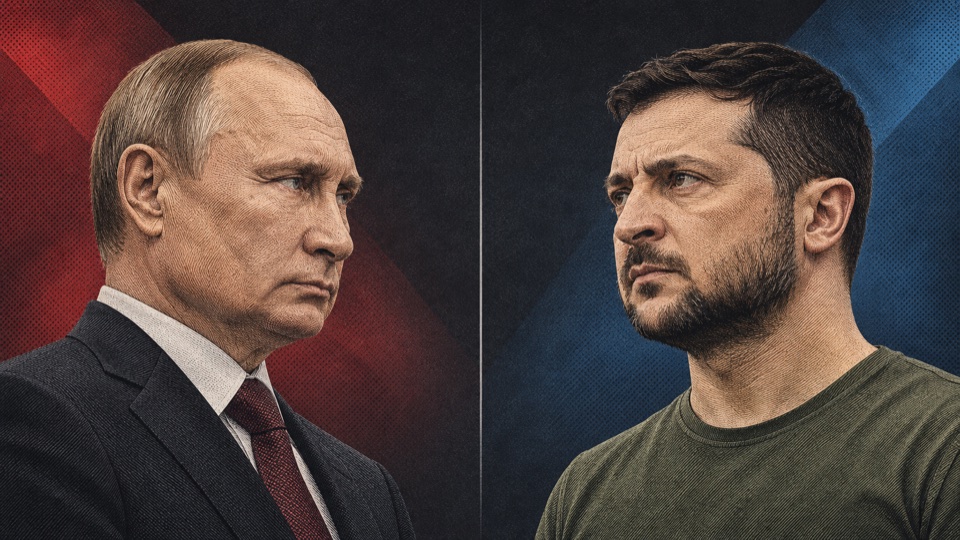
Moscow invokes security, NATO and the protection of Donbas; Kyiv asserts sovereignty, territory and guarantees against renewed aggression. Comparing these arguments does not mean giving them equal legal standing.
This in-depth article distinguishes government statements, documented facts and international decisions. It traces the foundations of Ukrainian independence, the crisis of 2014, unfulfilled agreements and differing visions of peace.
The platforms of 2022 and 2024 are examined with their dates clearly stated. They are not presented as the latest state of negotiations. Russian and Ukrainian populations are not synonymous with the positions of their respective governments.
Frequently asked questions
Does explaining Russian arguments mean justifying the invasion?
Had Ukraine already joined NATO in February 2022?
No. The 2008 Bucharest declaration envisaged future membership, without granting it or setting a date. [3]
Were the Western assurances of 1990 invented?
No: diplomatic records exist. But documenting those assurances is not the same as proving a general treaty permanently prohibiting any enlargement. [5]
Did the Budapest Memorandum provide for automatic military intervention?
No. It contained commitments and consultations, not an automatic defence clause equivalent to NATO. [18]
Were all those killed in Donbas before 2022 civilians?
No: the total also included combatants. [9]
Has the International Court of Justice delivered a final judgment on the entire war?
No. The order cited here concerns provisional measures of 16 March 2022 and the dispute over the Genocide Convention. It must be read within that scope. [10]
Was there already a signed peace in Istanbul in March 2022?
The account of 29 March described conditional proposals and specified that no document had been signed that day. It does not establish a final peace subsequently cancelled for a single reason. [14]
Key timeline
- 1990–1999 · From assurances to a new European architecture
Talks over Germany, Ukrainian independence, the Budapest Memorandum, the NATO–Russia Act and the OSCE Charter mark the construction of a security order later contested. [5][17][18][6][4]
- 2008 · The NATO prospect
Bucharest announces future membership for Ukraine and Georgia without admitting them to the Alliance. [3]
- 2014–2015 · Political crisis, Crimea, Donbas and Minsk
The Maidan crisis and the question of Crimea intertwine with the conflict in Donbas. Minsk II attempts to link security and a political settlement. [7][8][9][13]
- 2022 · Invasion and diplomatic attempts
The full-scale invasion is followed by the UN response, the International Court of Justice’s order, the Istanbul talks and Ukraine’s G20 formula. [1][2][10][14][15]
- 2024–2025 · Peace conditions and responsibility
The conditions published by Putin in June 2024 show the distance between the platforms. In 2025, the European Court rules on Odesa and Russian responsibility within the limits of the respective cases. [16][12][20]
This is not a contest between two equivalent truths
To understand this war, three questions must be kept separate: why a government says it is acting, what actually happened, and what actions the law permits. A security concern can be real without making an invasion lawful. A violation committed by a defending party remains a violation, but does not erase responsibility for initiating aggression.
On 2 March 2022, the UN General Assembly characterized Russia’s action as aggression in violation of the Charter and demanded the withdrawal of Russian forces. This is an Assembly resolution, not a criminal judgment against individuals. The documentary starting point is therefore not that Moscow and Kyiv simply have two equally recognized versions of the war’s legality. [1]
Reportage
Reuters reports on the start of Russia’s invasion
What is happening in Ukraine? Russia’s invasion, explained
The automatic English transcript discusses civilians fleeing, shelters in metro stations and sanctions. It attributes the security argument to Putin.
The check covers the transcript. This report dates to the first day of the full-scale invasion. The claims attributed to Putin and later developments require other sources.
YouTube is contacted when you load the player.
Before the war: independence and security assurances
On 1 December 1991, a referendum confirmed Ukraine’s declaration of independence: 90.32% of participants voted in favour. That figure does not capture every identity or subsequent transformation in Ukrainian society, but it prevents independence from being portrayed solely as a decision made by others over the population’s heads. Ukraine’s parliament preserves the institutional account. [17]
On 5 December 1994, in connection with Ukraine’s accession to the Non-Proliferation Treaty as a non-nuclear-weapon state and the elimination of nuclear weapons from its territory, Russia, the United States and the United Kingdom reaffirmed respect for its independence, sovereignty and existing borders. The Budapest Memorandum also reaffirmed the prohibition on the threat or use of force and on economic coercion. It provided for consultations if problems arose and immediate recourse to the Security Council in a specific eventuality involving aggression or a threat with nuclear weapons. [18]
It was not, however, an automatic military-defence clause equivalent to NATO membership. Describing it as an “absolute guarantee that Western armies would enter the war” attributes a mechanism to the text that it does not contain. Its weight in Ukrainian political memory is understandable: relying on diplomatic commitments and subsequently seeking stronger protection is not the same as wanting to threaten a neighbour. This last observation is an interpretation of the security dilemma, distinct from the memorandum’s literal content.
Security: Moscow fears NATO, Kyiv fears Moscow
In his speech of 24 February 2022, Putin presented NATO enlargement and growing military cooperation with Ukraine as an existential threat. He invoked Donbas, accused Kyiv of genocide and announced goals of “demilitarization” and “denazification”. He also invoked Article 51 of the UN Charter and the treaties just concluded with the separatist entities in Donetsk and Luhansk. These arguments were genuinely expressed: the document authenticates Russia’s position, but does not automatically prove its underlying premises. [2]
NATO enlargement is not an invention of propaganda. At the Bucharest summit on 3 April 2008, the Alliance declared that Ukraine and Georgia would become members. But the declaration neither admitted them to NATO nor set a date for entry. Confusing a political prospect with membership already achieved distorts the context in which the full-scale invasion began. [3]
To understand Ukraine’s objection, however, one must look at the same map from the other side of the border: an external guarantee can appear threatening to Moscow and protective to Kyiv. It is not necessary to endorse every NATO decision to recognize that Ukraine has security interests of its own and is not merely a square on the great powers’ chessboard. This is an analytical interpretation, not proof of governments’ private intentions.
The OSCE’s 1999 Istanbul Charter contains both requirements. It recognizes states’ right to choose or change their alliances and to remain neutral; it adds that they should not strengthen their security at the expense of others. It also excludes privileged spheres of influence. Citing only freedom of alliance or only indivisible security misrepresents the document. [4]
Moscow’s stated position
In February 2022, Putin presented NATO–Ukraine cooperation as a threat, invoked the protection of Donbas and claimed self-defence. This is the Russian government’s stated motivation, not proof that the legal prerequisites for invasion existed. [2]
Kyiv’s stated position
In the formula presented to the G20 in November 2022, Zelensky focused on sovereignty, territorial integrity, troop withdrawal and guarantees against another war. These are the contents of that dated platform, not an automatic description of all subsequent negotiating proposals. [15]
Did the West promise in 1990 not to enlarge NATO?
The assurances are not entirely invented: diplomatic records document discussions between James Baker and Mikhail Gorbachev in February 1990, in the context of German reunification. But saying that a political promise was made in those talks is different from claiming that a general treaty was signed permanently prohibiting any future accession from Eastern Europe. The document does not support that second conclusion. [5]
The NATO–Russia Founding Act of 1997 is another step that should not be skipped: it recognizes sovereignty, independence and the choice of means to ensure security, and grants neither party a veto over the other’s decisions. The dispute over disappointed expectations can therefore be discussed seriously without turning it into a Russian right to decide neighbouring states’ futures. [6]
2014: a political crisis, not a single label that explains everything
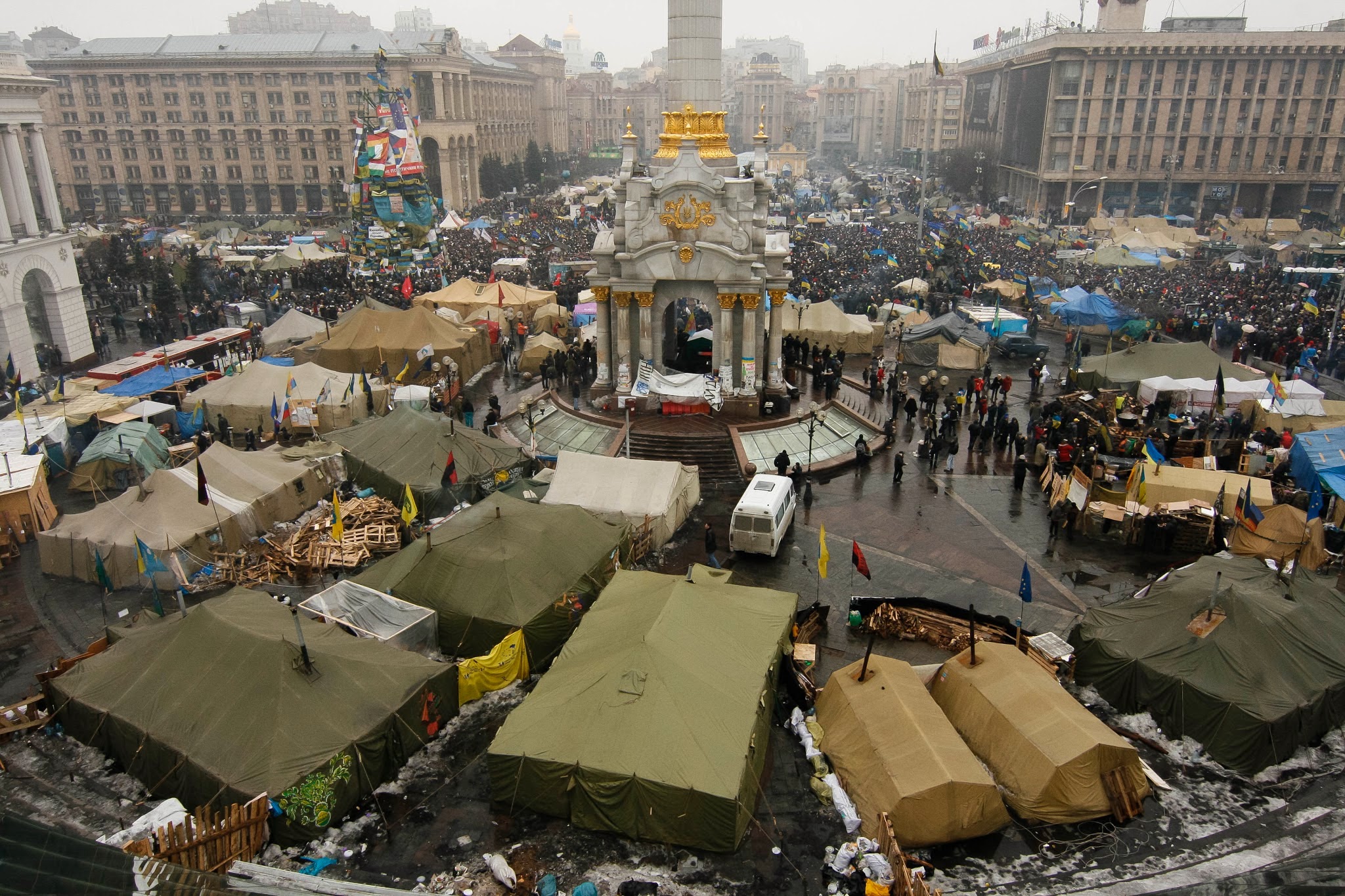
The Russian interpretation presents Maidan and Viktor Yanukovych’s downfall as a Western-backed coup. The Ukrainian interpretation points to mobilization against corruption, repression and a political choice that moved the country away from European integration. A reconstruction must distinguish the protests’ diverse character, violent episodes and institutional controversies from the idea that every participant was a foreign agent or an extremist.
The OHCHR report of 15 April 2014 documents the human-rights context and corrects an important detail: parliament’s attempted repeal of the language law did not become law, because the acting president did not sign it. Minority concerns and some attacks were real, but the initial assessment did not describe attacks against ethnic Russians as systematic or widespread. This is a snapshot of that period, not an exoneration of every subsequent language policy. [7]
Crimea: self-determination for Moscow, annexation for Kyiv
This issue cannot be resolved simply by tallying historical claims. The existence of Russian, Ukrainian and Tatar ties to the peninsula does not by itself establish the legitimacy of a border change. The decisive question is what procedure took place, under what conditions and with what recognition.
In Resolution 68/262 of 27 March 2014, the General Assembly reaffirmed Ukraine’s territorial integrity within its internationally recognized borders. It stated that the referendum of 16 March, which Kyiv had not authorized, had no validity as a basis for changing the status of Crimea and Sevastopol. This does not deny that different political preferences existed among the population; it distinguishes those preferences from the legal validity of the procedure used to annex a territory. [8]
Self-defence and self-determination are not unconditional formulas
The UN Charter recognizes the principle of peoples’ self-determination while also protecting states’ territorial integrity and political independence against the threat or use of force. Article 51 provides for individual or collective self-defence when an armed attack occurs. Calling an operation “defensive” is not enough: its prerequisites must be verified. [19]
A popular consultation, a historical claim or unilateral recognition of a separatist entity does not automatically resolve these problems. For Crimea, the UN specifically rejected the referendum’s validity as a basis for changing its status. For the 2022 invasion, the Assembly rejected Russia’s position by characterizing the aggression. These are documented conclusions, not an abstract rule that every claim to self-determination worldwide has the same solution. [8][1]
Finally, the right to resort to force must be distinguished from the rules applicable during hostilities. Self-defence does not authorize torture or unlawful attacks; documenting such abuses does not remedy the initial aggression. Individual responsibility, state responsibility and political compromises in negotiations require different tools and evidence.
Donbas: real victims, frequently distorted numbers
Between 14 April 2014 and 31 December 2021, OHCHR estimated 14,200–14,400 deaths in the conflict overall. They were not all civilians: the total included at least 3,404 civilians, approximately 4,400 members of Ukrainian forces and approximately 6,500 members of armed groups. The civilian figure included the 298 victims of flight MH17. [9]
Presenting this total as “14,000 Russian-speaking civilians killed by Kyiv” distorts the categories, attribution and meaning of the data. The count does not assign all deaths to a single perpetrator and does not automatically identify victims’ language or ethnicity. In 2021, 25 civilians were killed and 85 injured, the lowest combined annual level of that period. These are historical data with a specific cut-off date, not the toll of the entire war up to today. [9]
The suffering of Donbas must not be minimized. But “there were victims and abuses” and “a genocide was underway that authorized the invasion” are different propositions. In its provisional order of 16 March 2022, the International Court of Justice said it did not, at that stage, have evidence substantiating Russia’s genocide allegation; it also doubted that the Convention could authorize the unilateral use of force. It ordered Russia to suspend its operations. This was not a final judgment on every fact of the war. [10]
Russian responsibility established by the European Court
On 9 July 2025, the Grand Chamber of the European Court of Human Rights delivered a final judgment holding Russia responsible for grave and systematic violations of the Convention: unlawful attacks, extrajudicial killings, torture, arbitrary detention and transfers of children. The Court confirmed the framework of Russian effective control over separatist-held areas of eastern Ukraine from May 2014 and also established responsibility for the downing of flight MH17. [20]
The judgment concerns state responsibility and facts up to 16 September 2022, the temporal limit of its jurisdiction: it is not an individual criminal conviction by the International Criminal Court. It does not automatically cover every subsequent episode of the war. [20]
Ukrainian responsibility must not disappear from the account
An OHCHR report from July 2021 documents arbitrary detention, torture and ill-treatment by both Ukrainian government actors and armed groups and other actors in areas controlled by the self-proclaimed republics. Violence and impunity are therefore not merely unsubstantiated reciprocal accusations. The report also notes a decrease in these practices after 2016, without declaring that they had ceased. [11]
In its judgment on Odesa of 13 March 2025, the European Court of Human Rights identified Ukrainian authorities’ responsibility for failures to prevent and stop violence, provide rescue and investigate. It did not, however, establish genocide or a state plan of extermination. The judgment also documents violence between factions, indications of collusion between certain local police officials and anti-Maidan activists, and the role of Russian disinformation. [12]
Applying the same verification standard does not mean mechanically allocating 50% of the blame to each side. It means not concealing an abuse because it embarrasses the side regarded as the victim of aggression. The right to defend oneself and the duty to respect civilians belong to distinct legal questions.
Minsk: a written agreement is not a peace achieved
The Minsk II package of 12 February 2015 provided for a ceasefire, withdrawal of heavy weapons, monitoring, political steps for the territories concerned and restoration of border control according to an agreed sequence. Security, elections and political arrangements were linked, and the relationship between these conditions became a central difficulty in the process. [13] The text also required the withdrawal of foreign armed formations and the disarmament of illegal groups; restoration of Ukrainian border control was linked to local elections and the political settlement. [13]
The document’s existence proves that there was a diplomatic path. It does not prove that it was implemented, nor does it allow every failure to be attributed to a single later statement. Discussing violations requires dated incidents, monitoring reports and verifiable attribution: citing only the government accusing the other is not enough.

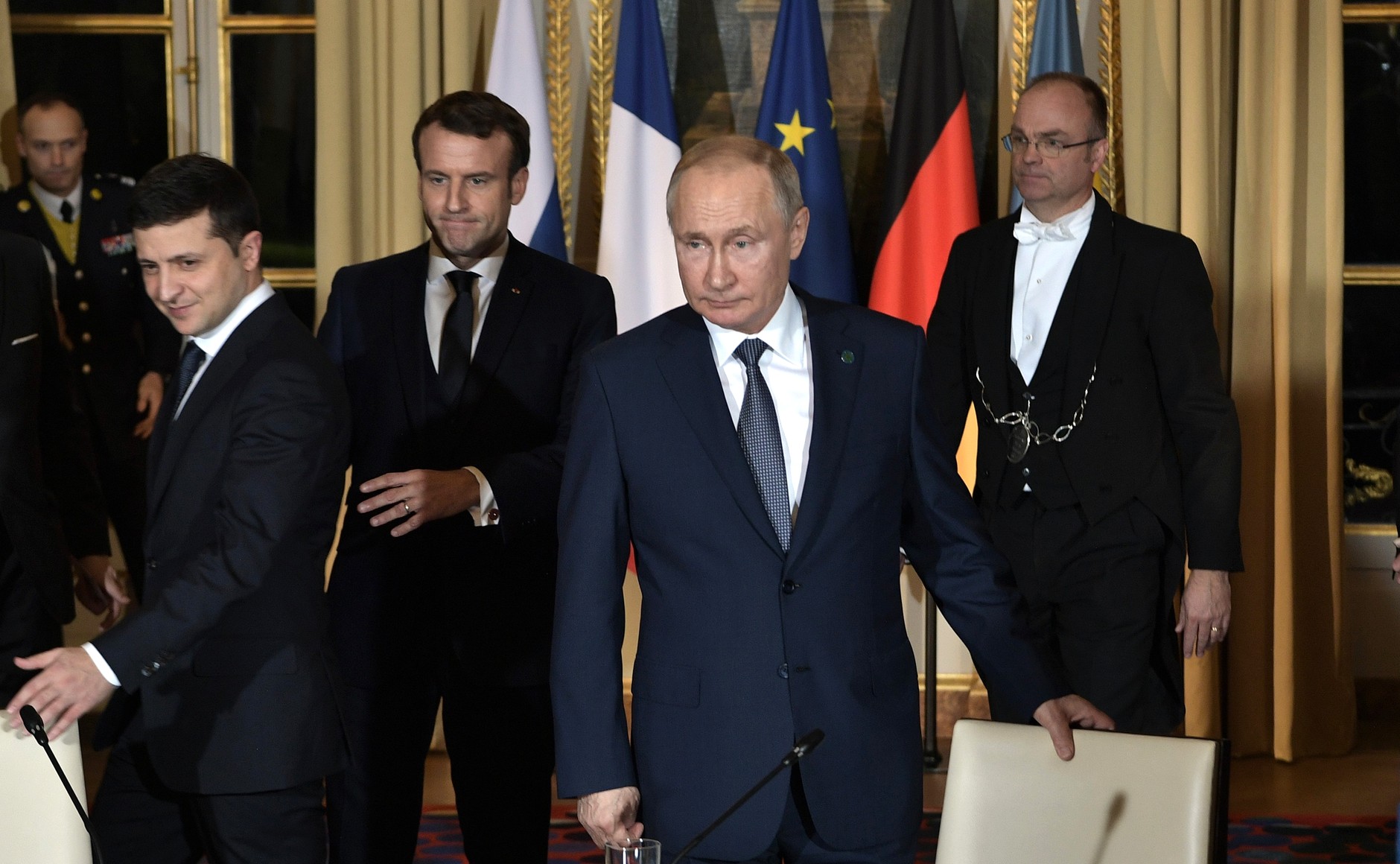

Istanbul 2022: concrete proposals, but no peace already signed
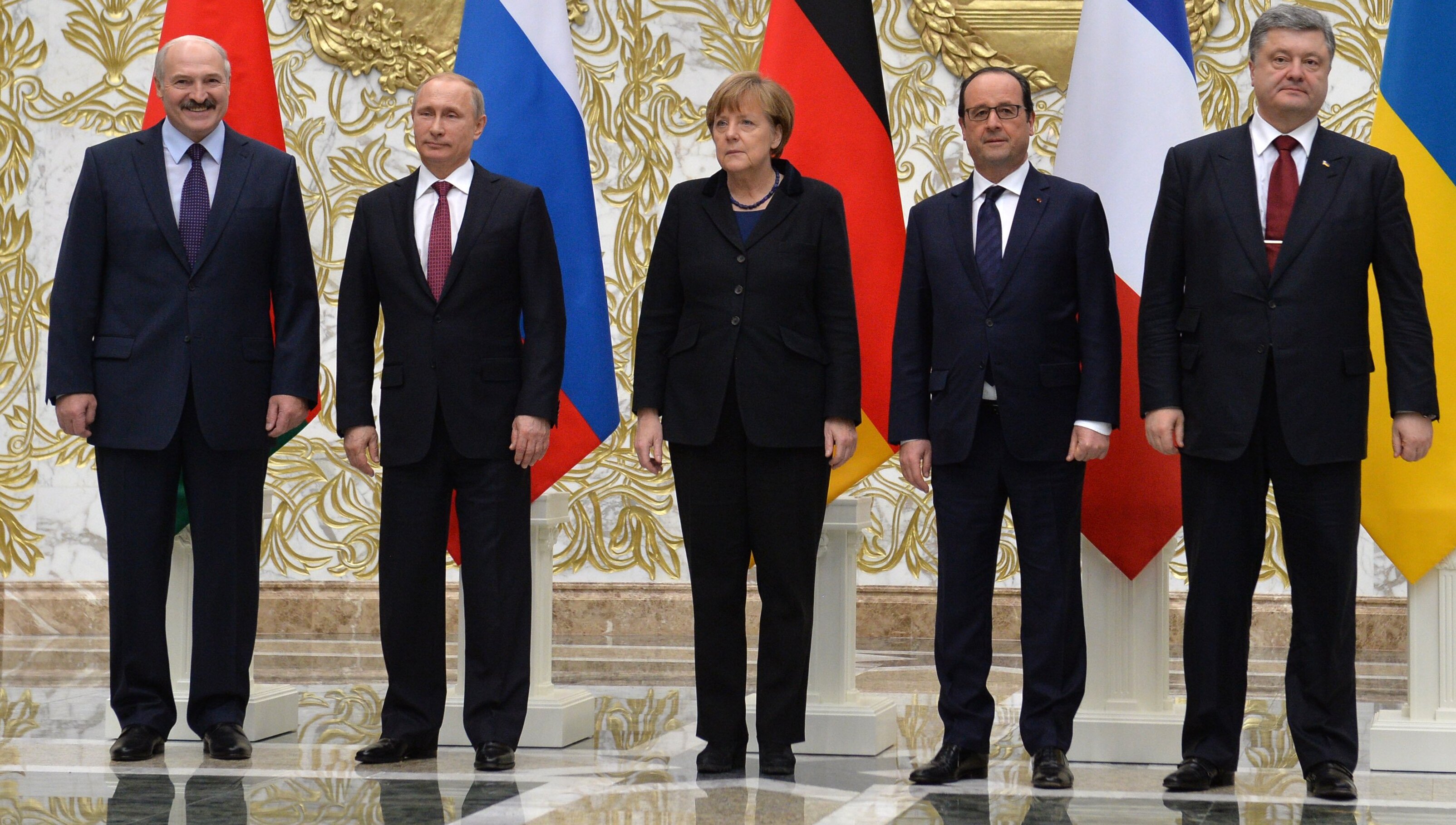
The official Ukrainian account of 29 March 2022 describes proposals for neutrality conditional on international guarantees, further negotiations and approval procedures. It envisaged a discussion over several years about Crimea and a separate political step for Donbas. It specified that no document had been signed that day. [14]
It is therefore incorrect to present that moment as a final peace already concluded and then cancelled by a single foreign visitor. Genuine questions remain about available guarantees, trust, territories and governments’ decisions. Participants’ accounts must be compared, not transformed into a proven single cause. The absence of a signed agreement does not prove that negotiations were useless or impossible either: these are different claims.
What the two governments meant by “peace”
On 15 November 2022, Zelensky presented a ten-point formula to the G20: nuclear, food and energy security; prisoners and deportees; the UN Charter and territorial integrity; withdrawal of troops; justice; the environment; prevention of renewed escalation; and confirmation of the end of the war. Its framework was a peace protecting sovereignty and independence, not merely an end to shooting. This is the platform announced on that date, not an automatic description of every subsequent negotiating position. [15]
On 14 June 2024, Putin instead set as preconditions Ukrainian withdrawal from the entire administrative territory of the Donetsk, Luhansk, Kherson and Zaporizhzhia regions and renunciation of NATO membership. For an overall settlement, he demanded neutrality, demilitarization, recognition of Russian territorial acquisitions and the lifting of sanctions. He was not merely asking to stop at the front line. The speech is preserved as an annex to an official Russian communication to the UN; publication in the UN system does not constitute endorsement of its claims. [16]
The distance between these models explains why “just negotiate” does not settle the issue. A ceasefire suspends hostilities; an agreement must define territory, security, oversight and the consequences of violations. A truce can save lives without resolving sovereignty. An agreement freezing the front line may be acceptable to some and a future threat to others. These are negotiating problems to make explicit, not reasons to regard war as inevitable.
Statement by a party
Zelensky sets out five conditions for peace at the UN
Ukraine - President Addresses United Nations General Debate, 77th Session (English) | #UNGA
In the English transcript of his 21 September 2022 speech, Zelensky sets out five conditions for peace. The ten-point formula came later, at the November G20 summit.
The speech documents Ukraine’s position at the time. The check covers the spoken text. Publication by the UN does not validate the president’s claims. Contains graphic verbal descriptions of torture and deaths.
YouTube is contacted when you load the player.
Statement by a party
Putin sets out Moscow’s conditions for talks
Putin sets out Russia's conditions for peace talks with Ukraine
According to the Russian captions, Putin demands a Ukrainian withdrawal from the entirety of the four regions claimed by Moscow, within their administrative boundaries, and abandonment of NATO membership before a ceasefire and talks.
The excerpt documents Russia’s position on 14 June 2024. The check covers the captioned remarks. The excerpt does not establish the legitimacy of the demands.
YouTube is contacted when you load the player.
How to read the conflict without becoming a mouthpiece
A government source tells us what that government argues. Independent monitoring helps verify events and conditions. A judgment establishes what the court actually decided, within its jurisdiction. A claim does not become false because it comes from Moscow or true because it comes from Kyiv, or vice versa.
The endpoint is not an artificial draw. It is a distinction: Russian security concerns are a legitimate subject of analysis; Ukraine’s right to sovereignty does not disappear as a result. Documented Ukrainian authorities’ abuses must be reported; they do not automatically make an annexation or invasion lawful. Understanding arguments is necessary precisely in order to test them, not to suspend judgment on the facts.
Claims examined
Red means insufficient supporting evidence, not automatically false. The FALSE sign applies only to the specific claim refuted by the documents.
FALSE
“The 2008 NATO declaration had already admitted Ukraine.”
Paragraph 23 envisages future membership and identifies MAP as the next step: it does not grant Ukraine membership. [3]
FALSE
“Those killed in Donbas before 2022 were all Russian-speaking civilians killed by Kyiv.”
The total includes combatants and does not attribute all deaths to Kyiv. [9]
NOT ESTABLISHED
“The assurances of 1990 prove a general and permanent ban on enlargement.”
The records document diplomatic assurances, not such a general treaty. [5]
Not established
“A final peace had been signed in Istanbul on 29 March 2022.”
The Ukrainian official account of 29 March says no documents were signed and proposals were presented. It is a party’s account, not an independent reconstruction of the entire negotiation. [14]
DOCUMENTED
“OHCHR also documented abuses by Ukrainian government actors.”
The July 2021 report documents them, alongside abuses by armed groups in separatist-held areas. [11]
Sources and limitations
- Resolution ES-11/1: aggression against Ukraine
United Nations General Assembly · 2022-03-02
A · Institutional text characterizing the aggression and demanding Russian withdrawal.
B · It is a resolution, not a criminal judgment or verification of every military episode.
- Vladimir Putin’s speech of 24 February 2022
Russian Presidency; republished by the Russian mission to the UN · 2022-02-24
A · Documents the stated motivations and invocation of Article 51.
B · An authentic speech does not prove allegations of genocide or imminent attack.
- NATO Bucharest Summit Declaration, paragraph 23
NATO · 2008-04-03
A · Documents the prospect of future membership for Ukraine and Georgia.
B · It neither grants membership nor sets a timetable.
- Charter for European Security, Istanbul
OSCE · 1999-11-19
A · Sets out together the choice of alliances, neutrality, common security and rejection of spheres of influence.
B · It does not authorize an invasion to resolve a security dispute.
- Record of the Baker–Gorbachev conversation
Diplomatic document preserved by the National Security Archive · 1990-02-09
A · Documents assurances in the context of negotiations over Germany.
B · It is not a general treaty prohibiting every future NATO enlargement.
- NATO–Russia Founding Act
NATO and the Russian Federation · 1997-05-27
A · Recognizes sovereignty, security choices and the absence of a mutual right of veto.
B · It does not by itself resolve the debate about expectations raised in 1990.
- Report on the human rights situation in Ukraine
OHCHR · 2014-04-15
A · Reconstructs the Maidan context and clarifies that repeal of the language law did not take effect.
B · Its temporal coverage is limited: it does not assess all subsequent policies.
- Resolution 68/262: territorial integrity of Ukraine
United Nations General Assembly · 2014-03-27
A · Rejects the validity of the Crimean referendum as a basis for changing its status.
B · It is not a survey of the population’s individual opinions.
- Conflict-related civilian casualties up to 31 December 2021
OHCHR · 2022-01-27
A · Distinguishes civilians and combatants.
B · It does not establish ethnicity, language or sole responsibility; data end in 2021.
- Order on provisional measures, Ukraine v. Russia
International Court of Justice · 2022-03-16
A · Notes the absence of evidence supporting Russia’s genocide allegation at that stage and orders the suspension of operations.
B · It is a provisional decision in the Genocide Convention dispute, not a final judgment on the entire war.
- Conflict-related arbitrary detention, torture and ill-treatment
OHCHR · 2021-07-02
A · Documents abuses by Ukrainian government actors and armed groups in separatist-held areas.
B · It does not imply equal responsibility for the invasion.
- Judgment on the events in Odesa
European Court of Human Rights · 2025-03-13
A · Establishes authorities’ responsibility regarding prevention of violence, rescue and investigations.
B · It does not establish genocide or a state plan of extermination.
- Resolution 2202 and annex containing the Minsk II package
United Nations Security Council · 2015-02-17
A · The resolution of 17 February contains the package agreed on 12 February: military and political measures and border control.
B · An agreed text does not prove implementation or by itself allocate all responsibility for failure.
- Ukrainian delegation’s proposals at the Istanbul talks
Presidency of Ukraine · 2022-03-29
A · Describes proposals, conditions and the absence of a document signed that day.
B · It is a source from one party and does not by itself explain the process’s subsequent failure.
- Zelensky’s G20 address: ten-point formula
Presidency of Ukraine · 2022-11-15
A · Documents the peace platform presented to the G20.
B · It is a dated historical position, not necessarily the latest negotiating proposal.
- Putin’s speech of 14 June 2024, transmitted to the UN
Russian Presidency; letter from the Russian mission to the UN · 2024-06-14
A · Documents territorial and security conditions presented by Putin.
B · Circulation as a UN document does not imply UN endorsement or make the statement current.
- Thirtieth anniversary of the independence referendum
Verkhovna Rada, Parliament of Ukraine · 2021-12-01
A · Reconstructs the result of the referendum of 1 December 1991.
B · The percentage concerns participants and does not measure present-day political opinions.
- Budapest Memorandum on Security Assurances
Ukraine, Russia, United Kingdom and United States · 1994-12-05
A · Documents commitments on sovereignty, borders, non-use of force and consultations.
B · It does not establish automatic military defence equivalent to NATO membership.
- United Nations Charter, Articles 1, 2 and 51
United Nations · 1945-06-26
A · Establishes principles on self-determination, the prohibition on the use of force and self-defence.
B · Citing the rules does not by itself settle their application to every specific case.
- Ukraine and the Netherlands v. Russia: Grand Chamber judgment
European Court of Human Rights · 2025-07-09
A · Establishes Russian state responsibility, systematic violations and responsibility for MH17.
B · Concerns facts up to 16 September 2022; it is not an individual criminal conviction.