Dossier
NATO and Ukraine before 24 February 2022
· Archive material update: three photographs added in the relevant sections and videos placed in the article.
Partnership, reform, training and weapons: what linked NATO and Ukraine before 24 February 2022 and what the documents do not establish.
In brief
On the eve of Russia’s full-scale invasion, Ukraine was not a NATO member. It had not been granted a Membership Action Plan, the programme for preparing for accession, or given an accession date. But it did have substantive military and political cooperation with the Alliance and several of its members, including reforms, assistance, instructors, exercises and supplies.
Both parts matter. Saying Ukraine was not in NATO does not mean it received no Western military support. Saying it received Western military support does not mean it was already covered by collective defence or under Alliance command.
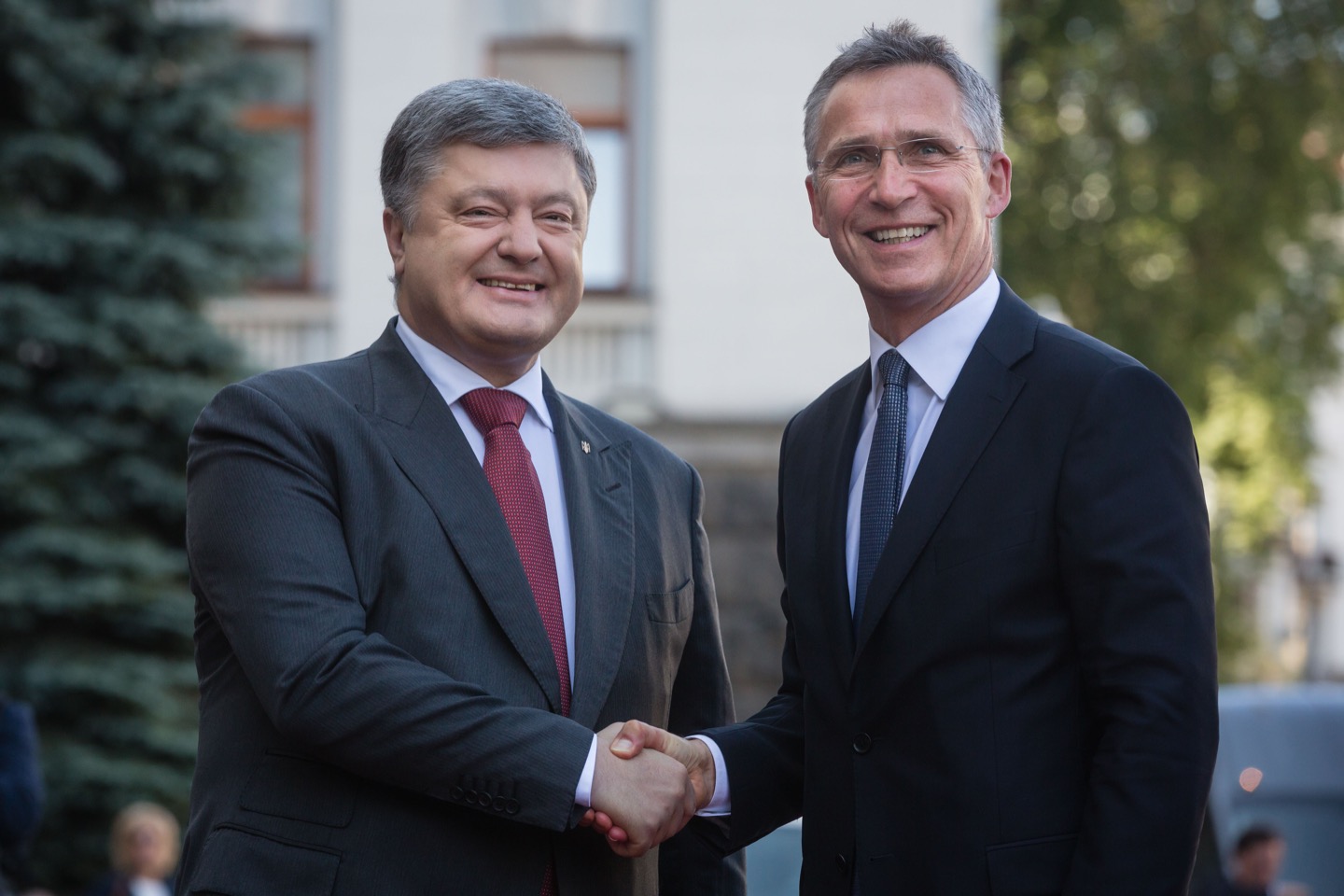
The political commitment made at Bucharest in 2008 remained in place, but the process did not reach accession. Meanwhile, support from individual countries grew, particularly after 2014. This dossier traces the decisions and distinguishes political commitments from their demonstrated consequences. Bucharest 2008 [1], Brussels 2021 [2].
Translation from Italian.
Contents
- 1. Four questions that are often conflated
- 2. Cooperation predates 2014
- 3. Bucharest 2008: a commitment without accession
- 4. Ukraine changed its policy
- 5. After 2014: more support, without membership
- 6. National missions: how to read the numbers
- 7. Supplies: announcement, authorisation and delivery
- 8. How much money, and what oversight?
- 9. The word “base” does not resolve the dispute
- 10. The scope of this dossier: intelligence cooperation
- 11. December 2021: what Moscow asked for
- 12. January 2022: disagreement and proposals
- Video and transcript
- 13. Key dates
- 14. The claims, one by one
- 15. Frequently asked questions
- 16. The takeaway
- Sources
1. Four questions that are often conflated
NATO may refer to the organisation, its commands or, imprecisely, Western countries as a group. That ambiguity distorts the debate.
The documents need to be read with four separate questions in mind:
- Membership: Was Ukraine a member of the Alliance?
- Cooperation: What agreements, programmes and supplies were in place?
- Authority: Who decided on and directed a particular activity?
- Combat: What evidence documents direct participation, as distinct from assistance?
A positive answer to the second question does not automatically answer the others. Likewise, a bilateral activity is not irrelevant simply because it is bilateral: that changes who is responsible, not whether the activity took place.
Public records reveal much of the cooperation. They do not provide a complete inventory of every classified activity. A gap in the evidence examined here should not be treated as categorical evidence of absence.
2. Cooperation predates 2014
The Partnership for Peace, which Ukraine joined in 1994, offered cooperation to partners without conferring membership. Its framework provided for transparency, democratic control of the armed forces, cooperation and consultations over a perceived threat. It did not provide a guarantee equivalent to collective defence among allies. PfP framework [3].
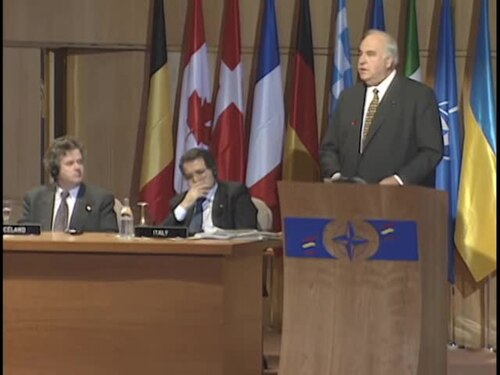
In July 1997 NATO and Ukraine signed the Charter on a Distinctive Partnership. It established a lasting framework for consultation through the NATO–Ukraine Commission and recognised the freedom of states to choose their own security arrangements. It was an institutional relationship, not an act of accession. 1997 Charter [4].
Madrid, 9 July 1997 · Signing of the NATO–Ukraine Charter
The 2002 Action Plan already recorded Ukraine’s long-term goal of joining NATO. It is therefore inaccurate to date all Euro-Atlantic aspirations to the aftermath of Maidan. It is equally inaccurate to imagine that Ukraine followed an uninterrupted political course: its choices changed over the following years. 2002 Action Plan [5].
3. Bucharest 2008: a commitment without accession
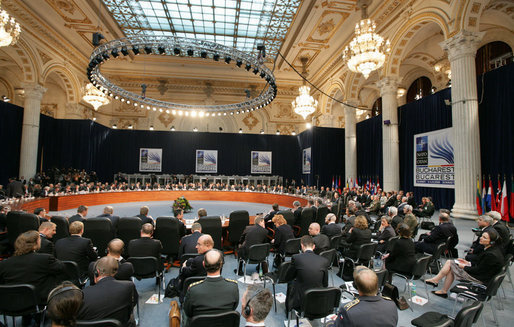
On 3 April 2008 allied leaders agreed that Ukraine and Georgia would become NATO members. In the same paragraph, however, they identified the MAP as the next step and left decisions on the applications to foreign ministers.
The distinction is precise: there was a collective political commitment to future membership, but the summit neither granted the MAP nor set an accession date. The language was neither politically inconsequential nor an act of accession. Bucharest Declaration, paragraph 23 [1].
In December the ministers reaffirmed Bucharest and introduced Annual National Programmes, or ANPs, without prejudging further decisions on the MAP. This is not a technicality: the document names the instruments separately. Communiqué of 3 December 2008 [6].
In 2009 a complementary declaration strengthened the NATO–Ukraine Commission’s role in overseeing that process. In June 2021 the allies reaffirmed future accession and the roles of the MAP and ANPs. None of this conferred membership. 2009 declaration [7], Brussels 2021 [2].
4. Ukraine changed its policy
Ukraine’s law of 1 July 2010 defined the country as non-aligned: it excluded participation in political-military alliances while retaining a constructive partnership with NATO. Non-alignment did not therefore end all cooperation. Historical text of Law 2411-VI, copy of the text [8].
The law of 23 December 2014 removed that designation and redirected cooperation towards meeting the criteria for accession. The 2014 wording is the one to use here, not the abbreviated version later introduced into the consolidated text. Law 35-VIII, archived text, copy of the text [9].
Constitutional Law 2680-VIII of 7 February 2019, signed by Petro Poroshenko on 19 February, enshrined the course towards the EU and NATO in the Constitution. This domestic decision mattered, but it could not unilaterally confer membership, which required decisions by the Alliance. Constitutional law, copy of the text [10], presidential record of the signing [11].
The chronology corrects two opposing simplifications: Ukraine’s bid did not come out of nowhere in 2014, nor had the country been on an uninterrupted march towards NATO since 1991.
5. After 2014: more support, without membership
In September 2014 the allies announced further initiatives on reforms and interoperability. In July 2016 the NATO–Ukraine Commission approved the Comprehensive Assistance Package, covering more than forty areas of support. Cooperation had institutional and administrative dimensions and was not limited to equipment. Wales 2014 [12], Warsaw 2016 [13].
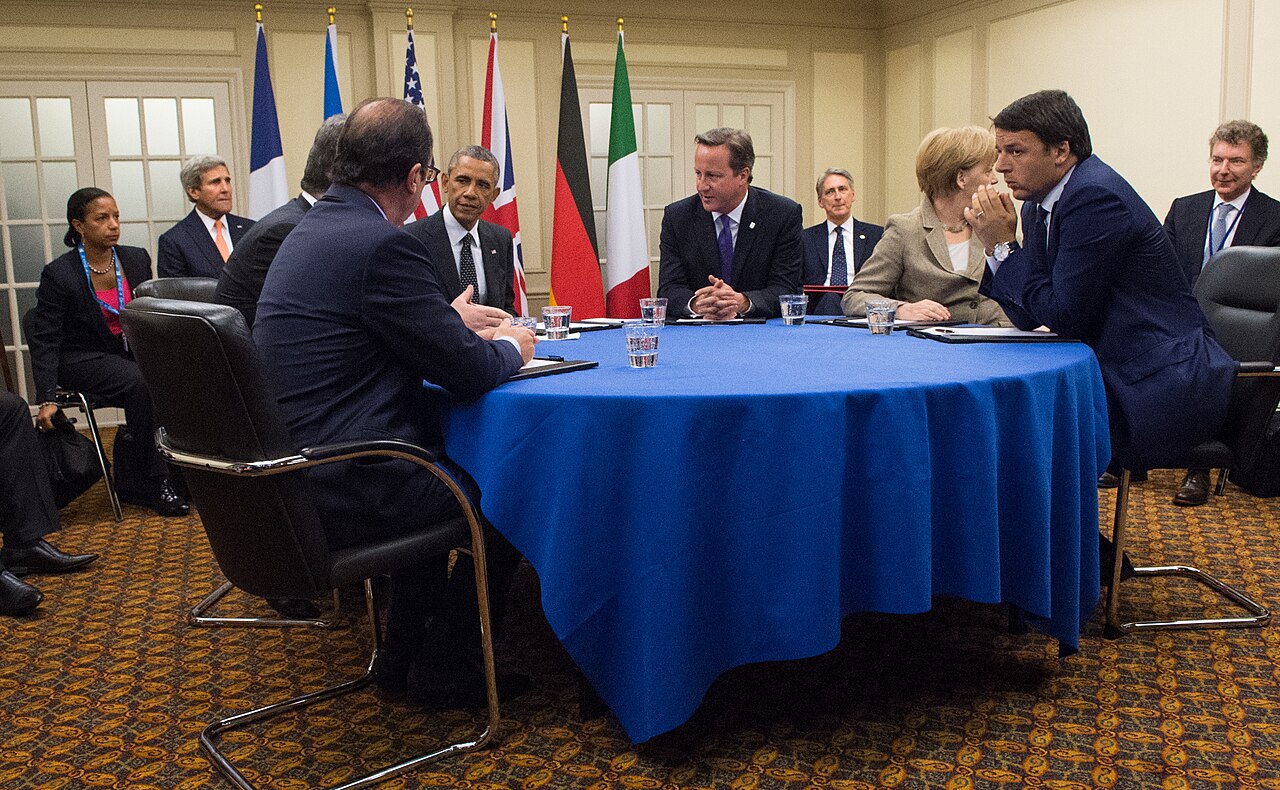
In June 2020 Ukraine became an Enhanced Opportunities Partner. The announcement explicitly said the status did not prejudge any decision on membership. Cooperation was growing, but the distinction between partner and ally remained both formal and substantive. NATO announcement of 12 June 2020 [14].
This is where accounts tend to diverge: Moscow attached strategic significance to increasing practical integration beyond the formal labels, while the allies distinguished that support from membership and the guarantees it entailed. Explaining the disagreement does not require discounting either the programmes or the legal and political distinction.
6. National missions: how to read the numbers
The United Kingdom, Canada and the United States documented programmes of their own. These should neither be grouped under a presumed NATO command nor portrayed as mere diplomacy. National does not mean isolated: Canada documented coordination with other countries through a multinational commission. That does not amount to NATO command.
In July 2017 London said Operation ORBITAL had trained more than 5,000 Ukrainians and involved more than 1,300 British military personnel since 2015. The latter was a cumulative figure, not the number present at any one time. In June 2021 another British announcement cited more than 21,000 people trained through ORBITAL and the maritime initiative. 2017 announcement [15], 2021 announcement [16].
On 26 January 2022 Canada said that Operation UNIFIER had trained nearly 33,000 Ukrainian military and security personnel since 2015 across more than 600 courses. These are Canadian government figures: the number of courses and the number of people are different measures. National Defence [17].
A U.S. Army article of 9 May 2022 attributes to General Joseph Hilbert a total of 23,000 Ukrainians trained under JMTG-U from the start of the mission through January 2022. The article appeared after the invasion, but the period covered predates it. This was neither a NATO-wide total nor a count of foreign personnel present at the same time. U.S. Army [18].
The series should not be added together as if they were a census of distinct people. That would require comparable definitions and checks for overlap. Exercises also have a history of their own: the U.S. Army dates Rapid Trident to 2006, not 2011. U.S. Army, 2021 [19].
Figures not to add together
Trained through UK ORBITAL and the maritime initiative, a cumulative figure reported in June 2021.
[16]Ukrainian military and security personnel trained since 2015, according to Canada in January 2022.
[17]Ukrainians trained under JMTG-U through January 2022; figure published by the U.S. Army in May.
[18]The figures come from national authorities, cover different periods and programmes, and may overlap. They do not count unique individuals, simultaneous presence or a NATO total.
7. Supplies: announcement, authorisation and delivery
The Congressional Research Service describes the shift from non-lethal assistance under the Obama administration to allowing lethal weapons under Trump. This was a change of policy, not the beginning of all U.S. assistance. CRS, 9 February 2022, copy of the text [20].
The 2018 and 2019 DSCA notifications on Javelins covered possible sales. The later CRS report traced the supplies; a notice of a possible sale does not by itself show that all items were delivered on the same date. The same caution applies to money: authorised value, commitments and spending are not interchangeable. CRS, 5 October 2021 version [21].
The British documentary record provides an especially clear sequence. On 17 January 2022 Ben Wallace announced defensive anti-tank systems in the House of Commons without naming the model or quantity. On 22 February Boris Johnson said that 2,000 anti-tank missiles had been supplied. On 9 March Wallace identified the initial supply as 2,000 NLAW, distinguishing it from the later total. Together, the three documents establish the initial figure as a British government statement, not as an independent inventory of individual deliveries. Hansard [22], 22 February [23], 9 March [24].
On 21 January 2022 Latvia also announced military assistance from the Baltic states. The announcement documents the decision made public; it does not by itself certify that each shipment arrived. In January 2019 Ukrinform reported the president’s announcement of an agreement for Turkish Bayraktar TB2s, without giving a quantity in the announcement it cited. We do not attribute a number to the president that the text does not contain. Latvian ministry [25], Ukrinform [26].
8. How much money, and what oversight?
The October 2021 CRS report put U.S. security assistance since 2014 at more than \$2.5 billion. This should not be confused with all economic support for Ukraine or with the much larger volumes in the years after February 2022. CRS 2021 [21].
To ask “how much?” is also to ask three other questions: which period, which programme and which accounting stage? Adding annual appropriations does not necessarily produce a comparable number to cumulative commitments. The CRS table distinguishes programmes and flags estimates; differing scopes do not justify treating the difference as missing money. CRS programme table, copy of the text [20].
Oversight existed, but its existence did not mean there were no problems. In report DODIG-2020-121 of 27 August 2020, the Department of Defense Inspector General examined enhanced end-use monitoring for certain categories of equipment. It found that Defense Department officials generally complied with the enhanced monitoring requirements for the Javelins examined. For night-vision devices, required physical inventories began in 2018; the report still identified reporting accuracy problems in January 2020.
The evaluation was conducted between July 2019 and March 2020. It did not certify all aid, did not cover the subsequent war and does not establish particular cases of trafficking or diversion from the administrative findings. It also did not address who commanded Ukrainian forces. Original report, summary and scope [27].
9. The word “base” does not resolve the dispute
In his speech on 21 February 2022, Putin portrayed the Western presence and assistance missions as effectively turning Ukraine into a hostile military platform. That was the Russian president’s stated position, not a finding established by the speech itself. Kremlin transcript, 21 February [28] · PDF copy of the official transcript [29].
Assessing a facility requires knowing who owns and operates it, under what agreement and under whose authority. A country does not have to cede its sovereignty to host a foreign base, so the absence of a transfer of sovereignty is not enough to refute such a claim.
The British memorandum of June 2021 described support for developing Ukrainian naval capabilities and infrastructure. It documents the intended purpose; it does not by itself establish that the projects were completed or that the facilities were under NATO command. British government announcement [16].
Ukraine’s Constitution prohibited foreign military bases on its territory. Applying that prohibition to a particular facility requires determining its actual status. Citing it does not show that every form of assistance violated it. The sources examined do not establish that the programmes described amounted to bases under Alliance command. Constitutional reference text, Article 17 [30].
10. The scope of this dossier: intelligence cooperation
Journalistic investigations of cooperation between U.S. and Ukrainian intelligence services must be treated separately from NATO records. A bilateral relationship between intelligence services is not, by definition, an Alliance operation.
This article does not use journalistic accounts of classified activity to put numbers on Western personnel taking part in combat or killed. We do not publish details of methods, sites or vulnerabilities. Claims based on anonymous sources require precise attribution and separate verification: two articles do not necessarily amount to two independent confirmations.
Leaving it outside this dossier does not mean classified cooperation did not exist. It means its scope cannot automatically be inferred from the public documents used here. In particular, information published in 2024 cannot be treated as a snapshot of 2021 without verification.
11. December 2021: what Moscow asked for
The proposals published by Russia’s Foreign Ministry on 17 December 2021 went beyond asking to postpone Ukrainian accession. The draft addressed to NATO states called for a halt to further enlargement, explicitly including Ukraine, and envisaged restrictions on military activities in several countries. The other draft, addressed to the United States, called for an end to further Alliance expansion and limited military cooperation with former Soviet states that were not already members.
These were Russian proposals, not agreements accepted by the other parties. The demands show that the dispute also concerned the structure of European security, not just the calendar for one country’s bid to join. NATO–Russia draft, Arts. 6–7, copy of the Russian ministry’s version [31] · U.S.–Russia draft, Art. 4, copy of the Russian ministry’s version [32].
The 1997 NATO–Russia Founding Act is a separate document. It contained commitments to military restraint framed in relation to the security environment it described at the time. It was not a treaty barring any future enlargement or partnership. It should not be substituted for the 2021 drafts or read as though the texts said the same thing. Founding Act [33].
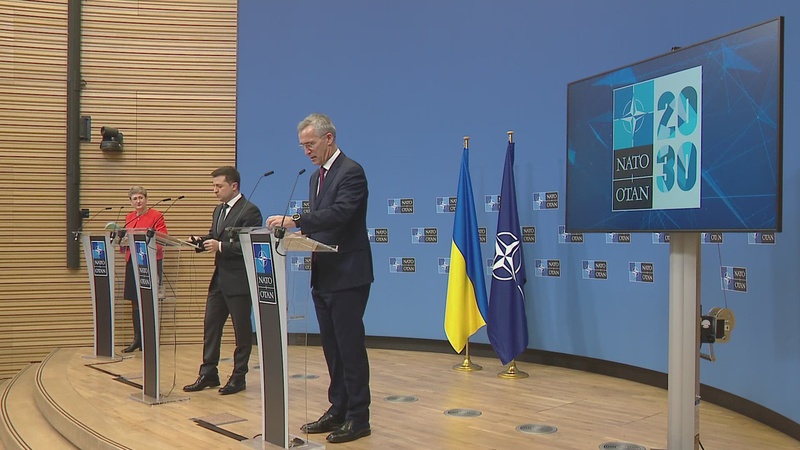
Brussels, 16 December 2021 · Jens Stoltenberg’s remarks
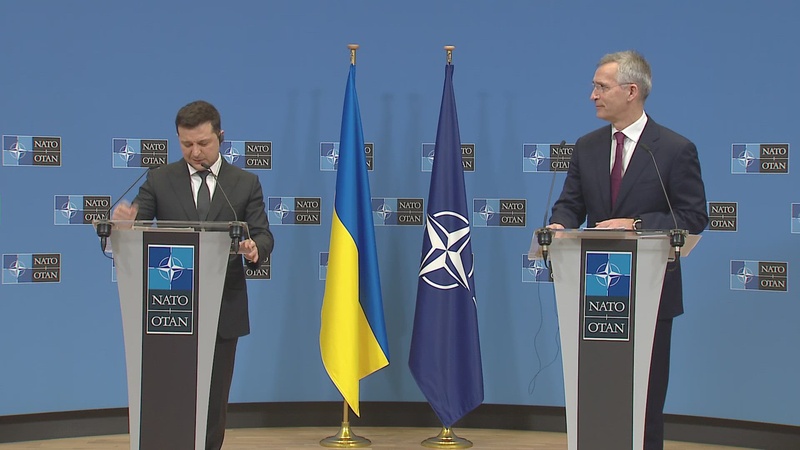
12. January 2022: disagreement and proposals
On 12 January Jens Stoltenberg said Russia was seeking a halt to new admissions and the withdrawal of forces from eastern allies. The allies instead reaffirmed states’ right to choose their own security arrangements and NATO’s open-door policy. The transcript records NATO’s stated position, not minutes agreed by all sides. 12 January press conference [34].
On 26 January Stoltenberg announced written proposals on NATO–Russia relations, European security, transparency and arms control, while refusing to give up Alliance principles. It is therefore inaccurate to describe those days as a total absence of dialogue, and equally inaccurate to equate willingness to negotiate on some matters with acceptance of Russia’s demands. 26 January press conference [35].
The documentary record shows which requests and responses were made public. It does not prove that any single concession would certainly have averted war. That is a counterfactual, not something a communiqué can verify.
Video and transcript
Press conference after the NATO–Russia Council, 12 January 2022 [36] (Q&A 1/2) · Official transcript [34].
The recording documents NATO’s stated position; it is not independent corroboration.
Brussels, 12 January 2022 · Press conference after the NATO–Russia Council
Jens Stoltenberg answers reporters’ questions after the meeting. The press conference records NATO’s position.
Key timeline
- 1994Milestone:Partnership for Peace [3]What it does not mean:NATO membership
- 1997Milestone:Charter on a Distinctive Partnership [4]What it does not mean:Collective defence guarantee
- 2002Milestone:Membership goal in the Action Plan [5]What it does not mean:Entry already agreed
- April 2008Milestone:Bucharest political commitment [1]What it does not mean:MAP granted or date set
- December 2008Milestone:Annual National Programmes [6]What it does not mean:Automatic equivalence to the MAP
- 2010Milestone:Law on non-alignment [8]What it does not mean:End of NATO cooperation
- 2014Milestone:End of non-alignment; increased Allied support [9][12]What it does not mean:NATO membership
- 2016Milestone:Comprehensive Assistance Package [13]What it does not mean:Transfer of command of Ukrainian forces
- 2019Milestone:EU/NATO goal in the Constitution; signed 19 February [10][11]What it does not mean:Unilateral accession
- 2020Milestone:Enhanced Opportunities Partner [14]What it does not mean:Advance decision on accession
- 2021Milestone:Bucharest position reaffirmed; Russian drafts in December [2][31][32]What it does not mean:Security treaties signed
- January–February 2022Milestone:Further assistance and diplomatic discussions [17][22][23][34][35]What it does not mean:National assistance under NATO command
14. The claims, one by one
Strong evidence · For the attributed statements
Governments stated the totals for the national programmes and for the initial British supply in the documents cited.
Green means the statements are correctly documented, not that every person or delivery has been independently audited. [15] [16] [17] [18] [19] [20]
None of these assessments warrants a “FALSE” stamp on a claim not identified by author, date and checkable wording. The SINE VELO method.
15. Frequently asked questions
Was Ukraine already in NATO “in practice”?
That is a political expression, not a precise status. Cooperation was real and growing, but did not automatically confer membership, collective defence or Alliance command. Anyone using “in practice” needs to specify what concrete feature they mean.
Was accession promised in 2008?
Yes, as a political commitment. The communiqué provided for future membership; it did not grant the MAP or set a deadline. Leaving out either half distorts the document.
Does non-alignment mean a country cannot cooperate with anyone?
Not under that Ukrainian text: the 2010 law combined non-alignment with continued constructive cooperation with NATO. The wording chosen matters more than a broader abstract definition.
Does that mean instructors from NATO countries were absent?
No. National programmes are documented. The point is to attribute them correctly and not mistake cumulative instructor or trainee numbers for the number present at one time.
Can the British, Canadian and U.S. figures be added together?
Not as a definitive total of distinct people. Programmes use different time periods and units of measure, and some people may have participated more than once. An arithmetic sum is not a census.
Were the 2,000 NLAW already part of the initial support?
The British statements of 22 February and 9 March, read alongside the 17 January announcement, support that account. Attribution to the British government must remain explicit.
Does the U.S. audit show that no weapon was ever diverted?
No. It covers specific categories and a specific period. It does not clear every past or future transfer, nor does every gap in monitoring prove trafficking.
Is a U.S.-funded facility automatically a NATO base?
No. Funding, ownership, operation and command are separate questions. Classification depends on specific agreements and facts, not a blanket label.
Does Western cooperation alone establish that the invasion was necessary?
No. Documenting cooperation, reconstructing a perception of threat and evaluating a justification for war are separate tasks. A figure about aid or partnerships cannot resolve all three.
Can the documents tally the “NATO generals killed” before 2022?
Not the documents examined here. Such a claim requires identities, dates, roles and specific evidence. It cannot be inferred from trainee numbers or from the existence of a mission.
16. The takeaway
Before February 2022 Ukraine was not an ally formally protected by NATO, but neither was it a country without military ties to the West. The record shows expanding cooperation, shifts in Ukrainian policy, national programmes and growing strategic disagreement with Moscow.
The decisive distinction is between what documents establish and what interpretation adds. Not every initiative of a NATO member is a NATO initiative; the absence of membership does not erase the support received; and support does not automatically establish foreign command.
This dossier is part of the Russia–Ukraine conflict hub. For context: Maidan, Crimea 2014, Russia and Ukraine: comparing their arguments. For more on accountability: following the money and how aid is monitored.
Sources
- Bucharest 2008
A · Primary source or official page · www.nato.int · Access checked during layout.
B · Passages supported or put in context: In brief, 3. Bucharest 2008: a commitment without accession.
- Brussels 2021
A · Primary source or official page · www.nato.int · Access checked during layout.
B · Passages supported or put in context: In brief, 3. Bucharest 2008: a commitment without accession.
- PfP framework
A · Primary source or official page · www.nato.int · Access checked during layout.
B · Passages supported or put in context: 2. Cooperation predates 2014.
- 1997 Charter
A · Primary source or official page · www.nato.int · Access checked during layout.
B · Passages supported or put in context: 2. Cooperation predates 2014.
- 2002 Action Plan
A · Primary source or official page · www.nato.int · Access checked during layout.
B · Passages supported or put in context: 2. Cooperation predates 2014.
- Communiqué of 3 December 2008
A · Primary source or official page · www.nato.int · Access checked during layout.
B · Passages supported or put in context: 3. Bucharest 2008: a commitment without accession.
- 2009 declaration
A · Primary source or official page · www.nato.int · Access checked during layout.
B · Passages supported or put in context: 3. Bucharest 2008: a commitment without accession.
- Historical text of Law 2411-VI, copy of the text
A · Accessible copy of the document · docs.dtkt.ua · Access checked during layout.
B · Passages supported or put in context: 4. Ukraine changed its policy.
- Law 35-VIII, archived text, copy of the text
A · Accessible copy of the document · docs.dtkt.ua · Access checked during layout.
B · Passages supported or put in context: 4. Ukraine changed its policy.
- Constitutional law, copy of the text
A · Accessible copy of the document · docs.dtkt.ua · Access checked during layout.
B · Passages supported or put in context: 4. Ukraine changed its policy.
- presidential record of the signing
A · Primary source or official page · www.president.gov.ua · Direct access failed on recheck.
B · Passages supported or put in context: 4. Ukraine changed its policy.
- Wales 2014
A · Primary source or official page · www.nato.int · Access checked during layout.
B · Passages supported or put in context: 5. After 2014: more support, without membership.
- Warsaw 2016
A · Primary source or official page · www.nato.int · Access checked during layout.
B · Passages supported or put in context: 5. After 2014: more support, without membership.
- NATO announcement of 12 June 2020
A · Primary source or official page · www.nato.int · Access checked during layout.
B · Passages supported or put in context: 5. After 2014: more support, without membership.
- 2017 announcement
A · Primary source or official page · www.gov.uk · Access checked during layout.
B · Passages supported or put in context: 6. National missions: how to read the numbers.
- 2021 announcement
A · Primary source or official page · www.gov.uk · Access checked during layout.
B · Passages supported or put in context: 6. National missions: how to read the numbers, 9. The word “base” does not resolve the dispute.
- National Defence
A · Primary source or official page · www.canada.ca · Access checked during layout.
B · Passages supported or put in context: 6. National missions: how to read the numbers.
- U.S. Army · Accessible official version
A · Primary source or official page · www.army.mil · Access checked during layout.
B · Passages supported or put in context: 6. National missions: how to read the numbers.
- U.S. Army, 2021 · Accessible official version
A · Primary source or official page · www.army.mil · Access checked during layout.
B · Passages supported or put in context: 6. National missions: how to read the numbers.
- CRS, 9 February 2022, copy of the text
A · Accessible copy of the document · www.everycrsreport.com · Access checked during layout.
B · Passages supported or put in context: 7. Supplies: announcement, authorisation and delivery, 8. How much money, and what oversight?.
- CRS, 5 October 2021 version
A · Accessible copy of the document · www.everycrsreport.com · Access checked during layout.
B · Passages supported or put in context: 7. Supplies: announcement, authorisation and delivery, 8. How much money, and what oversight?.
- Hansard · Accessible official version
A · Primary source or official page · hansard.parliament.uk · Access checked during layout.
B · Passages supported or put in context: 7. Supplies: announcement, authorisation and delivery.
- 22 February
A · Primary source or official page · www.gov.uk · Access checked during layout.
B · Passages supported or put in context: 7. Supplies: announcement, authorisation and delivery.
- 9 March
A · Primary source or official page · www.gov.uk · Access checked during layout.
B · Passages supported or put in context: 7. Supplies: announcement, authorisation and delivery.
- Latvian ministry
A · Primary source or official page · www.mod.gov.lv · Access checked during layout.
B · Passages supported or put in context: 7. Supplies: announcement, authorisation and delivery.
- Ukrinform
A · Reporting by the named outlet · www.ukrinform.net · Access checked during layout.
B · Passages supported or put in context: 7. Supplies: announcement, authorisation and delivery.
- Original report, summary and scope
A · Primary source or official page · www.oversight.gov · Access checked during layout.
B · Passages supported or put in context: 8. How much money, and what oversight?.
- Kremlin transcript, 21 February
A · Primary source or official page · en.kremlin.ru · Direct access failed on recheck.
B · Passages supported or put in context: 9. The word “base” does not resolve the dispute.
- PDF copy of the official transcript
A · Accessible copy of the document · thelawlibrary.github.io · Access checked during layout.
B · Passages supported or put in context: 9. The word “base” does not resolve the dispute.
- Constitutional reference text, Article 17
A · Primary source or official page · zakonst.rada.gov.ua · Access checked during layout.
B · Passages supported or put in context: 9. The word “base” does not resolve the dispute.
- NATO–Russia draft, Arts. 6–7, copy of the Russian ministry’s version
A · Accessible copy of the document · avalonlibrary.net · Access checked during layout.
B · Passages supported or put in context: 11. December 2021: what Moscow asked for.
- U.S.–Russia draft, Art. 4, copy of the Russian ministry’s version
A · Accessible copy of the document · augengeradeaus.net · Access checked during layout.
B · Passages supported or put in context: 11. December 2021: what Moscow asked for.
- Founding Act
A · Primary source or official page · www.nato.int · Access checked during layout.
B · Passages supported or put in context: 11. December 2021: what Moscow asked for.
- 12 January press conference
A · Primary source or official page · www.nato.int · Access checked during layout.
B · Passages supported or put in context: 12. January 2022: disagreement and proposals, Video and transcript.
- 26 January press conference
A · Primary source or official page · www.nato.int · Access checked during layout.
B · Passages supported or put in context: 12. January 2022: disagreement and proposals.
- Press conference after the NATO–Russia Council, 12 January 2022
A · Primary source or official page · www.nato.int · Access checked during layout.
B · Passages supported or put in context: Video and transcript.
- Mikhail Palinchak / President.gov.ua · CC BY 4.0
A · Wikimedia Commons · commons.wikimedia.org · Access checked during layout.
B · Kyiv, 10 July 2017. Poroshenko and Stoltenberg on the occasion of the NATO–Ukraine Commission. Archive photograph of political cooperation, not accession.
- Chris Greenberg / White House · White House · Public domain in the United States
A · Wikimedia Commons · commons.wikimedia.org · Access checked during layout.
B · Bucharest, 3 April 2008. North Atlantic Council summit meeting with invitees. The photograph does not show a MAP being granted.
- Wikimedia Commons · U.S. Department of State / Flickr
A · U.S. Department of State · Image copy and record consulted on Wikimedia Commons, which links to the original archive · Public domain in the United States
B · Newport, 4 September 2014. Obama, Poroshenko, Kerry and other leaders meet on the sidelines of the NATO summit. The photograph shows that discussion, separate from the formal NATO–Ukraine Commission meeting.
- Wikimedia Commons · European Commission Audiovisual Service · CC BY 4.0
A · Étienne Ansotte / European Commission Audiovisual Service / © European Union, 2016 · Image copy and record consulted on Wikimedia Commons, which links to the original archive
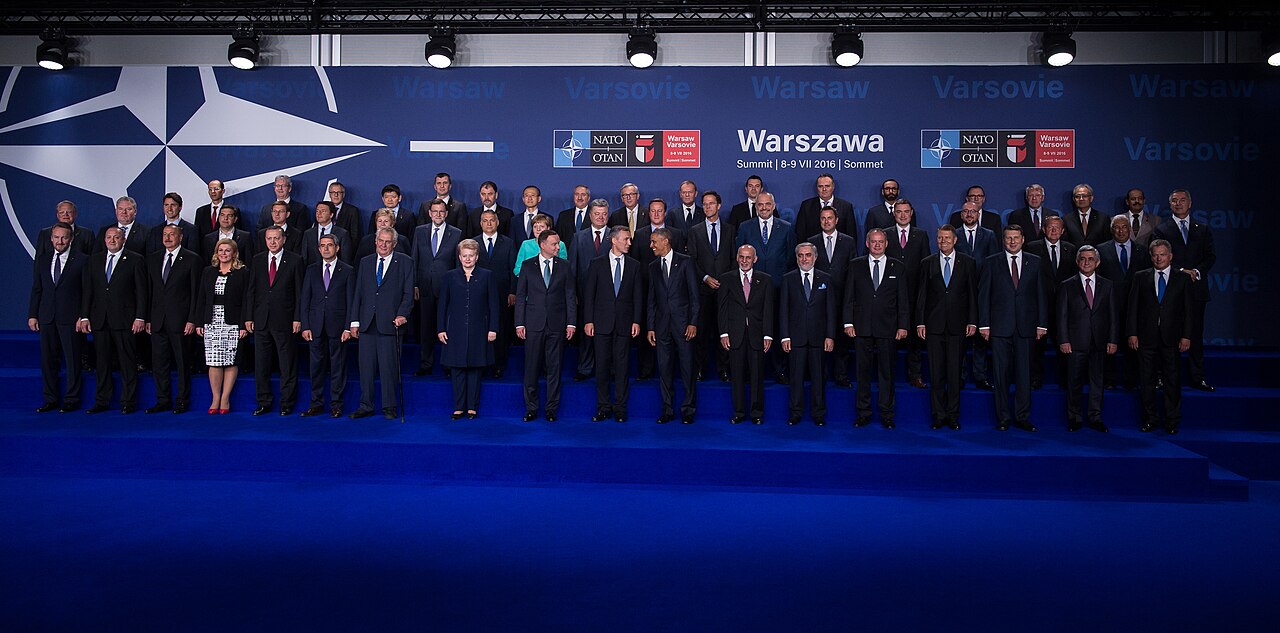
B · Warsaw, NATO summit of 8–9 July 2016. Group photograph with Petro Poroshenko. It records attendance at the summit. The communiqué is the record of the assistance package’s approval.
- DVIDS · 2271809 · DVIDS Copyright
A · Staff Sgt. Adriana Diaz-Brown / U.S. Army / DVIDS · Public domain in the United States
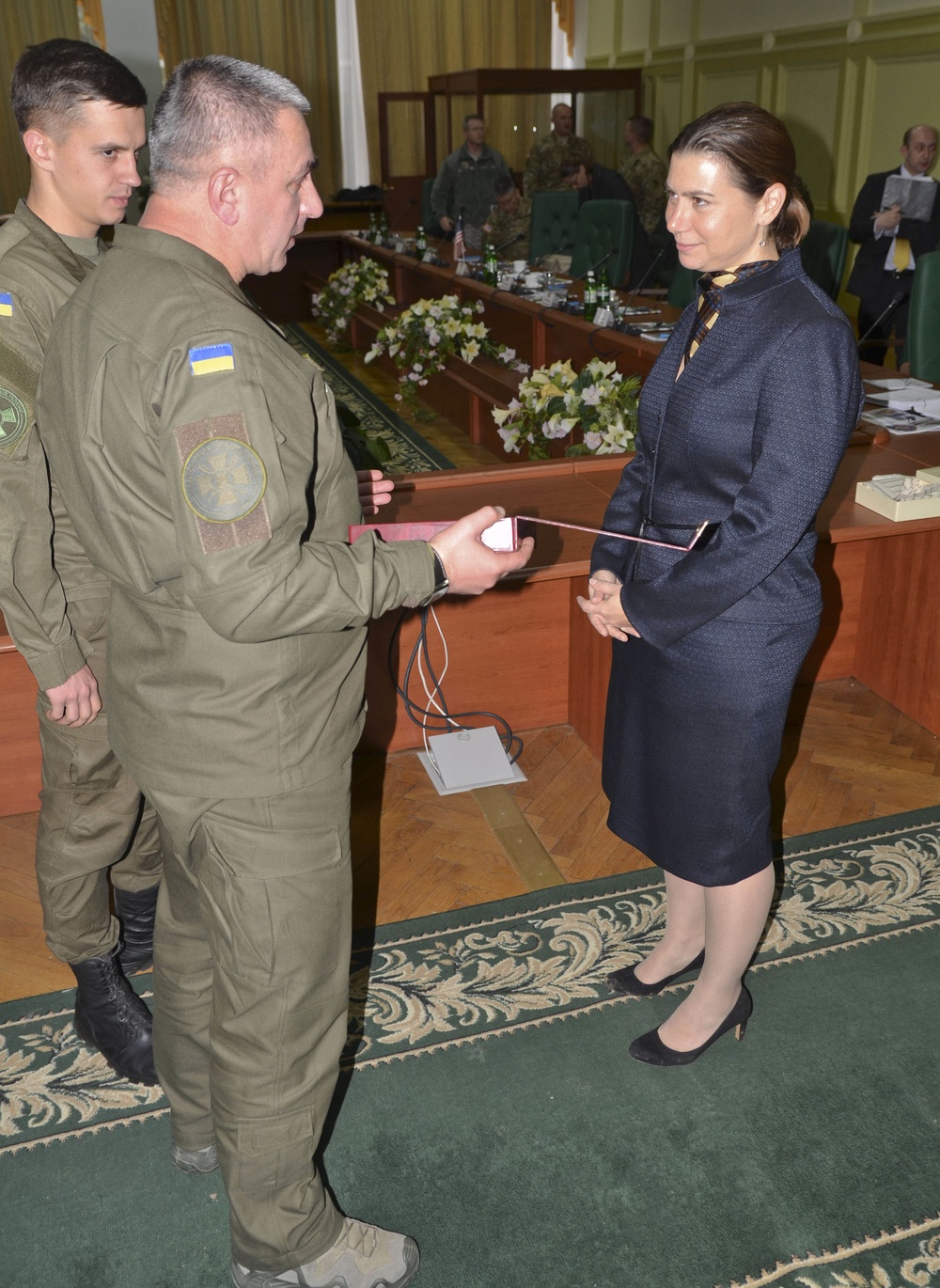
B · Ukraine, 6 November 2015. Mykola Balan and Elissa Slotkin at the closing ceremony of Fearless Guardian, a US programme. The photograph records the ceremony. The programme’s command and activities require separate evidence.
- Wikimedia Commons · Clinton Presidential Library / YouTube
A · White House Television · Courtesy; William J. Clinton Presidential Library · Public domain in the United States
B · White House Television footage of the signing ceremony. The still comes from the archive video. The transcript records Bill Clinton’s remarks.
- Read the transcript
A · White House / U.S. National Archives · 1997-07-09
B · The transcript records Bill Clinton’s remarks.
- NATOchannel / DVIDS · 825928 · DVIDS Copyright
A · NATO / NATOchannel · DVIDS · 2021-12-16 · Public domain in the United States
B · Opening remarks at the joint press point with Volodymyr Zelenskyy. The video records the secretary general’s stated position.
- NATOchannel / DVIDS · 825929 · DVIDS Copyright
A · NATO / NATOchannel · DVIDS · 2021-12-16 · Public domain in the United States
B · The Ukrainian president’s opening remarks at the same press point. The footage records the public statements.
- Read the transcript
A · NATO · 2021-12-16
B · Opening remarks at the joint press point with Volodymyr Zelenskyy. The video records the secretary general’s stated position. The Ukrainian president’s opening remarks at the same press point. The footage records the public statements.
- NATO Archive · NATO / YouTube · NATO content use
A · NATO · 2022-01-12
B · Jens Stoltenberg answers reporters’ questions after the meeting. The press conference records NATO’s position.


