
El Fasher, from siege to mass killings: what the documents establish
Eighteen months of siege, mass killings and civilians fleeing: UN investigations, satellite evidence and the parties’ responses, with the limits of every toll.
In one minute
El Fasher, the capital of North Darfur, did not fall after a single battle. Its capture by the Rapid Support Forces, the RSF, in October 2025 ended around eighteen months of siege, shelling, food shortages and forced displacement. It was Darfur’s last major regional capital defended by the Sudanese Armed Forces, the SAF, and allied forces. [1] [2]
The picture emerging from the reports examined does not rest solely on the combatants’ accusations. It includes survivors’ testimony, footage examined by investigators and satellite analysis. This evidence supports the occurrence of mass killings, including of civilians and people no longer able to fight. It does not, however, establish a definitive total death toll. [1] [2] [3]
OHCHR, the UN Human Rights Office, documents more than 6,000 people killed between 25 and 27 October. That toll belongs to its investigation; it is not a complete census. The figure of more than 460 patients and companions killed at the Saudi hospital needs additional caution: its circulation in several documents does not establish verification through several independent chains of evidence. [2] [4]
The RSF denies the hospital massacre and portrays violations as individual acts, announcing arrests. The independent UN fact-finding mission, the FFM, instead describes an organized operation and concludes that genocidal intent is the only reasonable inference, while describing indicators pointing to genocide. This is the mission’s attributed conclusion, not merely a warning about risk. An investigative conclusion and a judgment are different things. The absence of a judgment does not invalidate the evidence gathered or justify erasing the mission’s assessment. [1] [5] [6] [7]
The parties’ accounts
Frequently asked questions
What happened in El Fasher in October 2025?
How many people were killed?
What did the investigations conclude about genocide?
RSF: capture, promises of protection and denials
On 26 October 2025, the RSF channel announced the capture of the 6th Infantry Division. Its language was that of liberation, not violence against the population. A statement issued that day promised civilian protection, safe passage and respect for safeguards for prisoners. These texts document what the command said. They do not establish that its promises were kept. [8] [9]
On 27 October, the spokesperson claimed sweeping operations against people described as terrorists and mercenaries, including as they attempted to flee. This is important for reconstructing the official portrayal of the operation, but it does not allow those labels to be applied automatically to everyone on the exit routes. Precisely who was attacked, and in what circumstances, is what needs to be established. [10]
On 29 October, Mohamed Hamdan Dagalo, Hemedti, acknowledged violations and announced an investigation, according to the account reported by the FFM. This reconstruction relies on the FFM and the video caption, not on a complete independent transcript of the footage. The next day, the RSF denied the Saudi hospital massacre, claimed hospitals were no longer operating, issued an order on civilian protection and announced the arrest of the commander known as Abu Lulu. [11] [6] [12] [13] [1]
In January 2026, an RSF delegation described the violations as individual acts. The following May, the movement said Abu Lulu was detained and facing a special military court. The material gathered does not include judicial records allowing the proceedings and their outcome to be checked. An announced arrest, actual custody, a trial and a conviction are not synonyms. [7] [14]
SAF: withdrawal presented as a decision to spare civilians
According to Sudan Tribune’s report, on 27 October Abdel Fattah al-Burhan said he had authorized withdrawal to spare the remaining population and the rest of the city. The army accused the RSF of mass killings, sexual violence and forced displacement. The original televised speech was not consulted: this is therefore an account reported by a news outlet, not a primary transcript checked by the newsroom. [15]
This reconstruction must not, however, make the SAF appear blameless. OHCHR’s report on the siege also documents army airstrikes and artillery shelling by the SAF and Joint Forces. The sources examined do not allow all victims of these operations to be quantified separately. The focus of the investigations into the final capture on the RSF does not erase the other combatants’ conduct during the siege. [16]
Images and audiovisual testimony
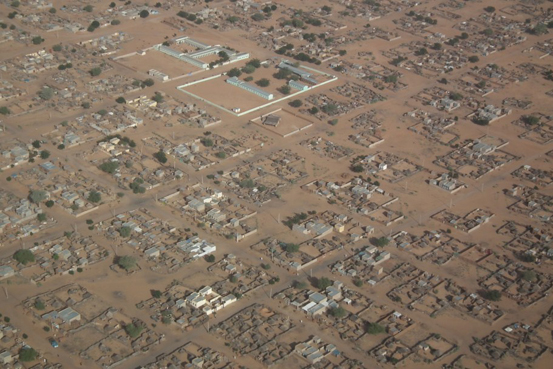
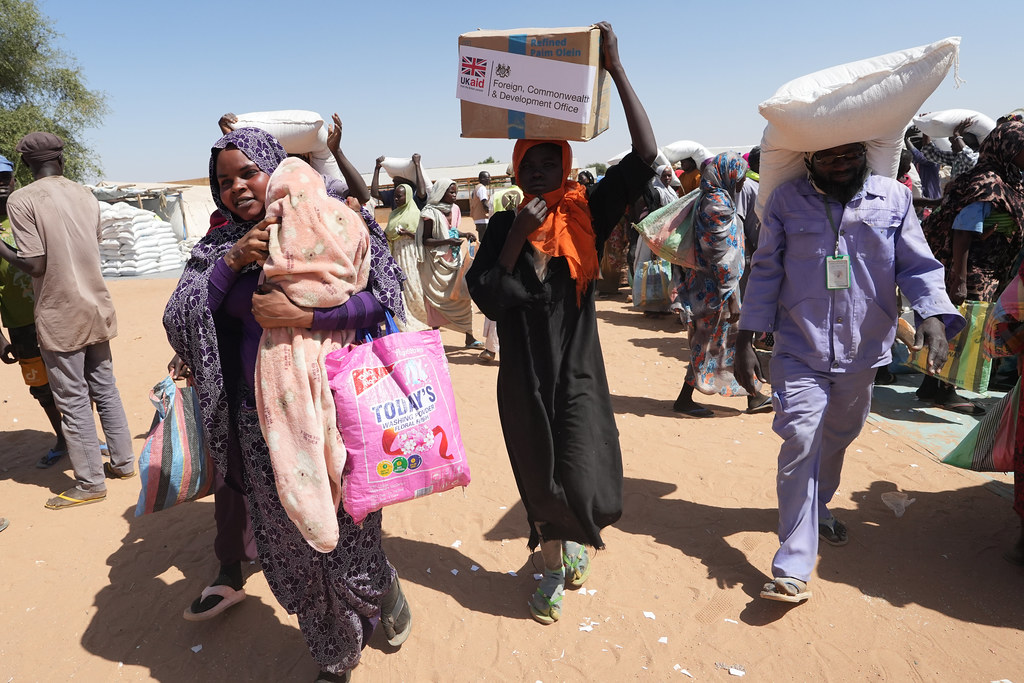
UNHCR, 6 November 2025: an agency colleague describes families arriving in Tawila. The OHCHR/WHO briefing of 31 October reports collected testimony. Both are contextual materials.
The archive photographs provide context. Videos open on the source site.
Go to video sources · UNHCR · Families fleeing El Fasher arrive in Tawila · 2025-11-06 · UN Geneva · OHCHR / WHO press briefing · 2025-10-31
Why El Fasher mattered
The war between the SAF and RSF began on 15 April 2023. By late November, the RSF controlled four of Darfur’s five capitals. El Fasher remained a military, administrative and humanitarian hub, but also a place where people already forced to flee had gathered. Describing it simply as a military position leaves out a crucial part of its recent history. [1] [2]
Its defenders included the SAF’s 6th Division, the Joint Forces and armed civilians known as mustanfareen. Movements led by Minni Minawi and Jibril Ibrahim, signatories to the Juba agreement, were among the army’s allies. On the opposing side, the FFM describes the RSF supported by local Arab militias. Armed groups’ community affiliations cannot be projected onto every civilian from the same community: precisely this conflation of identity, territory and assumed political allegiance appears in testimony about persecution. [1]
Abu Shouk and Zamzam camps housed people from Fur, Berti, Masalit, Tama and other Darfur communities. Many had already been displaced during the violence of 2003–2004. Their journey in 2025 was not necessarily a first flight, but another move from a refuge that had become unsafe to somewhere increasingly difficult to reach. Understanding the flight requires considering the city, the camps and the routes toward Tawila, Garni and other centers, not only the front lines. [1] [2]
Eighteen months of siege, not a single week
The encirclement is dated to May 2024. On 13 June, the Security Council adopted resolution 2736, demanding that the RSF halt the siege. The resolution does not verify every subsequent episode: it does document that the siege was recognized as an international concern long before the city fell. [19]
For May–December 2024, OHCHR recorded at least 782 civilians killed and 1,143 injured, warning that the figures were incomplete. These data concern a specific phase and must not be added mechanically to every figure below: time periods, categories and the completeness of reporting differ. [16]
The offensive against Zamzam in April 2025 opened another chapter. OHCHR’s report covering 11–13 April documents at least 1,013 civilians killed. In some passages, the FFM uses a period also including 14 April. That difference should be visible when accounts are compared, not concealed by choosing a date without explanation. Zamzam is not the same event as the killings during October’s capture, but it helps explain the pressure on the city and further displacement. [20]
The siege also operated through everyday life: markets, community kitchens, healthcare facilities, access to water and the ability to transport food. The reports describe trucks turned away and people attacked while carrying food. The issue was not just occupied territory, but whether life could continue there. Characterizing starvation as a method of warfare must be attributed to the investigations supporting that assessment; using the word famine without specifying the analysis or classification behind it is insufficient. The original IPC classifications have not been checked in this reconstruction. [1] [2]
The earthworks and the promise of escape
From May 2025, imagery analyzed by Yale shows construction of earthen barriers. By 27 August, the observed route extended over 31 kilometers. The laboratory interprets this configuration as an enclosure capable of trapping the population. The structures’ physical presence and the interpretation of their operational significance are connected but distinct levels of analysis. Yale’s term describing a killing zone is not a satellite measurement: it is its interpretation of the arrangement. [21]
Testimony collected by the FFM also describes trenches around two meters wide and more than two and a half meters deep. The relationship between imagery and accounts matters: a satellite shows structures and changes in the terrain; a person can describe how crossings were guarded and what happened to those attempting to cross. Neither source automatically replaces the other. [1]
Between 31 July and 1 August, according to OHCHR, figures from the RSF-aligned Ta’sis coalition invited civilians to head toward Garni and promised safety. The original statements were not consulted. The investigation’s central question can nevertheless be tested against subsequent events: a corridor is not safe because it is announced as such, but because people can use it without being attacked, arbitrarily detained or separated from relatives. Testimony about barriers and escape routes challenges precisely that promise. [2]
The final weeks before the fall
The approach to the final offensive included attacks on places with a substantial civilian presence. On 19 September, Al-Safiya mosque in the Daraja Oula neighborhood was hit. The reports give differing tolls: 67 civilians according to OHCHR, around 70 according to the FFM, and around 78 in the Yale report examined. Adding them would be wrong, and forcing them into a falsely precise figure is unnecessary. They are accounts of the same episode, with differences in sources and counting. [1] [2] [22]
For Dar al-Arqam, between 10 and 11 October, the FFM reports testimony describing dozens of bodies; UNICEF reports at least 17 children killed. The figure for children does not equal the total death toll, and UNICEF’s statement, in the passage examined, does not identify the attacker. That figure alone does not establish responsibility for the attack. [1] [23]
On 23 and 24 October, OHCHR reports around 300 civilians killed in the Abu Shouk neighborhood. These episodes precede or overlap the start of the final phase, making it unhelpful to describe the capture as a single instant. A chronology must show the military advance, withdrawal orders and violence against those who stayed or fled. [2]
24–30 October: the sequence of the capture
24 October. According to the FFM, the SAF received orders to withdraw. The RSF’s final offensive began that night. Issuing the order and completing the withdrawal were not the same event. [1] [2]
25 October. Army forces left the 6th Division headquarters. The FFM also reconstructs the disruption of the defenders’ communications, attributed to RSF electronic interference. This is the mission’s reconstruction, not a technical measurement conducted by the newsroom. [1]
26 October. The RSF entered the city and announced the capture of the headquarters. This is a key date in the capture, but it does not imply that every neighborhood was already under stable control. The investigations place incidents at the university and attacks in the healthcare area on that day. [8] [1] [2]
27 October. Al-Burhan’s public announcement of the withdrawal made the military defeat explicit. The FFM dates to that day three videos showing Abu Lulu killing detainees in civilian clothes. Here, the footage is described through the mission’s authentication work, not independently verified by SINE VELO. [15] [1]
28 October. OHCHR places full RSF control, including the airport, by this date. WHO dates the reported killing of more than 460 patients and companions at the Saudi hospital to that day; its statement was published on the 29th. The event date and statement date must remain separate. [2] [4]
29 and 30 October. Hemedti’s speech, the RSF denial of the hospital massacre, the civilian-protection order and the announcement of arrests followed. Operations continued until 30 October according to OHCHR’s sources. Its report therefore covers 24–30 October, whereas its headline death toll concerns 25–27 October. [11] [6] [12] [13] [2]
How they investigated: two UN teams, not wholly separate evidence collections
The FFM reports interviewing 320 witnesses, including 131 in Chad and South Sudan in 2026, and authenticating 25 videos. Its work connects testimony, audiovisual material and satellite observation. The interview count describes the investigation’s stated basis; it does not mean 320 independent confirmations of every episode. [1]
OHCHR describes two missions: one to eastern Chad from 17 November to 3 December 2025, interviewing 93 victims and witnesses, and another to Al Afad in northern Sudan from 25 November to 3 December, interviewing 53 more people. There were also three focus groups with 43 participants. The report was additionally informed by the High Commissioner’s January 2026 visit. These categories must not be added mechanically to produce a count of witnesses who were certainly all different individuals. [2]
The teams have distinct mandates and investigations, but institutional independence does not guarantee that every item of evidence is new. Both worked with people who fled to Chad; potential overlap among witnesses is unknown. Both also reference Yale analyses. Convergence strengthens the picture when it concerns genuinely different evidence; repeating the same satellite finding or testimony does not multiply the evidence. [1] [2]
Personal sources are protected and not all identifying details are published. This safeguards survivors and witnesses but limits outside scrutiny: we can examine the stated method and public findings, not repeat every interview. OHCHR expressly uses the standard of reasonable grounds to believe, not absolute certainty or the standard for a criminal conviction. [2]
The evidence: the university, exits and people no longer fighting
The university is central to the reconstruction. OHCHR reports around 500 killed at Al-Rashid dormitory and around 600 in other university facilities. The FFM describes hundreds of victims and testimony concerning 150–200 bodies in one building. These are different levels of aggregation and observation: bodies seen by a witness cannot be added to a location’s toll as though they were certainly additional victims. [2] [1]
At the earthworks and along exit routes, the reports describe groups of men separated from women and children and subsequently killed. The evidentiary value depends not simply on the horror of the account, but on its location, its potential corroboration by other testimony and its consistency with footage or images. Testimony gathered in different places may strengthen other accounts; the overlap between the two UN bodies’ samples is nevertheless unknown. Presenting each quotation from the two reports as additional independent evidence would be misleading. [1] [2]
The investigations also address killings of people who had surrendered. Distinguishing civilians, combatants and people hors de combat is not an exercise in minimizing casualties: it describes accurately who was attacked and what protection they had. A uniform or earlier participation in combat does not prove that a prisoner was still fighting. For an incident involving a unit of 130 men, OHCHR reports testimony that 103 were killed after surrendering: the figure remains attributed to that witness in the report. [2]
The Saudi hospital: repetition does not make a figure independent
WHO’s statement of 29 October condemns the reported killing of more than 460 patients and companions. The wording identifying a received report, rather than a direct on-site count, is essential. The FFM repeats an estimate of the same order, but the sources examined do not identify an independent origin for the figure. Two authoritative documents may therefore relay the same original information. They are not automatically two counts. [4] [1]
Yale’s analyzed imagery adds a different kind of indication: objects consistent with bodies in the hospital compound and subsequent burn marks. It does not identify individuals, establish by itself that they were patients, or allow the number 460 to be derived. OHCHR also reports the killing of seven healthcare workers on 26 October on the basis of one account. That incident must also remain distinct from the total reported by WHO. [24] [3] [2]
The RSF denial includes the claim that hospitals were no longer operating. WHO, by contrast, describes the Saudi hospital as still partly operational. The material examined also includes later RSF captions about assistance to patients inside it. These elements challenge the denial, but captions cannot replace verification of the videos’ location, date and content. Activity filmed after the capture does not by itself establish conditions on every previous day. Three questions must therefore remain separate: the attack, the death toll and the facility’s operational status at the relevant time. [6] [25] [4]
What satellites see, and what they cannot count
Yale’s work compares images taken at different times. The laboratory identifies clusters of objects whose size and arrangement are consistent with bodies, changes in terrain, burn marks and the subsequent disappearance of some clusters. Its December 2025 report identifies at least 150 clusters and reconstructs the removal of some of them. A cluster is not one victim, nor a constant number of victims. [3]
The time sequence is more informative than one isolated image, but it does not remove the limits of remote observation. The traces do not allow individuals to be identified, and areas of disturbed earth are not automatically all mass graves. Removal and burning can be interpreted within the overall picture; on-site forensic examination remains different from satellite analysis. [3]
The same Yale report contains both an explicit limit on estimating deaths and a concluding assessment suggesting disposed remains on the scale of tens of thousands. Reading only the most striking phrase would erase this distinction. The first describes a methodological limit; the second is the laboratory’s analytical assessment. It cannot properly be turned into a total counted by satellite. [3]
Figures to read without adding them together
More than 6,000 killed. 25–27 October; OHCHR. A toll documented by the investigation and considered incomplete, not a definitive total. [2]
Around 300 civilians. Abu Shouk, 23–24 October. OHCHR estimate for that episode. [2]
More than 460. Saudi hospital. Killings reported by WHO; the origin of the figure remains to be clarified. [4]
At least 150 clusters of objects. Yale satellite analysis. Observations of clusters, not a count of people. [3]
27,000 victims. Statement by Minni Minawi cited by Yale. An estimate from a party to the conflict; the original was not consulted. [22]
Around 260,000 people. Estimated population trapped in August 2025. Not a census on the day the city was captured. [26]
100,537 displaced people. Preliminary IOM estimate as of 17 November. People estimated to have fled since 26 October, with coverage still evolving. [27]
Comparing the estimated population with people recorded as fleeing does not produce a death toll. Those quantities differ in timing and include people remaining, detainees, missing people, the dead and unregistered survivors. Likewise, the number arriving in Tawila does not represent every destination. The absence of a definitive count is a limitation of the investigation, not proof that mass killings did not occur. [27] [26] [28]
Escape did not mean safety
The investigations reconstruct violence continuing beyond the RSF’s entry into the city. The FFM and OHCHR describe sexual violence, detention, disappearances and demands for payment to release captives. The FFM reports ransoms of up to 25 million Sudanese pounds and testimony about demands varying by ethnic identity. These elements matter when assessing the targeting of communities, but they are not a price list verified for every detention. [1] [2]
OHCHR describes ten detention facilities and reports that by early January 2026, more than 2,000 people were estimated to be detained at Shala and at least 6,000 had already been transferred to Tagris in Nyala. The time reference describes the situation recorded; it does not mean all those transfers occurred in the first days of January. These figures cannot be added to an unverified figure of 50,000 detainees quoted elsewhere as if they certainly concerned separate populations. Dates, transfers and possible double counting matter as much as the magnitude of the number. [2]
MSF’s November 2025 account describes conditions for people who reached Tawila. Its later visit to El Fasher on 15 January 2026 lasted four hours and took place under supervision. The picture of an emptied city is important but limited testimony: it was not a free visit, a census of survivors or an inspection of every location cited by investigators. The visit date must accompany the publication date of 29 January, because this was not an observation made at the time of the capture. [28] [29]
Responsibility: beyond the claim of individual acts
The FFM connects the violence to an organized structure. It considers orders reported by survivors, commanders’ presence, public statements and the distribution of incidents. Its conclusion on planning is the stated outcome of the investigation, not an inference based solely on many crimes occurring during the same period. [1]
Individual responsibility nevertheless requires specific connections to be reconstructed: who committed an act, who ordered it and what responsibility the chain of command bore. The mission reports working on persons of interest and confidential files. The newsroom does not have those files and cannot turn responsibility attributed to an organization into a judgment against every individual belonging to it. [1]
Abu Lulu’s case makes the distinction clear. The FFM describes authenticated videos and witness identifications; the RSF announced an arrest. The RSF disputes subsequent reports of his possible return to the front. The Reuters article underlying Amnesty’s follow-up was not consulted directly. We cannot resolve this particular dispute by presenting the republication as a second confirmation. [1] [13] [14] [30]
Genocide: what the mission concludes, and what remains distinct
The OHCHR and FFM reports do not use identical legal formulations. OHCHR describes war crimes and analyzes elements that may constitute crimes against humanity. The FFM also examines genocidal intent: its analysis considers the material acts of genocide overwhelmingly present and genocidal intent the only reasonable inference. Its formal conclusion describes indicators pointing to genocide. These are assessments attributed to the mission, not to be reduced to a general warning about future risk. Representing its findings requires reading the analytical passages and conclusion together, rather than extracting a single label. [2] [1]
The mission’s official report title refers to the hallmarks of genocide in El Fasher. The documents set out both the strong assessment of the material elements and the reasoning on intent and concluding formulation. The mission is an investigative body of the Human Rights Council, not a court. This defines its function and standard of proof; it does not make its assessment irrelevant. [1]
The existence of a UN assessment of genocide does not become unconfirmed solely because there is no judgment. Three claims must be distinguished: that the FFM reached that conclusion; what evidence and inferences it presents; and whether a specific judicial determination exists. The first can be checked in the document, the second requires analysis, and the third requires an up-to-date examination of proceedings. This reconstruction does not include a complete review of proceedings through November 2026: an absolute statement about the current judicial position would therefore go too far. [1] [5]
The ICC Prosecutor’s initial assessment must likewise be distinguished from a decision by judges. The November 2025 statement uses conditional wording; the January 2026 report describes an initial assessment of crimes and work connecting them to those responsible. These developments have distinct dates and authors: they do not form a single verdict. [31] [32]
July 2026: the supplement and the RSF response
A later document changes and expands the documentary picture without describing a new massacre in 2026. FFM supplement A/HRC/62/CRP.4, dated 8 July 2026, adds references omitted from the earlier report for reasons of space and new evidence; it confirms the mission’s conclusions. The number of survivors interviewed rises to 333, while the document still reports 25 authenticated, verified and corroborated videos. These update the same investigation; they are not a second independent chain of confirmation. [5]
There is also an update on the parties’ cooperation: on 7 June 2026, the RSF answered some of the mission’s questions by letter. No meeting had taken place by publication. It would therefore be wrong to state without a time limit that the RSF did not respond to the FFM: the lack of a response described in the earlier report does not reflect all the documented follow-up. Equally, a letter does not establish that every investigative request was satisfied. [5]
The supplement reiterates the assessment that genocidal intent is the only reasonable inference and also cites statements by Abdelrahim Dagalo and Abu Lulu. This continues the mission’s investigative assessment; it is not a judgment. The sections cited here were checked in a complete archive copy, not the whole supplement. [5]
What is still missing
This reconstruction does not close every verification. Work remains to retrieve or complete the SAF originals, transcripts and verification of the cited RSF videos, the origin of the hospital count, procedural material in Abu Lulu’s case and a systematic review of documentary updates after May 2026 beyond the July FFM supplement examined. Possible overlap between the two UN investigations’ witnesses is unresolved. The satellite evidence cited by both depends partly on the same laboratory. [1] [2] [5]
The visual issue also remains. Satellite imagery does not become freely reproducible because it appears in a public report. Historical photographs need clear dates and locations and must not be presented as images of the assault. Graphic footage is not necessary to show readers that an investigation examined it: the method, references and findings can be described without republishing executions. [1] [3]
The strongest conclusion is therefore twofold: the evidence gathered supports a picture of mass violence that the explanation of isolated incidents cannot account for; the total death toll, some numerical claims and various individual responsibilities remain unresolved. This distinction, rather than a spectacular figure or one traffic light for the whole war, should guide the reading. [1] [2]
What is verified, claim by claim
Red indicates insufficient evidence. Each assessment applies to the statement shown.
Strong evidence
OHCHR documents over 6,000 killed between 25 and 27 October.
Green concerns the finding attributed to this investigation and these dates. It is an incomplete minimum, not the total death toll; we cannot reproduce every interview. [2]
Sources and credits
- A/HRC/61/77 "Sudan: hallmarks of genocide in El Fasher"
- "They were shooting us like animals": RSF final offensive and capture of besieged El Fasher (24–30 October 2025)
- Yale HRL, "RSF Systematic Mass Killings and Body Disposal in El-Fasher"
- OMS, comunicato del 29/10/2025
- FFM A/HRC/62/CRP.4, 8 July 2026 — archive copy
- Telegram RSF 8115
- Telegram RSF 8396
- Telegram RSF 8083
- Telegram RSF 8088
- Telegram RSF 8094
- Telegram RSF 8111
- RSF Order no. 7, 30 October 2025
- Telegram RSF 8125
- Sito RSF, "Abu Lulu is detained…"
- Sudan Tribune, 27/10/2025
- OHCHR, "Under siege… El Fasher since May 2024"
- UNHCR · Families fleeing El Fasher arrive in Tawila · 2025-11-06
- UN Geneva · OHCHR / WHO press briefing · 2025-10-31
- Risoluzione S/RES/2736 (2024)
- OHCHR, rapporto su Zamzam
- Yale HRL, "RSF Walls-In El-Fasher's Population"
- Yale HRL, "El-Fasher Falls to RSF: Evidence of Mass Killing"
- UNICEF, comunicato del 12/10/2025
- Yale HRL, "Day Two of RSF Control"
- RSF hospital caption
- UN News, 27/08/2025
- OIM-DTM Flash Alert, aggiornamento 111
- MSF, 26/11/2025
- MSF USA, "A glimpse of the ghost town of El Fasher"
- Amnesty International, 19/05/2026
- ICC Office of the Prosecutor, 3 November 2025
- 42° rapporto del Procuratore CPI al Consiglio di sicurezza
- Fraktion DIE LINKE. im Bundestag · Wikimedia Commons
- CC BY 2.0
- Russell Watkins/FCDO, Adré, Chad, 3 February 2026 (original photograph)
- Adré photograph: Creative Commons Attribution 4.0
