
Dossier
Chechens on both sides: from Grozny to the war in Ukraine
How can we explain the units linked to Kadyrov and the volunteers fighting against Russia? A guide to their histories, organisations and the evidence, without mistaking a people for an army.
In brief
- Not a single camp: Chechen background does not determine political allegiance or chain of command.
- Not a single Akhmat unit: similar names recur in different organisations; even personnel backgrounds are not necessarily homogeneous.
- Not a uniform status on the Ukrainian side: operational coordination, individual contracts and incorporation of an entire battalion are not equivalent.
- Not a referendum on the war: the number of contracts or departures announced by the authorities does not measure public support.
- Not collective responsibility: allegations, documentation and judgments must concern identifiable people, structures and incidents.
The verification cards in this dossier address specific propositions. Green does not morally endorse a side; yellow marks a real limitation without erasing documented facts.
In the Russia–Ukraine war, “the Chechens” does not describe a single side. The same word is used for an ethnic background, people from the Chechen Republic, structures linked to Ramzan Kadyrov and opponents who have chosen the Ukrainian side. These categories can overlap, but they are not identical.
The aim is not to find a psychological explanation that applies to everyone. We need to follow different political trajectories: power built within the Russian Federation, earlier wars, exile, independence activism, personal choices, paid military service and cases of coercion. This dossier separates those dimensions and distinguishes what sources document from conclusions we cannot draw from them.
The Chechen wars: the background to the divide
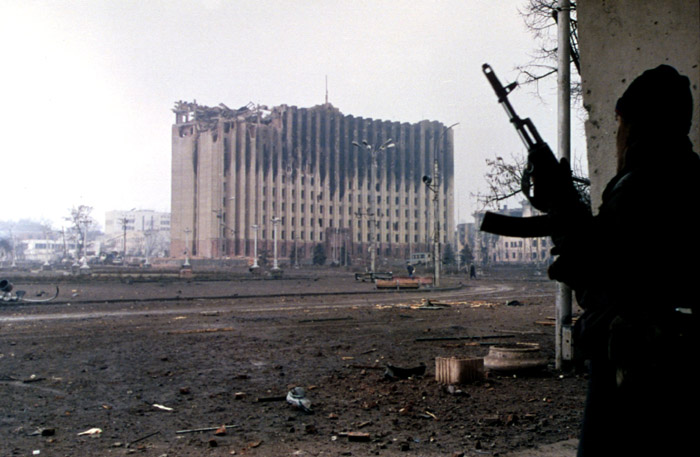
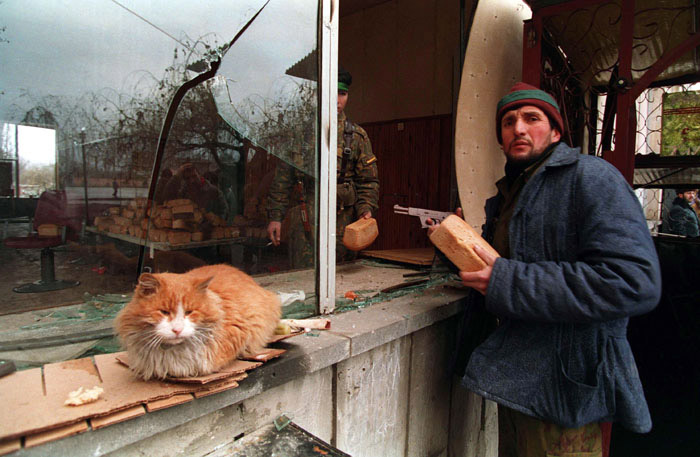
The presence of Chechen fighters on both sides did not begin with the invasion of Ukraine. To understand it, we must return to the wars between Moscow and the independence movement, without treating Chechen society as a single political actor. A November 1999 report by the Council of Europe’s Political Affairs Committee described the first war, beginning in December 1994, the 1996 ceasefire and the deferral of the status question during the Khasavyurt negotiations. The end of that campaign had not settled sovereignty. ([2], explanatory memorandum, §§1–7)
The same document described deteriorating security, kidnappings and the 1999 incursion into Dagestan by forces led by Shamil Basayev before the renewed federal offensive. It recognised the Russian Federation’s territorial integrity while challenging indiscriminate force and calling for civilian protection. Those positions are compatible: recognising a state’s sovereignty does not mean approving every operation conducted in its name. This was a parliamentary report written at the time, not a judgment on individual responsibility for the war. ([2])
The Kadyrovs: changing sides and a succession that was not immediate
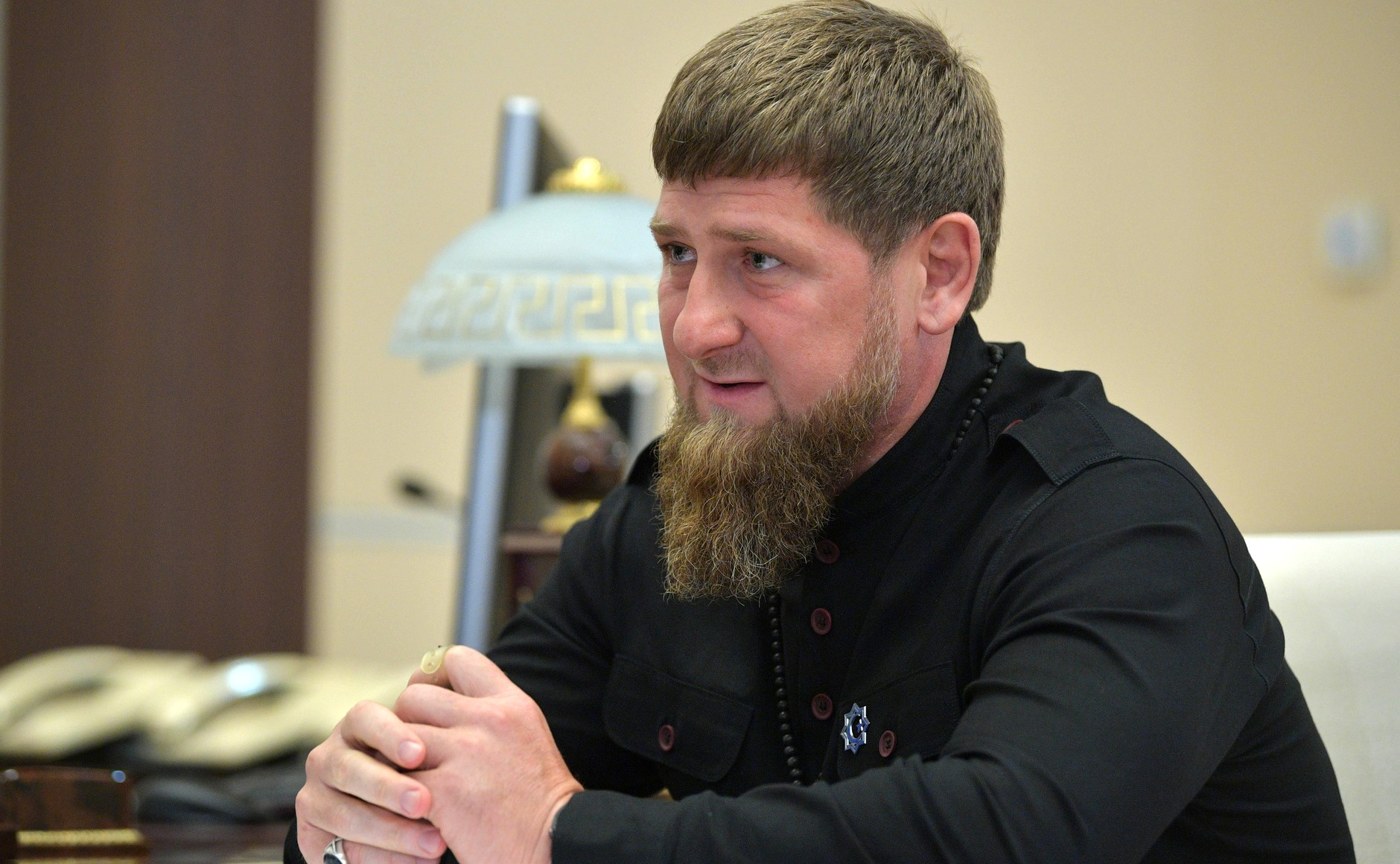
Akhmad Kadyrov supported the separatist cause during the first war but switched to Moscow’s side during the second. Human Rights Watch’s account describes how the subsequent “Chechenisation” of security gave an increasing role to local forces allied with the Kremlin. Ramzan commanded his father’s security service: the nucleus of a personal armed network gradually incorporated into public structures. The key change was therefore not simply replacing Russian soldiers with Chechens, but establishing a local power allied with Russia. ([1], historical background)
After the attack that killed Akhmad in May 2004, Ramzan did not immediately become president. Alu Alkhanov held that office; Ramzan became deputy prime minister, then prime minister in 2006 and president in April 2007. This sequence separates the growth of his actual power from formal accession to the presidency. HRW also describes how personal loyalty could coexist with integration into state institutions: a public uniform did not automatically erase relationships built around the family. ([1])
“Chechen” does not identify a chain of command
The April 2024 Danish–Swedish report distinguishes ethnically Chechen soldiers, units stationed in the republic, local structures and multiethnic formations trained there. The 42nd Motorised Rifle Division, for example, is not exclusively Chechen. The structures examined fall under the Ministry of Defence, Russia’s National Guard, Rosgvardia, or Interior Ministry bodies. Ethnicity, location and subordination are not interchangeable. ([3], §§3–3.3)
For readers, this means that a caption such as “the Chechens advance” leaves essential questions unanswered: which unit, under whose command, and when? Citizenship also answers a different question from ethnicity. Knowing where someone comes from is not enough to know their assignment, still less to attribute a political leader’s ideas to them. In analysing an operation, a verifiable unit name is more useful than a collective label.
Akhmat: a shared name, different organisations
The European Union Agency for Asylum’s synthesis of the situation in 2025 describes Kadyrov-linked units within different structures, including Rosgvardia and the Ministry of Defence. Akhmat therefore does not designate a single battalion. The source distinguishes Spetsnaz Akhmat from National Guard formations and notes the establishment of Akhmat-Kavkaz in March 2025. ([6], §4.4.1)
This account is not a certified organisational chart for November 2026. EUAA’s sources have different dates: announced unit and personnel figures cannot be added together. Nor does the informal expression “private army” legally classify these formations as private military companies: personal influence and institutional position are separate questions. ([6])
Propaganda and combat: why “just TikTok” does not explain the front
In his December 2024 analysis, researcher Mark Youngman distinguishes the media image from the forces’ actual employment. He describes contributions to fighting in Mariupol, Severodonetsk and Lysychansk, alongside later rear-area duties for some units. He also highlights the proliferation of Akhmat names and Apti Alaudinov’s role in Spetsnaz Akhmat. The picture varies by unit and phase of the war; it does not support the conclusion that nobody fights. ([5])
Propaganda does not automatically make every military activity fictitious. Equally, combat footage does not demonstrate an entire structure’s effectiveness or authenticate other videos. Assessment requires a place, date and unit, not just frequent social-media appearances. Youngman also notes the limited documentation of direct clashes between Chechens on opposing sides: possible explanations remain interpretations, not evidence of a secret agreement to avoid each other. ([5])
The population is not the same as those in power
Memorial collected accounts of pressure to sign military contracts alongside enlistment motivated by pay. This prevents us from reading every departure as spontaneous support, but does not prove everyone is forced. ([4])
The useful question is therefore not “which side are the Chechens on?” as though there were one answer. We must distinguish groups’ choices, institutions’ responsibilities and individuals’ circumstances. This is also the starting point for understanding those fighting for Ukraine: sharing a background does not mean sharing a political project, military biography or the same freedom of choice.
Recruitment: a signature does not tell the whole story
“Volunteer” requires caution: it can describe the form of a contract without explaining the circumstances of signing it. The joint April 2024 report by the Danish and Swedish immigration authorities distinguishes financial incentives, willing participation and coercion. It draws on twelve interlocutors, six anonymous, consulted during a mission to Georgia and the United Kingdom, not a representative survey of soldiers. Assessments of the extent of forced recruitment differ. We cannot derive a nationwide percentage supporting the war. ([3])
In October–November 2024, Memorial collected residents’ accounts of detention, threats of criminal proceedings and pressure to accept contracts. The report also describes men willing to enlist for pay and contrasts these accounts with the official assertion of voluntary service. It provides no sample size enabling a count of everyone coerced. The important distinction is not choosing between “all volunteers” and “all deported to the front”, but recognising different practices and documenting each case. ([4])
In September 2025, UN Special Rapporteur Mariana Katzarova reported that critics of Kadyrov, including LGBT people, were being forced to choose between military deployment and prison. The report discloses the Russian government’s non-participation and the use of interviews and submissions with protected identities: this is the rapporteur’s conclusion within a UN mandate, not an individual judgment. In July 2026, Novaya Gazeta Europe reported further pressure and district quotas based on its own sources, Memorial and activists. This is another line of reporting to follow, not a verified census of every unit; shared sources prevent automatically counting every republication as independent confirmation. ([8]; [10])
Domestic repression is not a background detail
Understanding individuals’ choices requires considering the cost of dissent, without assuming we know their thoughts. The 2018 OSCE report on violations since January 2017 documents persecution and impunity. Its author, Wolfgang Benedek, received no assistance for a mission to Russia and worked with testimony and documentation available outside the country. That limitation must be stated alongside the findings: it neither justifies dismissing the report as nonexistent nor presenting it as direct observation of every location. Its timeframe does not automatically establish events in 2026. ([7])
There is also a different level of determination: the European Court of Human Rights. In N.A. and Others v. Russia, 21 November 2023, the Court attributed to the state the presumed deaths of six people who disappeared after detention by state agents, and found violations of the right to life, including ineffective investigations. It also recognised a continuing systemic problem with investigations in Chechnya. The defence that some of the disappeared had voluntarily left for Syria was found unsupported. This is state responsibility under the Convention, not the personal criminal conviction of all Chechen commanders or soldiers. ([9])
Sanctions, allegations and responsibility are not synonyms
The US Treasury designated Kadyrov again in September 2022 under war-related sanctions, recalling previous measures. That act documents a US administrative decision and its reasons: it is not an international criminal judgment. In September 2025, Ukraine’s security service notified him in absentia of suspicion of war crimes, accusing him of ordering that prisoners not be taken and proposing Ukrainian prisoners as human shields. In the material examined, this is a Ukrainian investigative allegation; we have neither a final judgment nor independent verification that those orders were carried out. ([11]; [12])
Separating these levels makes the analysis more rigorous, not more indulgent. Documented testimony, a sanction and a judgment have different objects, procedures and evidentiary weight. Attributing an incident in Ukraine requires a place, date, unit and conduct: a fighter’s ethnicity or the name “Akhmat” cannot replace those steps. The same standard must apply to groups fighting for Ukraine.
Chechens fighting for Ukraine do not form a single army
On the Ukrainian side, “the Chechens” is not the name of a single formation. The Dzhokhar Dudayev battalion, Sheikh Mansur battalion and OBON have distinct histories and political reference points. The Adam group also appears separately in Ukrainian documents. A Rada statement about the meeting of 7 December 2023 lists representatives of all four without treating them as synonyms. This provides a documentary starting point, not a complete, up-to-date organisational chart of the fighting forces. ([18])
Attributing an operation or responsibility requires identifying the unit, person and date. Cooperation does not automatically transfer responsibility between units. ([18])
Since 2014: Dudayev and Sheikh Mansur
Dudayev takes its name from the first president of the Chechen separatist republic. In a November 2022 report, the Kyiv Independent reconstructs the role of founder Isa Munayev, a veteran of the Chechen wars and an exile in Denmark who died at Debaltseve in 2015. Adam Osmayev succeeded him. This is a chronology of the formation, not proof that its composition or institutional position remained unchanged over the years. ([14])
Mansur’s origins intersect with Dudayev’s. In an April 2022 interview with NV, Muslim Cheberloevsky recounts mobilisation among European exiles in 2014 and a subsequent division of forces. He also describes men of other backgrounds, including Georgians, Tatars and Azerbaijanis. This is the commander’s account: it documents his version of the unit’s beginnings and composition, not an independent register of all recruits. The formation’s Chechen name therefore does not establish every member’s ethnicity. ([16])
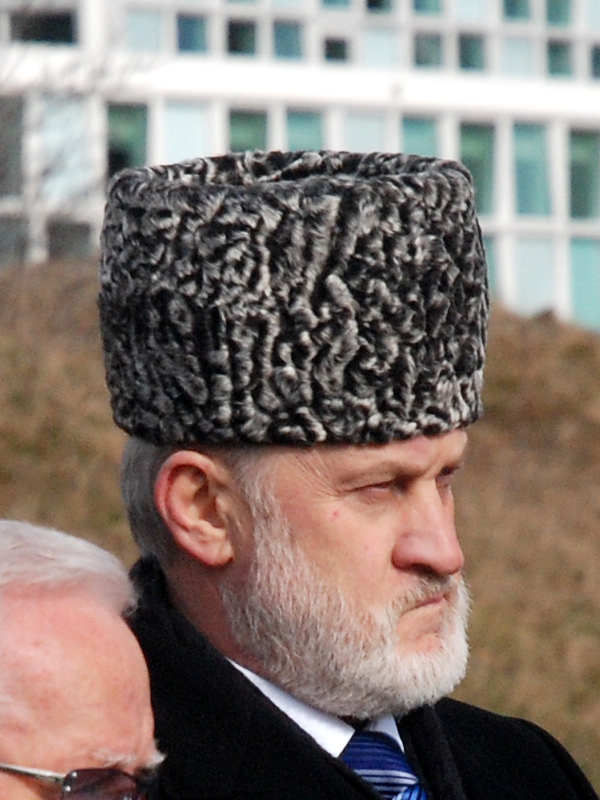
A study by Emil Souleimanov and Martin Laryš dates Mansur’s separation to October 2014. It also distinguishes OBON, announced after the full-scale invasion and linked to Akhmed Zakayev, a figure in the Ichkerian opposition in exile. This account helps distinguish the units, but does not replace the military orders or contracts needed to document every institutional transition. ([17])
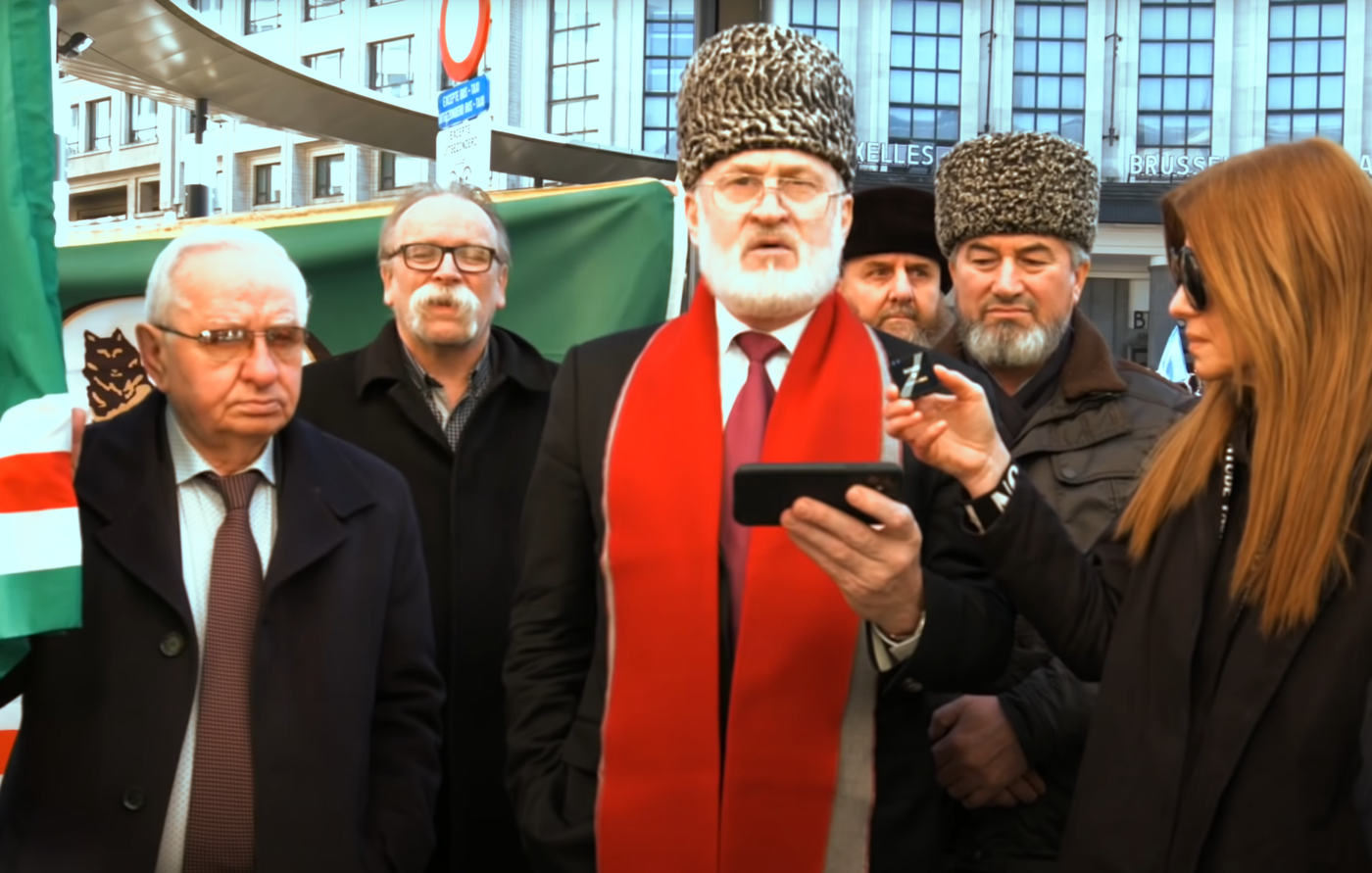
The diaspora, personal losses and plans to return
Motivations emerge mainly through fighters’ own words. In 2022, NPR interviewed Sheikh Mansur members, including a deputy commander calling himself Mansur, distinct from the historical namesake of the battalion. Their accounts connect losses in Chechnya, exile and fighting Russia in Ukraine as parts of one experience. Some describe fighting as a personal obligation. These testimonies help us understand the speakers; they do not justify presenting revenge as an innate Chechen characteristic or a motivation shared by the whole diaspora. ([15])
In ABC’s April 2023 report, a Dudayev fighter called Maga expresses a two-stage political objective: helping liberate Ukraine and then Chechnya. The interview documents a declared project, not its feasibility or a programme binding every unit. Interviewees’ figures also remain statements: without comparable registers, adding estimates from different periods would produce an apparently precise but unreliable total. ([22])
Souleimanov and Laryš interpret these choices by distinguishing historical revenge from personal revenge linked to loss. Their study’s limitation is explicit: it analyses open-source testimony, including journalists’ interviews, without conducting its own field interviews or using a representative sample. The authors do not argue that there is a single cause of participation in war. The study and the interviews it uses must therefore not be counted as independent verification of the same autobiographical account. ([17])
Military cooperation and formal incorporation are not synonyms
Volunteer status is particularly ill-suited to absolute statements. In September 2018, Hromadske directly questioned Ukraine’s General Staff about Sheikh Mansur. The newspaper reported the General Staff’s response that it was not part of the armed forces’ structure. At the same time, the report described volunteers cooperating with soldiers at the front. Cooperation and institutional membership differ. That response concerns 2018, not later circumstances. ([20])
Apostrophe’s 6 March 2026 interview makes the distinction more concrete. Cheberloyevsky says the battalion has not formally joined Ukraine’s armed forces, although it sent some groups to regularise their status. He describes the battalion overall as independent and voluntary, and states that it coordinates with the Ukrainian units alongside which it operates. These are the commander’s statements, not acquired and checked contracts: they do not establish each fighter’s individual status. They do, however, prevent presenting the entire formation’s integration as an undisputed, uniform fact. ([21])
The issue had already arisen institutionally: in December 2023, the Rada committee discussed simplifying recognition of the status of Chechen fighters and other peoples fighting Russian forces. Its statement establishes that the issue was discussed; alone, it does not constitute an administrative solution for every participant. ([18])
Ichkeria: a political cause, not a universal label
On 18 October 2022, the Rada adopted Resolution 2672-IX. It condemns Russian aggression, considers Ichkeria temporarily occupied and its existing regime illegitimate, denounces genocide against the Chechen people and urges other states to recognise the occupation and support investigations into crimes. It must be described for what it is: a position of Ukraine’s parliament. It is neither a final international genocide judgment nor universal recognition; it does not automatically establish the status of every fighter invoking Ichkeria. ([19])
Finally, religion or geographic origin cannot replace verification of affiliations. Hromadske was already reporting questions about some men’s Syrian backgrounds in 2018, alongside the commander’s response; for allegations, it also referred to another investigation. That reference is not independent proof of ISIS membership. Examining someone’s past requires relevant identities, formations, periods and documents. Neither turning all Chechen volunteers into jihadists nor collectively guaranteeing an absence of controversial backgrounds is justified. These are collective conclusions the sources examined here do not support. ([20])
Volunteer, foreigner, mercenary: three words not to confuse
In everyday language, “mercenary” can be an insult or an imprecise synonym for an armed foreigner. International humanitarian law defines it more narrowly. ICRC legal adviser Ramin Mahnad explains that fighting for another country is not enough: members of its armed forces do not become mercenaries simply because of their nationality. Nor does lack of incorporation automatically make a volunteer a mercenary; further requirements must be assessed, including essentially financial motivation and promised compensation substantially above that of comparable soldiers. Fundamental protections still apply to people without prisoner-of-war status. ([13])
This is why the battalions’ status is not a mere formality. We need to know a person’s and unit’s actual affiliation, rather than assigning a category based on passport, group name or religion. This dossier does not replace individual examination of case files or collectively certify all fighters on either side.
What we still do not know
Available sources do not enable a complete, current and verified order of battle for November 2026, or a reliable percentage of Chechens supporting either side. Aggregate figures may count departures over time, non-Chechen personnel trained in the republic, units with different tasks or simply political announcements. Without comparable denominators, adding them produces an impressive but unhelpful number.
Images have limits too. A photograph of Grozny in 1995 does not show Ukraine in 2022; an official portrait documents a meeting or presence, not the truth of the subject’s statements; a diaspora demonstration does not automatically represent all exiles’ views. Captions help prevent these shifts in meaning.
Analysis becomes stronger when it rejects easy equations: Chechen equals Kadyrov supporter, independence activist equals jihadist, Muslim equals ISIS member, volunteer equals regular soldier. Any link with a specific organisation must be established through people, dates, affiliations and conduct, not inferred from identity. Checking individual allegations requires dedicated work, not a collective label in this article.
How we worked
We combined institutional documents, research with stated methods, original interviews and human-rights reports. For each source, we distinguish the speaker, the period observed and the type of evidence. A commander’s statement helps establish their position, but cannot alone confirm the unit’s strength or every operation. An institutional synthesis citing Memorial does not become an additional witness to the same interview.
Sources on the Chechen wars and repression provide historical context, not substitutes for evidence about incidents in Ukraine. We do not have access to every military order, internal archive or individual court file. Where that limitation affects the assessment, we state it in the relevant card rather than covering it with an absolute assertion.
For broader context, see our Russia–Ukraine conflict hub and dossier Russia and Ukraine: their arguments compared.
Key dates
- December 1994 The first Chechen war begins. [2]
- August 1996 Khasavyurt defers the status question. [2]
- 1999 Incursion into Dagestan and renewed federal offensive. [2]
- April 2007 Ramzan Kadyrov becomes president. [1]
- 2014 The Dudayev and Mansur formations emerge. [14] [16]
- 18 October 2022 The Rada adopts its resolution on Ichkeria. [19]
- 21 November 2023 Judgment in N.A. and Others v. Russia. [9]
- 6 March 2026 Cheberloyevsky distinguishes the independent battalion from regularised groups. [21]
Evidence by claim
The assessments apply to the statements listed.
Strong evidence
The judgment concerns state responsibility
The Court finds Convention violations; it does not criminally convict every commander. [9]
One original judicial document, not a false second confirmation.
Strong evidence
The Ichkeria resolution is a parliamentary act
The official text documents a Ukrainian position, not an international judgment. [19]
An official text checked in the parliamentary publication.
Conflicting evidence or fragile conclusion
The SSU allegation is not a final conviction
The statement presents an investigative suspicion. Execution of the orders is not independently verified here. [12]
Investigative source from one party, with an explicit limitation.
Strong evidence
Nationality does not define a mercenary
The ICRC analysis requires individual legal assessment and further criteria. [13]
Specialist legal explanation, not a ruling on individual fighters.
Frequently asked questions
Why are there Chechens on both sides?
Is Akhmat a single unit?
No: the name recurs in different organisations. The specific unit must be identified. [6]
Are all units called Chechen ethnically homogeneous?
No. Background, location and composition are different categories. [3]
Do volunteers fighting for Ukraine all have the same status?
That is not established. In March 2026, the Mansur battalion commander still distinguishes the battalion from some regularised groups. [21]
Are Dudayev, Mansur, OBON and Adam synonyms?
No: the parliamentary statement lists them separately. [18]
Is every departure from Chechnya voluntary?
Accounts describe both incentives and pressure. They provide no representative percentage. [4]
Do social-media images prove military effectiveness?
Not alone. The incident, place, date and unit must be checked; propaganda and combat can coexist. [5]
Do interviews explain the whole diaspora?
No. They describe the speakers; they are neither a survey nor a universal explanation. [17]
Does foreigner mean mercenary?
No. The legal category requires further conditions: nationality alone is insufficient. [13]
Are sanctions and allegations equivalent to convictions?
Has the Rada issued an international judgment?
No: the resolution expresses the Ukrainian parliament’s position. [19]
How many Chechens are fighting overall?
We lack a verified, comparable total: we do not add announcements, contracts and units from different dates. [6]
Sources, licences and limitations
Sources reviewed through .
- Check A. Provenance and passage consulted
- Human Rights Watch · Punitive house-burning in Chechnya · 2009-07-02 · Summary and historical background
- Check B. What it documents and its limits
- Documents changes in local structures; individual case files were not all inspected.
- Check A. Provenance and passage consulted
- PACE, commissione affari politici · Doc.8585, Conflict in Chechnya · 1999-11-03 · Committee report and memorandum
- Check B. What it documents and its limits
- Contemporary account of the wars and positions; neither a judgment nor the final resolution.
- Check A. Provenance and passage consulted
- Danish Immigration Service / Swedish Migration Agency · Russia: Recruitment of Chechens · 2024-04 · Summary, method, categories and recruitment
- Check B. What it documents and its limits
- Twelve interlocutors; no representative sample or current organisation chart.
- Check A. Provenance and passage consulted
- Memorial · Kadyrov plans to voluntarily recruit 84,000 people · 2024-12-20 · Full text and October–November 2024 testimony
- Check B. What it documents and its limits
- Documents reports of pressure and paid enlistment; sample size is unspecified.
- Check A. Provenance and passage consulted
- Mark Youngman, Riddle · Chechnya’s war on Ukraine · 2024-12-05 · Text of Youngman’s analysis
- Check B. What it documents and its limits
- Distinguishes units and phases; linked sources and videos were not all inspected.
- Check A. Provenance and passage consulted
- EUAA · Russian Federation Country Focus, 4.4.1 Chechen military units · 2026-01 · Section 4.4.1 and notes 924–937
- Check B. What it documents and its limits
- Synthesis of 2025 conditions drawing in part on Memorial and Youngman; not a 2026 organisation chart.
- Check A. Provenance and passage consulted
- OSCE, Wolfgang Benedek · Moscow Mechanism report on alleged human rights violations in Chechnya · 2018-12 · Summary, recommendations and relevant closing passages
- Check B. What it documents and its limits
- Report based on testimony and documents; the mission did not obtain access to Russia.
- Check A. Provenance and passage consulted
- Mariana Katzarova, ONU · A/HRC/60/59 · 2025-09-15 · Paragraphs 1–6, 115, 128–131 and relevant conclusions
- Check B. What it documents and its limits
- Special Rapporteur’s assessment and protected sources; no individual judgment.
- Check A. Provenance and passage consulted
- Corte europea dei diritti dell’uomo · N.A. and Others v. Russia · 2023-11-21 · Heading, paragraphs 58–99 and operative part
- Check B. What it documents and its limits
- Establishes state responsibility under the Convention; not an individual criminal conviction.
- Check A. Provenance and passage consulted
- Novaya Gazeta Europe · Chechen police given monthly quotas · 2026-07-21 · Full July 2026 report
- Check B. What it documents and its limits
- Quotas are attributed to partly anonymous sources, Memorial and activists; not an independent census.
- Check A. Provenance and passage consulted
- US Treasury · Treasury targets additional facilitators of Russia’s aggression in Ukraine · 2022-09-15 · Section on Kadyrov and his family
- Check B. What it documents and its limits
- Establishes the Treasury sanctions decision and its stated reasons; not a judicial ruling.
- Check A. Provenance and passage consulted
- Servizio di sicurezza ucraino, SSU · In absentia suspicion against Kadyrov · 2025-09-01 · Full text of the investigative statement
- Check B. What it documents and its limits
- SSU allegation; execution of orders and judicial outcome not established here.
- Check A. Provenance and passage consulted
- Ramin Mahnad, ICRC · Third-country nationals in international armed conflict · 2022-10-06 · Full legal commentary
- Check B. What it documents and its limits
- Explains cumulative criteria and safeguards; no determination of anyone’s status.
- Check A. Provenance and passage consulted
- Kyiv Independent · Meet the Chechens fighting Russia in Ukraine · 2022-11-25 · Report and relevant biographical passages
- Check B. What it documents and its limits
- Journalistic reconstruction; Osmayev’s 2012 case file was not verified.
- Check A. Provenance and passage consulted
- NPR, copia WWNO · Meet the Chechen battalion joining Ukraine · 2022-09-05 · NPR text republished by WWNO; audio not listened to
- Check B. What it documents and its limits
- One reporting chain and individual accounts.
- Check A. Provenance and passage consulted
- NV · Intervista a Muslim Cheberloevsky · 2022-04-07 · Opening and first two accessible exchanges
- Check B. What it documents and its limits
- Answers are attributed to the interviewee; the full paywalled text was not read.
- Check A. Provenance and passage consulted
- Emil Souleimanov e Martin Laryš · Driven by Revenge · 2025 · Abstract, case selection, three profiles and conclusions
- Check B. What it documents and its limits
- Analyses published interviews; no original field interviews or representative sample.
- Check A. Provenance and passage consulted
- Verkhovna Rada · Riunione con rappresentanti di combattenti ceceni · 2023-12-08 · Full statement on the 7 December meeting
- Check B. What it documents and its limits
- Identifies representatives and topics discussed; no incorporation order.
- Check A. Provenance and passage consulted
- Verkhovna Rada, Golos Ukrainy · Risoluzione2672-IX e dichiarazione allegata · 2022-10-18 · Full text in the official Golos Ukrainy publication; Zakon inaccessible
- Check B. What it documents and its limits
- Establishes the Rada’s position; not universal international recognition.
- Check A. Provenance and passage consulted
- Hromadske · Unofficial volunteer battalions in Donbas · 2018-09-18 · Full 2018 report
- Check B. What it documents and its limits
- Relays the General Staff response at the time; the linked source for allegations was not acquired.
- Check A. Provenance and passage consulted
- Apostrophe · Intervista a Muslim Cheberloyevsky · 2026-03-06 · Interview readable in search, opening and first part; local download 403
- Check B. What it documents and its limits
- Commander’s account of status and coordination; no individual contracts.
- Check A. Provenance and passage consulted
- ABC News, Patrick Reevell · Chechen volunteer fighters back Ukraine’s Russian resistance · 2023-04-13 · Full ABC report; video not viewed
- Check B. What it documents and its limits
- Maga may be the same interviewee as in Kyiv Independent.
- Check A. Provenance and passage consulted
- Kremlin.ru / Press Service of the President of the Russian Federation · Ramzan Kadyrov (2018-06-15) 01.jpg · CC BY 4.0 · Resized without cropping.
- Check B. What it documents and its limits
- Scope documented by the archive and caption.
- Check A. Provenance and passage consulted
- Jelger Groeneveld · Akhmed Zakayev (2018).jpg · CC BY 2.0 · Crop already present on Commons, Labrang, 25 January 2024.
- Check B. What it documents and its limits
- Scope documented by the archive and caption.
- Check A. Provenance and passage consulted
- Kurochkin Andrey · Akhmed Zakaev. Inna Kurochkina. Brussel 26.02.2022.png · CC0 · Resized without cropping.
- Check B. What it documents and its limits
- Scope documented by the archive and caption.
- Check A. Provenance and passage consulted
- Photo: Mikhail Evstafiev · Evstafiev-chechnya-palace-gunman.jpg · CC BY-SA 3.0 · No changes to the acquired master.
- Check B. What it documents and its limits
- Scope documented by the archive and caption.
- Check A. Provenance and passage consulted
- Photo: Mikhail Evstafiev · Evstafiev-chechnya-bread-cat.jpg · CC BY-SA 3.0 · No changes to the acquired master.
- Check B. What it documents and its limits
- Scope documented by the archive and caption.


