Dossier
Did BlackRock buy Ukraine? Land, funds and reconstruction without shortcuts
What the BlackRock and US–Ukraine agreements establish: advice, farmland, investments and resources. Documents, chronology and the limits of the claims.
In brief
The agreements examined do not document a sale of Ukraine to BlackRock. They document financial advice, fundraising projects and, under a different programme, joint US–Ukrainian investments. These are economically and politically important activities, but they are not equivalent to owning a country.
The opposite conclusion, “there is no problem because these are just investments”, would also be inadequate. Ownership, contractual power and financial dependence are different issues. A company can influence how an asset is used through a lease, financing or an equity stake without directly buying the land. Understanding what is happening requires examining which rights are granted, to whom, for how long and in exchange for which obligations.
This dossier separates five issues that are often conflated: BlackRock’s advisory work; the agricultural land market; large agribusinesses; the intergovernmental US–Ukraine fund; and the distribution of reconstruction risks and benefits. Biden–Burisma requires a separate dossier: it is not evidence about BlackRock and should not be used to fill documentary gaps in this story.
Frequently asked questions
Does BlackRock own Ukraine?
The agreements examined here do not establish that. Advice and ownership are different categories.
So BlackRock has no economic interests?
That conclusion does not follow. An advisory role, even unpaid, should be analysed without inventing undocumented purchases.
Can a foreign investor operate in Ukrainian agriculture?
Business activity, leasing, equity stakes and agricultural land ownership must not be confused. Restrictions are not identical.
Are all “land bank” hectares owned?
No: in the Kernel example cited, the accounts explicitly refer to leased land.
Does the American fund receive half of Ukraine?
No: the published summaries describe revenue categories and financial rights, not a transfer of half the territory.
Are UDF and URIF the same fund?
Not in the documents examined. Their origins and participants differ.
Are the investments merely promises?
Specific URIF approvals are documented in 2026. Further reporting is needed to establish how much has already been disbursed.
Does this dossier also resolve the Biden case?
No. Burisma requires its own chronology and evidence, without automatic links to BlackRock.
Timeline
- 2020
approval of agricultural land-market reform.
- 1 July 2021
the first opening phase begins.
- 10 November 2022
BlackRock FMA advisory memorandum.
- May 2023
announcement of the Ukraine Development Fund project.
- January 2024
the agricultural reform’s second phase as envisaged by law.
- 30 April 2025
US–Ukraine agreement for the separate URIF programme.
- July 2025
Bloomberg report on suspended fundraising for the BlackRock-advised project.
- September 2025
DFC announces its initial $75 million commitment.
- 26 March 2026
announcement of the first URIF investment.
- 2 October 2026
announcement of new energy and minerals approvals.
1. What BlackRock actually signed
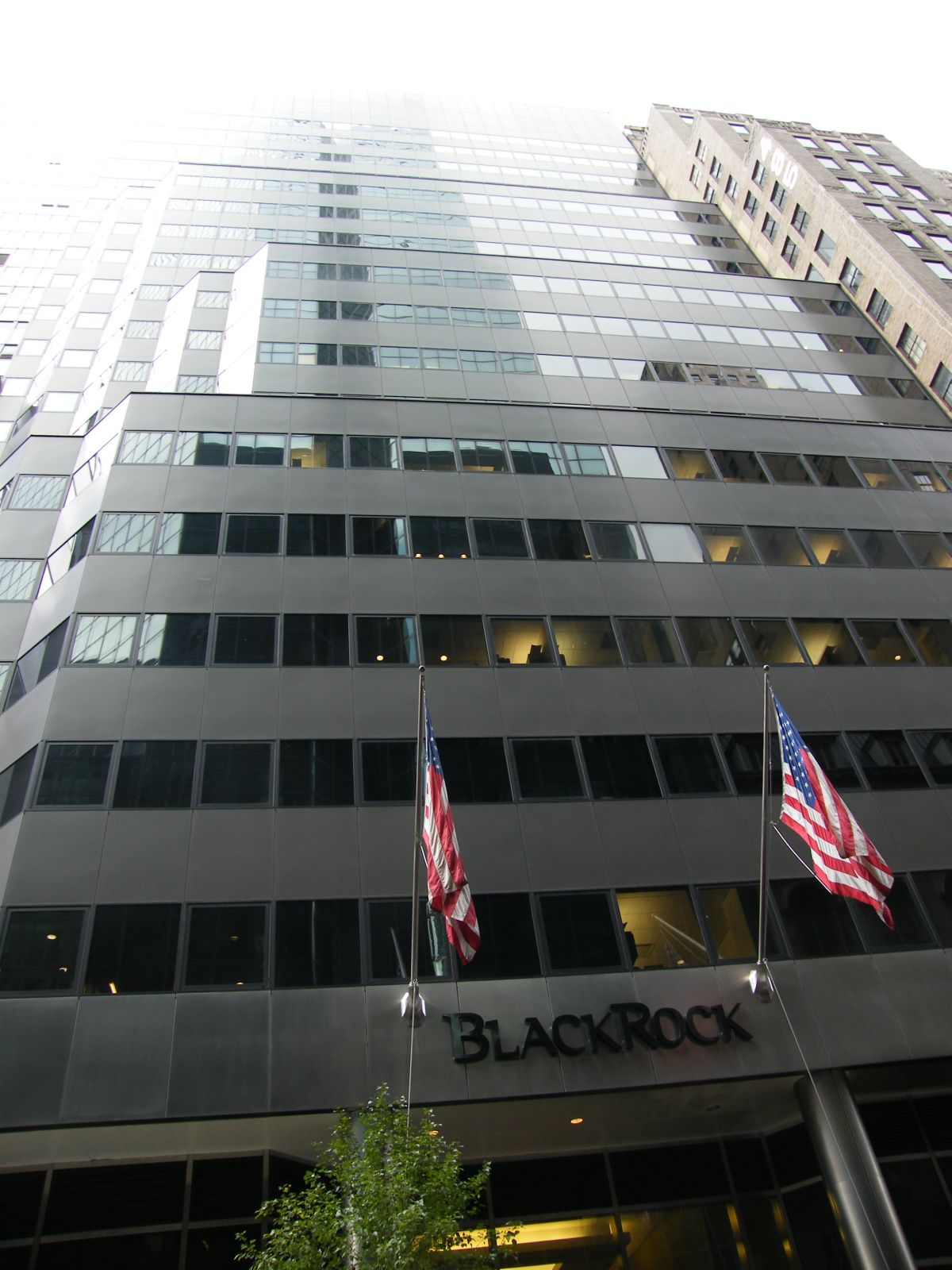
BlackRock’s statement of 16 November 2022 describes a memorandum signed in Washington on 10 November. The assignment concerns a framework for reconstruction investment: its structure, the vehicle’s governance and ways to attract public and private capital. The appointed unit is Financial Markets Advisory, which the statement distinguishes from the firm’s investment-management business. It does not announce purchases of land, infrastructure or stakes in the Ukrainian state. [1].
This is a substantive distinction: an adviser can design a fund without owning its investments. Belonging to a huge financial group warrants scrutiny of conflicts of interest; it does not justify automatically attributing ownership of every project discussed to the adviser.
2. The fund announced in 2023
In May 2023 the government presented the Ukraine Development Fund project, intended to mobilise capital in energy, infrastructure, agriculture, manufacturing and technology. The ministry explicitly described BlackRock FMA’s design assignment as pro bono, or unpaid. JPMorgan Chase and McKinsey also appear in the announcement: they are not the same company, and their roles should not be added together as though they formed a single owner. [2].
The document establishes a project and an assignment. It does not establish that all the hoped-for funding arrived or that investors bought the sectors mentioned. Announcement, contractual commitment, payment and actual investment are four different stages. A target figure cannot become money already spent in a news headline.
3. Why the 2023 account is insufficient in 2026
In July 2025 Bloomberg reported that the search for investors for the BlackRock project had been suspended. [3].
Documentary limitation: this report does not justify declaring that every possible activity by the group in Ukraine has ended forever, or conflating UDF with later programmes. A claim that BlackRock currently manages a particular fund requires the relevant mandate and its date, not a photograph of a meeting or an old memorandum.
The methodological point remains important even without reconstructing every negotiation: the 2022–2023 description must be dated, not automatically treated as a snapshot of the present.
4. Five terms that change the meaning of a story
Advice: a service is supplied, possibly free of charge. The contract does not itself transfer an asset.
Management: decisions are made for a portfolio or fund under a mandate. Assets under management are not automatically the manager’s own property.
Equity stake: a share in a company is owned. A minority stake must not be described as total control; an indirect holding requires tracing the corporate chain.
Debt: the creditor has a contractual right to repayment. Security and clauses may confer power, but a loan does not immediately mean ownership of all the debtor’s assets.
Lease or concession: certain usage rights are obtained under conditions and for a specified duration. They do not automatically constitute ownership of the land or sovereignty over the territory.
These are categories for reading documents, not advance exonerations. For each transaction, ask which concrete rights, including voting and security rights, accompany the label.
5. What the 2020 land reform changed
The 2020 law, as explained by the presidency, provided for opening the market to Ukrainian citizens from 1 July 2021, initially up to 100 hectares. From January 2024, Ukrainian-owned companies were to become eligible, with a 10,000-hectare limit. The statement also distinguished the prohibition on selling state and municipal land. The referendum mechanism concerning access for foreign investment needs precision: it concerns companies incorporated under Ukrainian law with shareholders or beneficial owners who are not Ukrainian citizens, not blanket permission for any foreign buyer. [4].
The legal reference to check for the current regime is Article 130 of the Land Code, not a social-media slogan. [5].
Scope matters: this concerns ownership of agricultural land. Leasing land or investing in a company that farms it is not equivalent to buying the soil. However, stakes in companies that own land are also subject to restrictions: interposing a company is not an automatically permitted workaround. Nor can the entire cultivated area be attributed to a shareholder without establishing rights and control.
Scope of this verification: this section reconstructs the 2020 reform and its stages; it does not certify every exception in force in November 2026. Amendments from 2026 concerning acquisition through enforcement of security have emerged; direct access to the updated official text was unsuccessful. We therefore do not provide a definitive list of currently eligible entities or legal advice on an individual purchase. Distinguishing ownership, leasing and equity remains essential; a complete account of the law requires the official consolidated text and transitional provisions.
6. A concrete example: Kernel’s “land bank”
Kernel’s accounts for the financial year ending 30 June 2025 report approximately 362,000 hectares of leased land. They also describe acquiring an agricultural business with lease rights over approximately 6,300 hectares. This is useful because the terminology is explicit: the group expands its operating agricultural base partly through lease rights. [6].
Saying “a group operates over a large area” can therefore be correct. Replacing it with “that group owns every hectare”, without checking title, changes the information. Attributing the whole area to a possible shareholder in the group adds a second logical leap.
The example does not prove that agricultural concentration is harmless. It suggests measuring it with relevant indicators: hectares managed, lease duration, number of landowners, corporate control, credit and market access. A land-ownership register alone does not exhaust the issue.
7. Actual foreign ownership: Cargill–Neptune
Refuting a sale of the whole country does not mean denying documented Western acquisitions. In July 2021 Cargill announced that it had become the majority shareholder, with 51%, in the Neptune joint venture, a grain terminal at the port of Pivdennyi. The announcement assigned strategic direction to Cargill and day-to-day operations to the local team. This is a controlling stake in a specific business, described with a percentage, company and date. [7].
This case helps distinguish evidence from a slogan. It is appropriate to speak of an American equity majority here; it is not appropriate to turn that into ownership of the entire port, every field supplying it or Ukraine. The transaction’s timing before the full-scale invasion of 2022 also prevents every Western presence being portrayed as a consequence of post-war reconstruction. Establishing the current corporate position would additionally require an updated registry record: the fact reconstructed here is the acquisition announced in 2021.
8. Financing large groups: MHP
The issue extends beyond equity stakes. IFC’s MHP Loan 2023 project disclosure describes financing to refinance bonds and expand an agricultural waste-to-energy facility. It identifies Yuriy Kosyuk as controlling shareholder and explains the use of concessional instruments to reduce risk. The instruments envisaged include an approximately $60 million first-loss guarantee. [8].
In their joint October 2023 announcement, IFC, EBRD and DFC presented a total $480 million package. Its stated purpose was to support production, exports and financial stability during the war. [9].
Both questions remain legitimate: does the financing prevent the collapse of an important supply chain? And does it strengthen a major operator relative to smaller competitors? The announcement establishes the financial instrument and stated motives; it does not by itself resolve the assessment of effects. A first-loss guarantee deserves attention precisely because it changes who bears risk; it does not automatically prove either a loss already incurred by taxpayers or a transfer of company ownership to lenders.
9. Not every criticism of concentration is propaganda
The Oakland Institute’s War and Theft report, published in February 2023, argues that concentration of land and finance strengthens major operators and foreign interests. Its summary estimates that over nine million hectares are controlled by a combination of oligarchs and large businesses, not that nine million hectares are owned by BlackRock. This is a critical analysis to be attributed to its authors, not a cadastral census certified by SINE VELO. [10].
Power imbalances also appear in lenders’ documentation. The World Bank programme document for a loan proposed in June 2020 included the land-market law among the programme’s prior actions. It envisaged credit support for small farmers and warned that, without effective instruments, they could be excluded from the market, increasing concentration. [11].
Lenders’ influence on reforms is therefore not an invented question. But documenting conditionality and distributional risks does not establish a clandestine sale of the country. Further verification must compare stated objectives with actual access to credit, concentration, prices and outcomes for small landowners and businesses.
10. The US–Ukraine fund is different
On 30 April 2025 the United States and Ukraine signed the agreement for the United States–Ukraine Reconstruction Investment Fund, URIF. The public entities and institutional framework differ from the BlackRock-advised UDF project. [12].
US documentation describes a board with three representatives on each side and a financing component linked to royalties, licences and similar natural-resource payments. [13].
Presenting this fund as a BlackRock operation would require additional evidence of its specific role. Sharing American nationality does not make a public agency and a private asset manager interchangeable.
11. What 50% means: revenue, not half of Ukraine
The Ukrainian government’s published summary specifies contributions of 50% of royalties from new and dormant permits; it describes contributions by both parties and possible contributions credited from military assistance. According to that summary, profits are to be reinvested during the first decade and distributions made after 2035. DFC has priority, not exclusive rights, in considering investments and offtake agreements. [14].
The government states that the subsoil and resources remain Ukrainian and that the agreement does not transfer state-owned companies. [15].
The distinction does not remove the agreement’s significance: allocating a share of future revenue to a joint mechanism and granting economic priority are substantial choices. But “half of specified revenue” does not mean “half of all minerals”, “half of all taxes” or “half of the country”. Nor does the government summary replace examination of the complete contracts when a disputed clause is being discussed.
12. From announcements to investments: the record in 2026
In September 2025 DFC announced an initial $75 million equity commitment. On 4 February 2026 DFC reported an investment of that amount, matched by $75 million from the Ukrainian government, totalling $150 million. These are institutional statements: we have not directly examined the bank transfers. This is the fund’s seed capital, not Ukraine’s price. [16]; [17].
On 26 March 2026 Treasury announced approval of the first investment, an equity stake in Sine Engineering, which works in communications and drone systems. It is incorrect to backdate that investment to the BlackRock memorandum. [18].
On 2 October 2026 Treasury described further approvals: a mining platform with BGV, an equity investment in combined heat and power, and debt financing for DTEK electricity storage. Different mechanisms exist even within the same fund: equity and loans are not synonyms. The announcement alone cannot establish every disbursement, return or contractual clause. [19].
13. Why so many entities seek a reconstruction role
The joint RDNA5 assessment, published in February 2026 by the Ukrainian government, World Bank, European Commission and UN, estimates almost $588 billion in recovery and reconstruction needs over the following decade, based on damage and needs as of 31 December 2025. This is not an already available cheque or the value of an acquisition. [20].
That need helps explain the search for public and private resources. But scale does not automatically determine a project’s quality. The useful question is not only “will investors come?” but “which projects will be financed, on what terms and with what verifiable benefit for people living in Ukraine?”.
14. Serious criticism: what needs checking
A critical reading can focus on documentable questions without assuming that a secret sale has already been established:
- Who absorbs a loss: taxpayers, public insurance, investors or debtors?
- Who selects projects, and which conflicts of interest are disclosed?
- Is procurement competitive? Are beneficial owners, fees and subcontractors public?
- Which environmental, employment and service obligations accompany profit?
- What autonomy does the public entity retain over tariffs, licences and priorities?
- Which revenues stay locally and which are distributed abroad?
- Can small operators participate, or does the system favour only those who already have capital?
These are SINE VELO investigation criteria, not established accusations against the entities named. Turning them into conclusions requires contracts, accounts and checks, transaction by transaction.
15. What we can and cannot conclude
This dossier is not a complete census of Ukrainian company and landowners. It does not verify every privatisation or concession and has not examined every UDF and URIF contract in full. Kernel illustrates a documentary distinction; it does not alone measure all foreign concentration in the sector.
Documented: a BlackRock advisory mandate; the UDF project; a regulated agricultural market with ownership restrictions; large leased operating areas; a separate US–Ukraine fund with announced and approved investments.
Not established by the documents examined: that BlackRock bought Ukraine, that the memorandum transfers territory, or that 50% means half the country.
To assess contract by contract: economic concentration, advantages for major investors, possible conflicts of interest and the actual distribution of revenue.
There is no need to choose between “all a conspiracy” and “all charity”. Investors may seek returns, states strategic advantages and Ukraine essential resources. Journalism must verify how these interests become rights and obligations, without mistaking suspicion for evidence or an institutional announcement for guaranteed results.
What the evidence establishes
Assessments of specific, dated claims, not of the entire investigation.
Documented within this scope.
In November 2022 BlackRock FMA received an advisory assignment for reconstruction.
The 16 November statement describes the memorandum signed on 10 November: investment structure and governance. It does not announce land purchases or a transfer of ownership of the country. Green refers to the assignment, not its outcome or the absence of conflicts of interest. [1]
Documented in the cited accounts.
Kernel reported approximately 362,000 hectares of leased land at the end of financial year 2025.
The reference period ended on 30 June 2025. “Leased” does not mean “owned”; the figure does not identify BlackRock as the landowner and does not by itself measure all agricultural concentration. [6]
Documented historical acquisition.
In July 2021 Cargill announced a 51% stake in the Neptune joint venture.
The announcement concerns the grain-terminal company at Pivdennyi, not the entire port or Ukraine. It does not certify the current corporate ownership, which requires an updated registry check. [7]
Sources and limitations
- BlackRock, memorandum announcement
·
A · Provenance · The original BlackRock announcement dated November 16, 2022 was read: the memorandum was signed on November 10, 2022.
B · Cross-check and scope · This is a source from a party involved concerning the advisory assignment on structure and governance. It does not establish land purchases or implementation of the project, nor does it constitute independent corroboration.
- Ministry of Economy, UDF project
·
A · Provenance · Original document consulted; author identified in the link.
B · Cross-check and scope · Cross-checked against other dossier sources: supports only the cited passages, within the limitations stated in the text.
- Bloomberg, 5 July 2025 update
·
A · Provenance · Attributed and dated news report, not a current contractual mandate.
B · Cross-check and scope · Limitation retained: not a complete verification of current law or contracts; no additional conclusions from missing documents.
- Ukrainian presidency, land-market law
·
A · Provenance · Original document consulted; author identified in the link.
B · Cross-check and scope · Cross-checked against other dossier sources: supports only the cited passages, within the limitations stated in the text.
- Ukrainian Land Code
·
A · Provenance · Direct access to the updated official text was unsuccessful; this does not certify every exception currently in force.
B · Cross-check and scope · Limitation retained: not a complete verification of current law or contracts; no additional conclusions from missing documents.
- Kernel, 2025 annual report, Farming section
·
A · Provenance · Original document consulted; author identified in the link.
B · Cross-check and scope · Cross-checked against other dossier sources: supports only the cited passages, within the limitations stated in the text.
- Cargill, acquisition of Neptune majority
·
A · Provenance · Original document consulted; author identified in the link.
B · Cross-check and scope · Attributed, dated historical information; not proof of current ownership or ownership of the country.
- IFC, MHP 2023 project disclosure
·
A · Provenance · Original document consulted; author identified in the link.
B · Cross-check and scope · Cross-checked against other dossier sources: supports only the cited passages, within the limitations stated in the text.
- IFC, MHP package
·
A · Provenance · Original document consulted; author identified in the link.
B · Cross-check and scope · Cross-checked against other dossier sources: supports only the cited passages, within the limitations stated in the text.
- Oakland Institute, original report
·
A · Provenance · Original document consulted; author identified in the link.
B · Cross-check and scope · Source of the authors’ analysis, not a certified independent cadastral census.
- World Bank, 2020 loan document, pp. 21–24 and policy matrix
·
A · Provenance · Original document consulted; author identified in the link.
B · Cross-check and scope · Cross-checked against other dossier sources: supports only the cited passages, within the limitations stated in the text.
- US Treasury, agreement signing
·
A · Provenance · Original document consulted; author identified in the link.
B · Cross-check and scope · Cross-checked against other dossier sources: supports only the cited passages, within the limitations stated in the text.
- DFC, agreement fact sheet
·
A · Provenance · Original document consulted; author identified in the link.
B · Cross-check and scope · Cross-checked against other dossier sources: supports only the cited passages, within the limitations stated in the text.
- Ukrainian government, fund commercial terms
·
A · Provenance · Original document consulted; author identified in the link.
B · Cross-check and scope · Limitation retained: not a complete verification of current law or contracts; no additional conclusions from missing documents.
- Ukrainian government, agreement presentation
·
A · Provenance · Original document consulted; author identified in the link.
B · Cross-check and scope · Limitation retained: not a complete verification of current law or contracts; no additional conclusions from missing documents.
- DFC, initial commitment
·
A · Provenance · Original document consulted; author identified in the link.
B · Cross-check and scope · Cross-checked against other dossier sources: supports only the cited passages, within the limitations stated in the text.
- DFC, critical-minerals update
·
A · Provenance · Original document consulted; author identified in the link.
B · Cross-check and scope · Cross-checked against other dossier sources: supports only the cited passages, within the limitations stated in the text.
- US Treasury, first URIF investment
·
A · Provenance · Original document consulted; author identified in the link.
B · Cross-check and scope · Cross-checked against other dossier sources: supports only the cited passages, within the limitations stated in the text.
- US Treasury, October 2026 investments
·
A · Provenance · Original document consulted; author identified in the link.
B · Cross-check and scope · Cross-checked against other dossier sources: supports only the cited passages, within the limitations stated in the text.
- World Bank, RDNA5
·
A · Provenance · Original document consulted; author identified in the link.
B · Cross-check and scope · Cross-checked against other dossier sources: supports only the cited passages, within the limitations stated in the text.