
Dossier
Azovstal 2022: what we know about the siege, civilians and prisoners
From the encirclement to the end of the siege: what the UN and ICRC documented on evacuations and prisoners, and which allegations remain open.
New sources on damage and tattoos This update adds the 2024 photograph, UNOSAT’s April 2022 satellite assessment and the statement on tattoos recorded in the OSCE proceedings. [19] [20]
In brief
During the Russian siege of Mariupol, civilians took shelter at the Azovstal steelworks and Ukrainian forces gathered there, including the Azov Regiment and the 36th Marine Brigade. In May the UN and ICRC documented civilian evacuations. From 17 May the ICRC registered fighters leaving the plant as prisoners of war. These facts do not establish that all civilians were hostages, who fired in particular incidents or how widespread any extremist tattoos were among the prisoners. [1] [2] [3].
Green
51 civilians evacuated from the steelworks
In the third operation, 51 civilians were evacuated from Azovstal, included in the more than 170 total arrivals from the plant and the Mariupol area. [6].
False
The ICRC certified that all of the more than 170 civilians in the third operation came from the steelworks.
The statement distinguishes 51 people from the plant from the wider total of more than 170. [6].
From the city to the steelworks
The UN Commission of Inquiry reports that Russian forces attacked Mariupol from 24 February 2022 and encircled it by 1 March. Urban fighting and the siege caused severe damage and civilian suffering. In the final stages Ukrainian forces fell back to Azovstal. The Commission dates the end of the siege to 20 May, when Russian authorities announced they had taken the entire city. HRW, SITU and Truth Hounds reconstruct the surrender of fighters from the Azov Regiment and the 36th Brigade between 16 and 20 May. The names are not interchangeable: Azovstal is the site and Azov was one of the units. [1] [2].
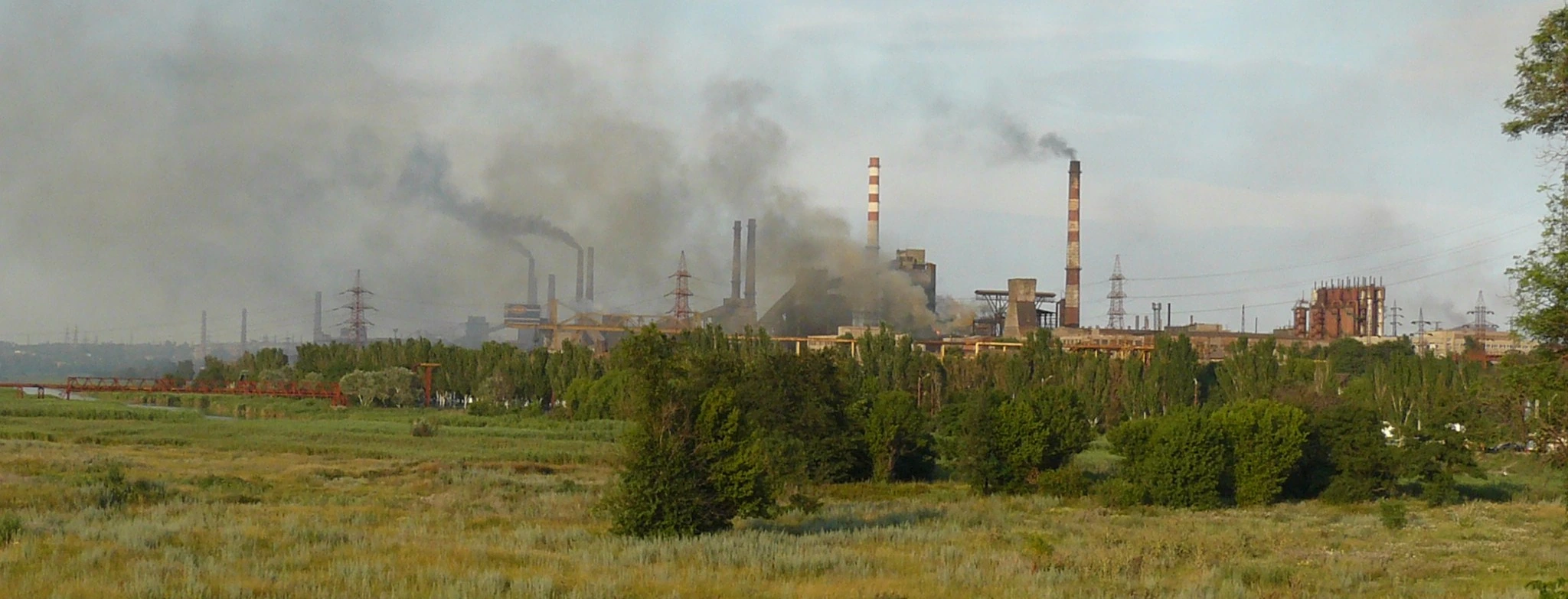
On 28 April 2022 UNOSAT published an assessment comparing Maxar imagery from 25 April with imagery from 21 June 2021. It estimated that about three-quarters of the plant buildings assessed on the map were visibly damaged. The estimate is approximate because the comparison layer did not include every structure. The assessment records damage visible by that date, before the siege ended. [19]
The report classifies 220 of 294 structures as damaged or possibly damaged, with 15 in the latter category. The assessment was preliminary and had not been verified on the ground. [19]
Evacuations: what the counts show
On 3 May the ICRC reported that several dozen civilians had left the steelworks area and that more than 100 people had reached Zaporizhzhia. Civilians joined the convoy along the way, so not everyone had been evacuated from the plant. The Ukrainian president had announced the start of the evacuation on 1 May. That was a statement by a party, distinct from the account by the organisation that helped facilitate it. [4] [5].
On 8 May the ICRC reported more than 170 arrivals in the third safe passage operation from Azovstal and the Mariupol area, including 51 civilians evacuated from the plant. The UN also reported that many people had been prevented from joining the convoys in the preceding days. That passage does not identify who stopped them. Voluntary departure by some does not establish that everyone was free to leave. Reports of people being prevented from leaving do not by themselves prove hostage-taking or the use of human shields. The latter allegation requires evidence that civilians’ presence was used intentionally to shield an objective from attack. [6] [7] [8].
On 5 May the Russian delegation to the Security Council specifically accused Azov fighters at Azovstal of using civilians as human shields. OSCE Moscow Mechanism experts said they had been unable to determine the basis for the Russian allegation. They noted media material about a Ukrainian woman who made a similar allegation about the plant. That is a testimonial lead, not an independent finding. The report does not document the testimony’s provenance sufficiently for direct verification in this dossier. [9] [10].
Allegations of shooting: what is missing for attribution
On 6 June the Russian delegation to the Security Council accused Ukrainian forces of firing on civilians and cited statements attributed to Azovstal prisoners to support allegations against Ukrainian commanders. The minutes show that the allegation was made, not that the UN verified it. The passage does not provide incident-by-incident corroboration that would establish here that the unit named was responsible for the shooting or that civilians were deliberately targeted. The circumstances in which a prisoner speaks matter: a statement made in custody requires independent corroboration. [11].
The Mariupol theatre shows why location matters. For that building, struck on 16 March, the UN Commission examined the Russian allegations of hostage-taking and Azov’s presence. It received accounts of occasional military presence nearby, but found no evidence of a significant military presence in the theatre. This is a finding about that building, not the steelworks or every incident in the city. [12] [13].
Prisoners: what records and images prove
The ICRC began registering prisoners leaving the plant on 17 May and reported on 19 May that it had registered hundreds. This was humanitarian work to trace them and help them keep in touch with relatives. The ICRC did not transport them to detention sites, and its statement does not publish a census by unit or tattoo. Registration does not show that everyone received the same treatment after capture. [3].
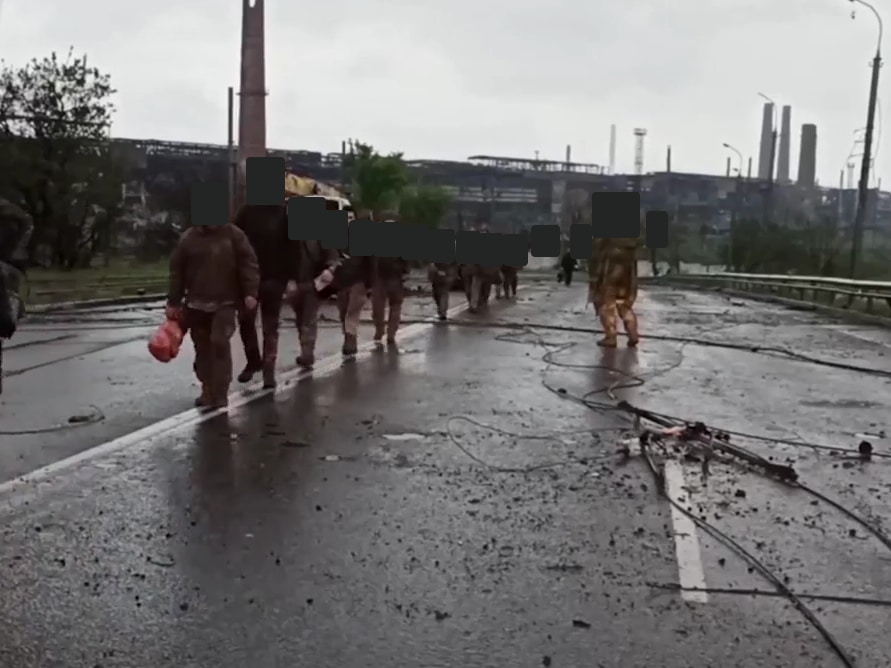
On 25 May 2022, at the OSCE Forum for Security Co-operation, the Russian delegation said its military personnel had seen tattoos with swastikas and SS symbols while searching men who had left Azovstal. The journal records the Russian statement. The OSCE did not make a finding on the allegation in those proceedings. [20]
No set of images with sufficiently documented provenance, dates and unit membership was verified here to estimate how widespread Nazi or neo-Nazi symbols were among Azovstal prisoners. Even an authentic photograph of a single symbol would not show its prevalence. We do not publish identifying or humiliating images of prisoners. Article 13 of the Third Geneva Convention protects them against exposure to public curiosity. The dossier on Azov separately covers the unit’s origins and evolution. [14].
A picture shared in 2022 as showing a Ukrainian prisoner with swastikas was taken in a prison in Belarus in 2005. AFP traced it to its own archive. The finding concerns one misattributed photograph. Identifying people or units and estimating how common the symbols were would require authenticated, dated and representative material. [21]
ICRC: arrival in Zaporizhzhia after evacuation
3 May 2022, 3:51. Footage and testimony at the point of arrival. It does not show people leaving the shelters or establish the conditions of those unable to leave. [17] ICRC statement and footage · sensitive content (18+) ↗ [18]
FAQ
Are Azovstal and Azov the same thing?
No. Azovstal is the steelworks. The Azov Regiment fought alongside other Ukrainian units, including the 36th Marine Brigade.
Did all of the more than 170 evacuees come from the steelworks?
No. The ICRC reported 51 civilians evacuated from the plant and more than 170 total arrivals from Azovstal and the Mariupol area.
Does the presence of civilians prove they were hostages?
No. Coercion, who was responsible and the circumstances require distinct evidence. For human shielding, evidence of the purpose of shielding an objective is also required.
Did the ICRC record the unit and tattoos of every prisoner?
The statement does not establish that. It documents humanitarian registration, not a census of symbols or unit membership.
Source register
- A
- Passage and provenance recorded in the dossier’s editorial checks.
- B
- Siege chronology. The Commission says it had no direct access to the city.
HRW, SITU and Truth Hounds investigation
- A
- Passage and provenance recorded in the dossier’s editorial checks.
- B
- HRW, SITU and Truth Hounds reconstruct the units present. This is not a census.
- A
- Passage and provenance recorded in the dossier’s editorial checks.
- B
- Humanitarian registration of hundreds of prisoners. It does not establish units, symbols or later treatment.
- A
- Passage and provenance recorded in the dossier’s editorial checks.
- B
- Several dozen left the plant area. Over 100 arrivals included people who joined along the route.
- A
- Passage and provenance recorded in the dossier’s editorial checks.
- B
- A party’s announcement that evacuations began. The ICRC account is a distinct operational source.
- A
- Passage and provenance recorded in the dossier’s editorial checks.
- B
- 51 from the plant within more than 170 arrivals; the URL contains a different number from the text.
- A
- Passage and provenance recorded in the dossier’s editorial checks.
- B
- Describes people prevented from leaving. The cited passage does not identify who prevented them.
- A
- Passage and provenance recorded in the dossier’s editorial checks.
- B
- Sets out the rule and the requirement of intent. It does not establish what happened here.
- A
- Passage and provenance recorded in the dossier’s editorial checks.
- B
- Records the Russian delegation’s allegation. It is not a UN finding.
OSCE Moscow Mechanism experts, human shields section
- A
- Passage and provenance recorded in the dossier’s editorial checks.
- B
- Experts could not establish the basis of the allegation. Note 203 points to a media account.
Security Council, S/PV.9056, pp. 21–22
- A
- Passage and provenance recorded in the dossier’s editorial checks.
- B
- Records Russian allegations. It does not corroborate attribution incident by incident.
- A
- Passage and provenance recorded in the dossier’s editorial checks.
- B
- Examines military presence at the theatre. The place and findings are distinct from the steelworks.
- A
- Passage and provenance recorded in the dossier’s editorial checks.
- B
- The same Commission’s theatre summary. It is not independent of its detailed report.
- A
- Passage and provenance recorded in the dossier’s editorial checks.
- B
- Legal framework on prisoners’ dignity. It does not establish breaches in this case.
MOs810 · Wikimedia Commons · 10.07.2012
- A
- The Wikimedia Commons record and original file were checked. MOs810 dates the photograph to 10 July 2012 and releases it under CC BY-SA 3.0.
- B
- The panorama shows the steelworks before the siege. UNOSAT separately documents damage visible in April 2022.
- A
- The terms of the CC BY-SA 3.0 licence were checked.
- B
- The licence allows reuse with attribution and disclosure of changes. The cropped thumbnails are also distributed under CC BY-SA 3.0.
ICRC: arrival in Zaporizhzhia after evacuation
- A
- Official entry and shot list opened. The dossier’s check records sampled viewing.
- B
- Arrival footage from Zaporizhzhia. It neither shows people leaving shelters nor establishes the situation of those unable to leave.
ICRC statement and footage · sensitive content (18+)
- A
- Official entry and shot list opened. The dossier’s check records sampled viewing.
- B
- The newsroom places the footage and accounts in Zaporizhzhia. Access is subject to the publisher’s terms.
UNOSAT assessment 3358 · imagery from 25 April 2022
- A
- Opened the original PDF published on 28 April. It compares Maxar imagery from 25 April 2022 with imagery from 21 June 2021.
- B
- Satellite estimate of damage visible by 25 April. The baseline omitted some structures. It does not attribute individual strikes or identify people.
OSCE Forum · FSC.JOUR/1017, Annex 1 · 25 May 2022
- A
- Read the relevant passage in Annex 1 of the journal for 25 May. It is a statement by the Russian delegation.
- B
- Documents the delegation’s words. It supplies no OSCE finding, does not identify prisoners and does not measure the prevalence of tattoos.
AFP · provenance of a photograph shared in 2022
- A
- Opened AFP’s Spanish-language investigation. AFP traces its photograph to its own archive and dates it to 2005.
- B
- Establishes the origin in Belarus of the specific photo. It does not establish the presence or absence of tattoos among Azovstal prisoners.
Russian Ministry of Defence (Mil.ru)
- A
- Opened the Commons entry and the frame. The entry credits Mil.ru, dates the material to 19 May 2022 and lists CC BY 4.0. The source link contains the version with faces visible.
- B
- Shows people walking near the plant and comes from a party to the conflict. It does not identify their units or substantiate the tattoo allegation.
- A
- Opened the Creative Commons licence text.
- B
- Allows reuse and adaptations with attribution and disclosure of changes.

