
Dossier
Azov since 2014: radical origins, military transformations and accountability
From far-right origins to the National Guard: units, politics, documented abuses, Azovstal and the limits of Russian and US decisions.
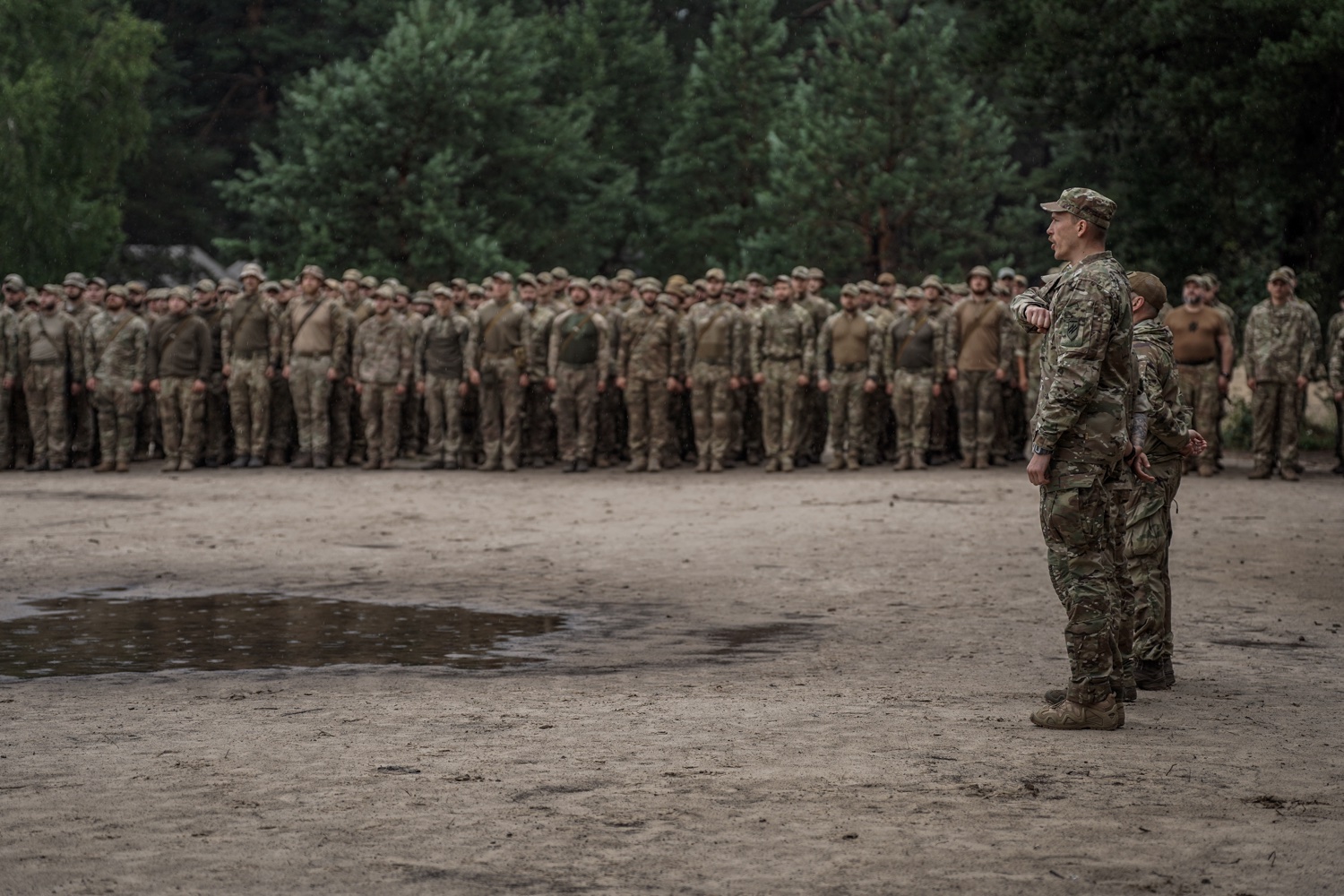
In brief
- Are the far-right origins real? Yes, for the founding core; this does not classify every subsequent member.
- Has it always been the same organisation? No: the military unit, party, veterans' networks and subsequent corps must be identified separately.
- Are there documented allegations of abuse? Yes: UN reports describe specific incidents. Monitoring and a judgment are not the same thing.
- Did state integration or US vetting erase the past? No: they address different questions from criminal responsibility for individual acts.
- Do allegations remove prisoners' rights? No: humanitarian protections do not depend on a political judgment about the unit.
Azov is one of the most controversial names in the Russia–Ukraine war. For some, it symbolises resistance in Mariupol; for others, it proves a neo-Nazi presence within Ukraine's military apparatus. A useful account cannot select one image and erase everything that contradicts it: it must distinguish the unit's origins, its transformations, the political movement and responsibility for specific acts.
This dossier follows the trajectory from 2014 to the structures documented in sources consulted in November 2026. Consultation dates do not make every testimony current: incidents, decisions and photographs are placed in their respective periods. Where documents or judicial outcomes are missing, that limitation remains visible.
1. Azov is not a single organisation
Azov emerged in 2014 with a leadership core from Ukraine's far right. The name subsequently encompassed distinct military structures, political organisations and veterans' networks. Those documented origins do not automatically describe every later member's ideology. [6]
A serious history must therefore answer concrete questions. Which unit is involved? In what year? Is a statement made by its commander, a political leader or an individual soldier? Does an allegation concern an identifiable incident or an undifferentiated collective? These distinctions are essential even when examining serious responsibilities: they prevent both hiding a fact behind a changed acronym and automatically transferring responsibility to someone who did not participate.
Incorporation into a public institution primarily concerns organisation and the chain of command. It is not an amnesty, a judgment on previous conduct or a certificate of personal beliefs. Similarly, identifying continuity among leaders and political circles does not establish who controls every unit today. This is the dossier's framework: follow people, structures and documents without replacing investigation with a universal label.
2. 2014: the founding core and the battalion's creation
Institutional accounts date the special battalion's establishment within the Interior Ministry to 5 May 2014, before its National Guard integration. [1] [3] [4]
Contemporary testimony helps identify those involved at the outset. In an interview published by UNIAN on 11 October 2014, Andriy Biletsky described a small original group from Patriot of Ukraine and said several members held cadre positions in the unit. He also discussed weapons shortages and legalisation under the Interior Ministry. This is a participant's voice, not a neutral operational history: the interview chiefly documents how Biletsky then presented his network and its path towards state recognition. [8]
Andreas Umland traces pre-war networks, including Patriot of Ukraine and the Social-National Assembly, and Biletsky's central role. This genealogy identifies the radical founding core, not every subsequent recruit's beliefs. [6]
Kostiantyn Fedorenko and Umland reconstruct political and financial backing, including support from Avakov and Taruta. They do not provide complete accounts: public authorisation, political support and donations are different things and do not automatically demonstrate ownership-like control over the battalion. [7]
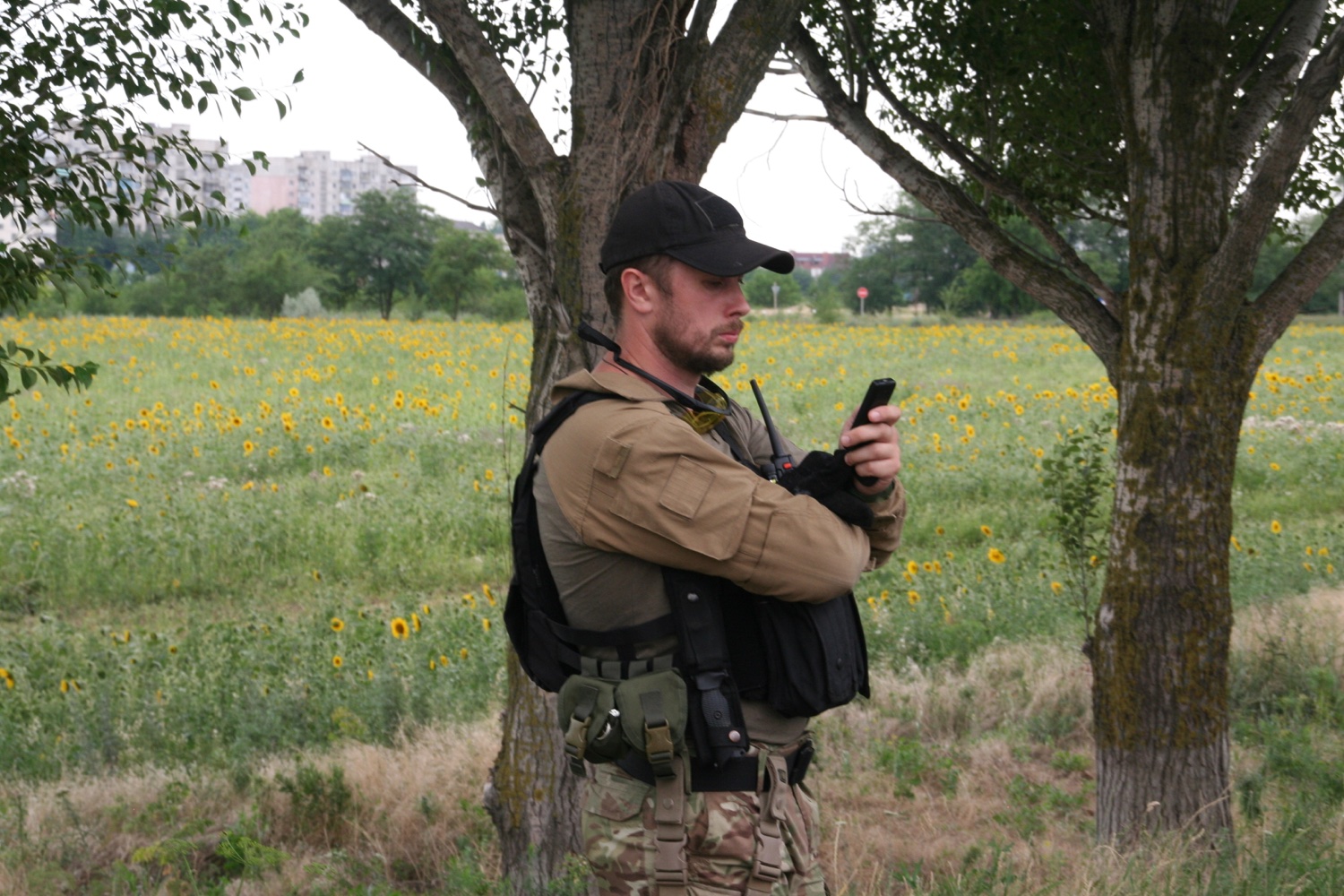
3. Integration into the National Guard: what changed and what it does not prove
The brigade's official history distinguishes three stages: regiment on 17 September 2014; special detachment within National Guard unit 3057 on 11 November; 12th Brigade in February 2023. [1]
In its 2022 commemoration, the National Guard also refers to the integration order of 11 November 2014. The organisational significance is clear: descriptions from that point onwards must include NGU membership. Presenting the entire subsequent history as that of a private militia without institutional subordination erases an essential element. [4]
This does not, by definition, resolve accountability. Assessing an abuse requires identifying the unit involved at the time, possible perpetrators, the relevant chain of command and available findings. A name change does not prove responsibility has disappeared; public status does not make wrongdoing impossible. Nor does it allow every action by groups using similar symbols, or by former members, to be attributed to a unit.
There is also a problem in reading the news: “Azov Battalion” remained a familiar expression even when the structure described was no longer a battalion. Documents and reporting must recover the designation appropriate to the date. Otherwise, the power of the name replaces identification of the organisation.
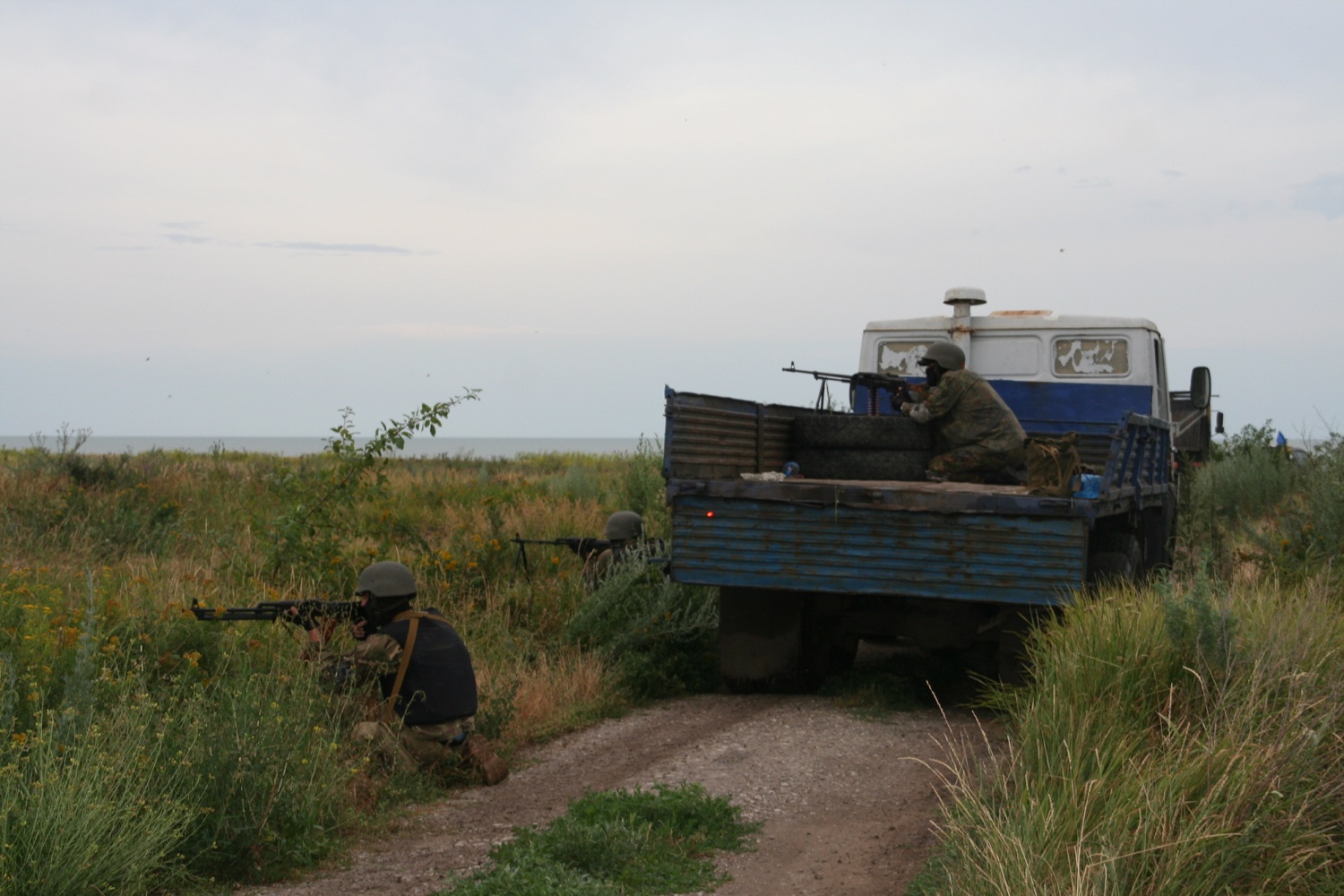
4. Ideology and symbols: evidence is not confined to a photograph
Fedorenko and Umland describe the Black Sun and Wolfsangel as stylised or coded neo-Nazi symbols used by the unit, which denied that they referred to German fascism. They also report Biletsky's denials of racist statements attributed to him and his later, non-ethnic definition of the nation. These responses must be assessed against the evidence, not treated as automatically conclusive. [7]
Umland reports racist statements attributed to Biletsky and his denial. The original texts have not been independently authenticated for this dossier. [6]
The brigade's website presents a nationalist prayer and decalogue linked to UPA remembrance. This is declared cultural self-representation, not a measure of every soldier's beliefs. [1]
The question is not whether to trust only the unit's explanations or read every emblem as an individual confession. Symbols, texts, leadership selection and behaviour are different kinds of evidence. A photograph can document a symbol displayed by one person at a particular moment; it is not a census of the entire formation. Discussing ideological change also requires comparisons over time, rather than applying only images of the origins to the present.
5. National Corps, money and networks: the movement is not the unit
On 14 October 2016, the congress reported by Interfax renamed an existing party National Corps and elected Biletsky its leader. Participants included veterans, volunteers and civilian representatives. The regiment did not formally become a party: a distinct political structure emerged, supported by people connected with that experience. [9]
Interfax described proposals for a stronger presidency, restored nuclear status, nationalisation, Baltic–Black Sea cooperation and debate on capital punishment. These were party policies, not operational orders to the regiment. [9]
Distinction does not mean absence of relationships. Bellingcat's 2018 investigation into training at the European Security Academy reconstructed links among individual servicemen, veterans and radical political circles. It included responses from the company, a private Polish business: those courses should not be recast as a NATO mission. Individual cases illustrate the networks' permeability, not the ideological composition of the whole force. [10]
Political financing also has its own history. In 2019, Texty analysed donations and security activities linked to National Corps circles, collecting responses. Former fighters working at industrial plants does not automatically prove that the plants' owner financed the battalion's foundation. Still less does it make the party's accounts interchangeable with those of a public brigade. [11]
In 2020, Chesno published a former activist's allegation that cash distributed to people was subsequently paid in as personal donations. Biletsky and donors disputed the account. The investigation deserves attention as a transparency issue and a comparison of testimonies; it does not by itself establish a judicial conviction or the ultimate origin of all funds. [12]
Assessing this milieu's influence therefore requires separating different questions: political representation, mobilisation capacity, financial resources and military positions. Data about one dimension does not automatically measure all the others.
6. Two military lineages that must not be confused
In January 2023, the National Guard itself issued an explicit explanation: NGU Azov and Land Forces Azov were not the same unit. The first descended from the 2014 formation. The second followed a lineage originating in Kyiv's territorial defence in 2022, becoming SSO Azov on 9 March and the 3rd Assault Brigade on 26 January 2023. [3]
The 3rd Army Corps' official history claims shared roots in Biletsky's milieu, but describes its own transformation from the 3rd Brigade into a corps in March 2025. It identifies Biletsky as commander. Shared roots and distinct structures can therefore both be true. [5]
On the National Guard side, the 1st Azov Corps is commanded by Denys Prokopenko. The 12th Brigade has not simply disappeared into a new designation: it remains a component of the corps and its founding core. The corps website distinguishes establishment on 7 March 2025 from the commander's appointment on 7 April. [2]
The March date is also confirmed by the National Guard's first-anniversary statement. [13] Its historical calendar attributes establishment to Interior Ministry order no.160 of 7 March 2025. [14] These references date the transformation without confusing the organisational event with subsequent public announcements.
The essential map is therefore this: the 12th Brigade and 1st Corps belong to the NGU lineage; the 3rd Brigade and 3rd Corps to the Land Forces lineage. “Azov” alone does not identify who carried out an action, received assistance or expressed a position. Before assigning responsibility or achievements, the name must be completed.
7. What the United Nations documents about abuses
Discussing allegations against Azov requires two simultaneous precautions: neither erase incidents documented by international observers nor turn the unit's name into a collective conviction. Verification concerns specific facts, people, places and periods. Testimony assessed by the UN, an indictment and a final judgment are not the same kind of evidence.
In its report published in 2016, the UN Human Rights Office describes a Mariupol resident detained by three Azov members on 28 January 2015, held at sports school no.61 and tortured before transfer to the SBU. The same document reports sexual violence against a man in August–September 2014, attributed to members of the Azov and Donbas battalions, not Azov alone. These are specific incidents, not statistics about the entire unit. The report also notes barriers to reporting and the absence of forensic examinations in the documented sexual-violence cases: an evidentiary limitation to disclose, not a reason to ignore victims. [15]
A subsequent thematic report reconstructs a woman's abduction and torture in Zaporizhzhia region in May 2014. The perpetrators, identified as Azov members, claimed to act on SBU orders: that assertion alone does not prove an agency directive. The UN applies the “reasonable grounds to believe” standard and explains that its sample does not measure the overall prevalence of violence. For 14 March 2014–31 January 2017, the report finds no grounds to believe sexual violence was used for strategic or tactical purposes: this does not erase individual incidents. [16]
The allegations do not concern detention alone. At Shyrokyne, the UN documented civilian buildings being used and property looted in the context of operations by Ukrainian forces and the Azov Regiment. Material gathered also dated to 2014: the report's November 2015–February 2016 window does not date every incident described. Attribution and chronology cannot be simplified into one event. [17]
In the case of Volodymyr Lobach, killed in Reshetylivka on 8 May 2014, the UN report attributes the killing to Azov members and notes that no suspects had been identified by 1 June 2016. That describes the investigation then, not a final outcome or the proceedings' entire subsequent history. [18]
Accountability has not disappeared from international documents. In 2025, the UN Committee against Torture expressed concern about inadequate investigations, few convictions and pending appeals, naming Tornado, Aidar and Azov separately. It requested information about outcomes and attention to superior responsibility. The document does not allocate convictions among the three formations: it cannot support assigning the total to Azov or claiming that none of its members has ever been convicted. [19]
This distinction is crucial: Aidar and Tornado are not alternative names for Azov. Nor are a political activist, an associate of the civilian movement and a serving soldier interchangeable categories. Attributing an abuse to a person or chain of command requires proving the connection, not inferring it from a symbol, sympathy or shared name. Organisational transformation does not erase previous responsibilities, but neither does it automatically transfer them to every new member.
8. Mariupol: military role does not settle ideology
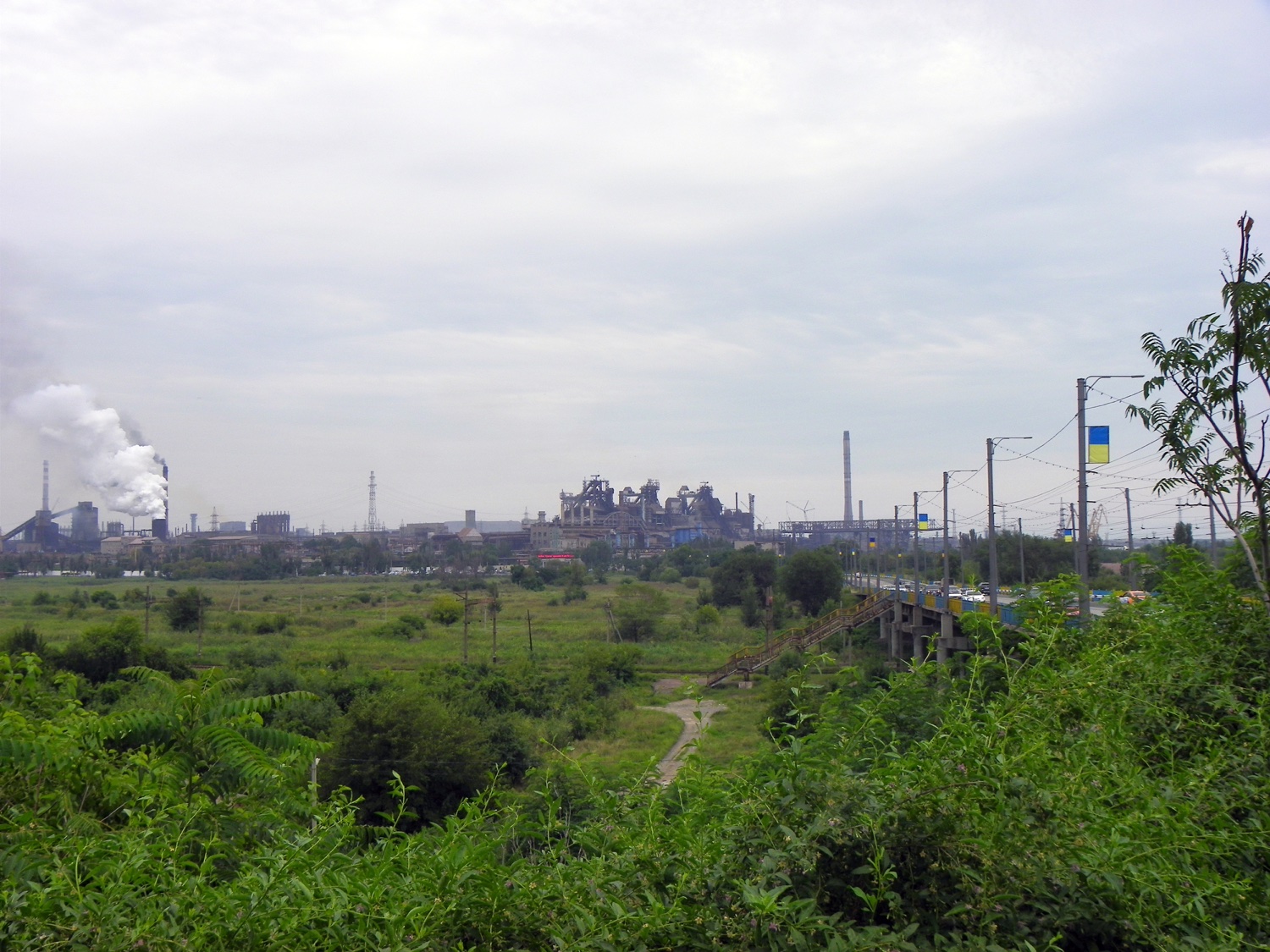
In 2022, Mariupol and the Azovstal steelworks made Azov internationally prominent. But the unit's history is not the entire city's: civilians, different military units and people unconnected with the political movement shared the siege. Amnesty International's investigation of Mariupol's theatre distinguishes the forces present, placing Azov mainly in the eastern city and steelworks. This describes that phase, not every position throughout the battle. [27]
Propagandistic uses of the name also require specific scrutiny. Russia's Defence Ministry accused Azov of blowing up the theatre from within on 16 March 2022. Examining that hypothesis, testimony and structural damage, Amnesty found no convincing support and concluded that a Russian airstrike caused the destruction. This is an attributed investigative finding, not a final criminal judgment; it does not erase abuses attributed to Azov members elsewhere. [27]
The two questions must remain independent: what responsibility emerges in an incident, and what role did the unit play in the city's defence? Answering the second does not pre-emptively absolve the first. Equally, radical founders do not prove that every allegation against Azov is true. In politically charged cases, switching the subject, date or evidentiary standard creates the greatest distortions.
Watch on ABC News · 29 sec [39]
Evacuation of civilians from Azovstal, May 2022. The footage documents the evacuation and cannot establish responsibility for the abuses discussed in the investigation.
UN video · Evacuating civilians from Azovstal
At the briefing of 3 May 2022, spokesperson Farhan Haq reads the Secretary-General’s statement on the evacuation coordinated with the ICRC before Osnat Lubrani speaks. The recording documents what the UN reported. [42] [43]
Loading opens the external UN Web TV player. Use the player’s Play button to start playback.
9. From surrender to captivity: what we know about Olenivka
On 19 May 2022, the International Committee of the Red Cross announced that it had registered hundreds of prisoners from Azovstal. Registration had begun on 17 May; the statement specified that the organisation was not transporting them to detention facilities. Recording names and family contacts was intended to trace captured people, not certify the safety of every subsequent transfer. [28]
In its later explanation of its role, the ICRC said it had facilitated the fighters' passage as a neutral intermediary, but had not guaranteed their safety in enemy hands. It also clarified that its two visits to Olenivka in May 2022 had not included individual interviews with detainees according to its procedures. Responsibility for protecting them remained with the conflict parties. This clarification describes a humanitarian mandate, not responsibility for the explosion. [29]
During the night of 28–29 July 2022, explosions in a barrack at penal colony no.120 near Olenivka, in Russian-occupied territory, killed dozens of prisoners. OHCHR's March 2023 report reconstructed the transfer of 193 Azov Regiment prisoners into that barrack and documented serious delays in assistance. Testimony and collected material constituted monitoring evidence, not findings from a UN investigators' visit to the site, which had not been permitted. [30] [31] [32]
The subsequent October 2023 report concluded that the damage was incompatible with the account of Ukrainian HIMARS rockets. It did not, however, definitively identify the weapon or its point of origin. It also described contamination of the scene and constraints preventing independent access. OHCHR's July 2024 statement reiterated these conclusions and the call for accountability. Refuting a particular account of the weapon does not, by itself, constitute a judgment on the attack's perpetrators or chain of command. [31] [32]
Prisoner status must not become a political reward. Guarantees against torture and ill-treatment do not depend on sympathy for a captive's ideas. At the same time, protecting prisoners does not prevent individual trials for crimes actually committed, with legally required safeguards. This distinction enables serious discussion of both abuses attributed to Azov members and violence suffered by its prisoners, without using either to offset the other. [22] [19]
10. Russia's designation and trials: what they establish
On 2 August 2022, Russia's Prosecutor General announced that the Supreme Court had recognised Azov as a terrorist organisation and banned its activities in Russia. This is a decision under Russian law, not a worldwide classification. The prosecution statement also summarises allegations advanced in the proceedings: it is not equivalent to reading the complete judicial reasoning or independently verifying each fact. [20]
On 26 March 2025, the same office announced 23 convictions by the Southern District Military Court, eleven in absentia, with sentences of 13–23 years. Listed offences included terrorist participation and training, and violent seizure of power. The statement does not present these as judgments on the individual torture incidents described above by the UN. Using them to declare that list of abuses judicially proven would therefore be a logical leap. [21]
Protections for captured people must also remain separate from political labels. According to the ICRC, in an international conflict prisoners of war cannot be prosecuted solely for lawful participation in hostilities; they can be held accountable for war crimes. Status must be assessed under the applicable rules and does not make every act lawful. “Terrorist” does not authorise torture or inhuman treatment, just as army membership does not confer immunity for individual crimes. [22]
11. United States: Leahy vetting does not rewrite the past
In June 2024, Washington announced that the 12th Special Forces Azov Brigade had passed Leahy vetting. CNN reported the State Department's statement that no evidence of gross human rights violations had been found for the unit examined. This is the decision communicated by US authorities, not an acquittal regarding historical cases. The full reasoning and vetting file are not published in the source consulted. [23]
Leahy rules concern eligibility for US assistance based on credible information about gross violations. Their purpose is not to certify every soldier's ideology or determine the criminal responsibility of all predecessors. Separate regimes apply to the State and Defense Departments: reducing them to an overall moral judgment on the name Azov is misleading. [24]
Appropriations laws are another layer. The March 2024 US law prohibited using that act's funds for the Azov Battalion. A similar named restriction appears in the law for fiscal year 2026, which ended on 30 September 2026. It is therefore incorrect to say Congress removed every restriction in 2024. These texts alone do not establish the illegality of any supply to the 12th Brigade: the beneficiary unit, funding and applicable instrument must be distinguished. [25] [26]
The conclusion is not a choice between “everything fabricated” and “everyone guilty”. It is to hold together evidence of abuses, the unit's transformations and the actual scope of public decisions, without allowing one to cancel the others.
FY2027 interim funding continues FY2026 Defense appropriations and conditions through December 11, 2026, unless superseded earlier. Continuity of the text neither determines which current units fall within the clause nor documents deliveries. [33]
Watch the US State Department briefing [40] · Read the official transcript [41]
Briefing of 24 June 2024. Near the end of the transcript, the spokesperson distinguishes the brigade that underwent Leahy vetting from the unit formed in 2014. The explanation does not establish a statutory exemption.
12. Open questions do not license arbitrary answers
Available documentation establishes real organisational transformations, but not a reliable census of current soldiers' personal beliefs. We have no verified percentage of neo-Nazis in the unit, nor complete accounts identifying one hidden owner of the entire milieu. Saying these measurements are missing does not make the questions irrelevant; it means avoiding an invented number as a substitute for difficult research.
Continuity must be assessed across separate dimensions. A person can change posts while retaining political relationships. A unit can recruit new members while preserving symbols and traditions. A party can exploit veterans' prestige without automatically issuing orders to the brigade. Verification must reconstruct those connections when documented, not deny them or universalise them for convenience.
“Normalisation” can also conceal different questions: administrative normalisation, military discipline, ties to the far right or criminal accountability? An organisational act chiefly addresses the first; it does not replace evidence on the others. A reputation earned in combat does not erase the rights of victims of possible abuses. Documented responsibilities of some do not erase captives' rights or demonstrate everyone's guilt.
13. How to read the next story about Azov
Before sharing an image or story, at least five things must be identified: who is speaking, which organisation is named, when the incident occurred, which document supports it, and what that document actually establishes. A 2014 photograph can be authentic yet misleading if presented as a portrait of 2026. A prosecution statement can be authentic without proving every allegation it contains. US vetting can be real without being a judgment on a movement's history.
The criterion is not to seek a reassuring formula that satisfies both sides. It is to apply the same method to every assertion, including those seemingly confirming what we already think. Radical origins, institutional transformations, abuses and violence against prisoners belong to the same history, but are not interchangeable evidence.
For broader context, see the Russia–Ukraine conflict hub and Russia and Ukraine: their arguments compared. Azov's history helps explain part of the conflict; it cannot serve as the sole explanation of a country or substitute for examining wartime responsibility.
Essential timeline
- 5 May 2014: establishment of the Interior Ministry special battalion, according to institutional accounts. [1] [3] [4]
- 17 September 2014: expansion into a regiment in the unit's official history. [1]
- 11 November 2014: integration into the National Guard. [4]
- 14 October 2016: National Corps congress, a distinct political organisation. [9]
- 2022: a separate military lineage emerges in Kyiv's defence, later SSO Azov. [3]
- 17 May 2022: ICRC registration of fighters leaving Azovstal begins. [28]
- 28–29 July 2022: explosions at Olenivka penal colony. [30]
- 2 August 2022: Russia's terrorist designation announced. [20]
- 26 January 2023: the SSO lineage becomes the Land Forces' 3rd Assault Brigade. [3]
- February 2023: the National Guard unit is reorganised as the 12th Brigade. [1]
- June 2024: the 12th Brigade's successful Leahy vetting announced. [23]
- 7 March 2025: establishment of the NGU 1st Corps, according to the National Guard. [13] [14]
- March 2025: establishment of the Land Forces' 3rd Corps in its official history. [5]
- 26 March 2025: Russian prosecutors announce 23 convictions in the military trial. [21]
- 2025: the UN Committee against Torture revisits accountability for historical abuses. [19]
Evidence by claim
Strong evidence
The radical origins are documented.
Research identifies the founding core, not every subsequent member’s beliefs. [6]
Study read in specified passages; original racist texts not directly authenticated.
Strong evidence
The party is not the unit.
The 2016 congress established a distinct political structure, with personal ties and veterans. [9]
Congress reporting, not a census of every network.
Strong evidence
The brigades are distinct.
The NGU clarified this in January 2023. [3]
Institutional distinction, not absence of personal ties.
Strong evidence
CAT raised investigations again in 2025.
The recommendation names several formations without allocating convictions among them. [19]
Green for the document’s content, not general criminal responsibility.
Strong evidence
The Russian designation is a Russian decision.
The 2022 statement does not constitute a worldwide classification. [20]
Prosecution statement read, not complete judicial reasoning.
Strong evidence
The ICRC did not guarantee safety in captivity.
Its clarification distinguishes its humanitarian role from the parties’ obligations. [29]
ICRC source, describing the situation at the clarification’s date.
Conflicting evidence or fragile conclusion
Olenivka: have the weapon and attack’s origin been established with certainty?
OHCHR rules out the HIMARS attack account but does not establish weapon and origin with certainty. [31] [32]
No UN access to the site and no final criminal attribution in the cited documents.
Frequently asked questions
Was Azov founded as a Nazi organisation?
A significant founding core came from the radical far right. Historical research documents that genealogy, not uniform beliefs among every recruit or subsequent structure. [6]
Did state integration eliminate those connections?
Integration defines subordination and structure; it does not automatically measure beliefs or personal ties. Continuities or ruptures require specific evidence, not just an administrative act.
Is National Corps the military brigade?
No. It is a distinct political entity. Personal ties and veterans' involvement do not make the organisations identical. [9]
Are the two brigades the same unit?
No: the NGU expressly distinguishes two institutional trajectories. [3]
What distinguishes the 1st Corps from the 12th Brigade?
The corps is a larger structure containing the 12th Brigade. Its establishment does not mean the brigade simply ceased to exist. [2]
Are the abuses merely Russian allegations?
Can Aidar and Tornado crimes be added to Azov's?
No: they are different formations. A document mentioning them together does not authorise transferring acts or convictions between them. [19]
Did US vetting acquit Azov?
Did every US restriction disappear in 2024?
Did the Red Cross guarantee Azovstal prisoners' safety?
The ICRC says no: it facilitated passage and registration, but could not guarantee what would happen in enemy hands. [29]
Has the UN definitively identified who struck Olenivka?
Does a “terrorist” designation remove a prisoner's protections?
No. A domestic label does not authorise torture; responsibility for possible crimes and applicable protections must be assessed under the law, without automatic collective conclusions. [22]
Sources, licences and limitations
Evidence cutoff . The A/B checks identify the passage consulted and the limits of the source.
- Check A. Provenance and passage consulted
- traditions declared by the brigade · 2014–2023 · Historical and institutional sections; traditions. Institutional source or attributed statement.
- Check B. What it documents and its limits
- Describes the institutional structure reported. The cited orders were not obtained in the original.
- Check A. Provenance and passage consulted
- 1st Azov Corps · 2025 · History, command and FAQ. Institutional source or attributed statement.
- Check B. What it documents and its limits
- Describes the institutional structure reported. The cited orders were not obtained in the original.
- Check A. Provenance and passage consulted
- NGU's 2023 explanation · 27.01.2023 · Main article. Institutional source or attributed statement.
- Check B. What it documents and its limits
- Distinguishes the structures. It does not establish the absence of personal ties.
- Check A. Provenance and passage consulted
- National Guard anniversary account, 2022 · 05.05.2022 · Main article. Institutional source or attributed statement.
- Check B. What it documents and its limits
- Describes the institutional structure reported. The cited orders were not obtained in the original.
- Check A. Provenance and passage consulted
- history of the 3rd Corps · 2022–2025 · Historical section. Institutional source or attributed statement.
- Check B. What it documents and its limits
- Distinguishes the structures. It does not establish the absence of personal ties.
- Check A. Provenance and passage consulted
- Umland's study of Azov's origins · 2019 · pp. 105–118. Published research, relevant passages.
- Check B. What it documents and its limits
- Supports the account of the founding. Attributed original writings and individual beliefs remain outside its scope.
- Check A. Provenance and passage consulted
- Fedorenko and Umland · 2022 · pp. 237–239, 243–244, 247. Published research, relevant passages.
- Check B. What it documents and its limits
- Documents network links and testimony within its scope. It is neither a complete set of accounts nor a judicial finding.
- Check A. Provenance and passage consulted
- UNIAN interview with Biletsky · 11.10.2014 · Opening interview exchanges. Institutional source or attributed statement.
- Check B. What it documents and its limits
- Documents what the interviewee said. The episodes and numbers they report require other evidence.
- Check A. Provenance and passage consulted
- Interfax on the congress · 14.10.2016 · Main article. Reporting in the publication identified.
- Check B. What it documents and its limits
- Documents the congress and party structure. The full statute was not checked.
- Check A. Provenance and passage consulted
- Bellingcat · 30.08.2018 · Passages on training, networks and the company’s response. Reporting in the publication identified.
- Check B. What it documents and its limits
- Concerns individuals and a private company. It is no evidence of a NATO mission or collective ideology.
- Check A. Provenance and passage consulted
- Texty · 28.03.2019 · Financing and replies; incomplete direct copy. Reporting in the publication identified.
- Check B. What it documents and its limits
- Documents network links and testimony within its scope. It is neither a complete set of accounts nor a judicial finding.
- Check A. Provenance and passage consulted
- Chesno · 18.05.2020 · Interviews, allegations and replies. Reporting in the publication identified.
- Check B. What it documents and its limits
- Documents network links and testimony within its scope. It is neither a complete set of accounts nor a judicial finding.
- Check A. Provenance and passage consulted
- NGU anniversary statement · 07.03.2026 · Main article. Institutional source or attributed statement.
- Check B. What it documents and its limits
- Describes the institutional structure reported. The cited orders were not obtained in the original.
- Check A. Provenance and passage consulted
- NGU calendar, 7 March · 07.03.2025 · 7 March entry; Order No. 160 cited. Institutional source or attributed statement.
- Check B. What it documents and its limits
- Describes the institutional structure reported. The cited orders were not obtained in the original.
- Check A. Provenance and passage consulted
- OHCHR · 14th report on the human rights situation in Ukraine · 2016 · §§45–49, 55–60, 100, 115. UN monitoring document, relevant passages.
- Check B. What it documents and its limits
- Documents the reported incidents or analysis. No individual judgment was obtained for that passage.
- Check A. Provenance and passage consulted
- OHCHR · Conflict-related sexual violence in Ukraine · 2017 · §§4–9, 25–30, 66–69. UN monitoring document, relevant passages.
- Check B. What it documents and its limits
- Documents the reported incidents or analysis. No individual judgment was obtained for that passage.
- Check A. Provenance and passage consulted
- OHCHR · 13th report on the human rights situation in Ukraine · 03.03.2016 · Shyrokyne, civilian premises and looting. UN monitoring document, relevant passages.
- Check B. What it documents and its limits
- Documents the reported incidents or analysis. No individual judgment was obtained for that passage.
- Check A. Provenance and passage consulted
- annex I, §8 · 2016 · §§1–5 and Annex I §8. UN monitoring document, relevant passages.
- Check B. What it documents and its limits
- Documents the reported incidents or analysis. No individual judgment was obtained for that passage.
- Check A. Provenance and passage consulted
- Committee against Torture · CAT/C/UKR/CO/7 · 17.06.2025 · §§17–18; official HTML. UN monitoring document, relevant passages.
- Check B. What it documents and its limits
- Records UN concerns. It does not break down convictions by the units named.
- Check A. Provenance and passage consulted
- Prosecutor General of Russia · Supreme Court designation · 02.08.2022 · Main statement. Institutional source or attributed statement.
- Check B. What it documents and its limits
- Records the decision or outcome announced by prosecutors. Full reasons and appeals were not verified.
- Check A. Provenance and passage consulted
- Prosecutor General of Russia · Military court sentences · 26.03.2025 · Main statement. Institutional source or attributed statement.
- Check B. What it documents and its limits
- Records the decision or outcome announced by prosecutors. Full reasons and appeals were not verified.
- Check A. Provenance and passage consulted
- ICRC · Prisoners of war and detainees · Applicable protections. Institutional document, relevant passages.
- Check B. What it documents and its limits
- Explains legal protections. It does not adjudicate the conduct of individual defendants.
- Check A. Provenance and passage consulted
- CNN via KESQ · US assistance and the Azov Brigade · 12.06.2024 · Main article; statement attributed to US State Department. Republished report with an attributed statement.
- Check B. What it documents and its limits
- Concerns vetting scope or the attributed decision. It does not establish the individual case file or an acquittal.
- Check A. Provenance and passage consulted
- Congressional Research Service · IF10575 · 25.04.2024 · State/DOD, scope of prohibited behavior. Institutional document, relevant passages.
- Check B. What it documents and its limits
- Concerns vetting scope or the attributed decision. It does not establish the individual case file or an acquittal.
- Check A. Provenance and passage consulted
- GovInfo · Public Law 118-47 · 23.03.2024 · Division A §8107. GovInfo legal text, provisions and immediate context.
- Check B. What it documents and its limits
- Sets the conditions for the appropriations identified. It establishes neither a delivery nor how the clause applies to every unit.
- Check A. Provenance and passage consulted
- GovInfo · Public Law 119-75 · 03.02.2026 · Division A §8105. GovInfo legal text, provisions and immediate context.
- Check B. What it documents and its limits
- Sets the conditions for the appropriations identified. It establishes neither a delivery nor how the clause applies to every unit.
- Check A. Provenance and passage consulted
- Amnesty International · “Children” · 06.2022 · pp. 2–5, 39–41; accessed via the web report. Published research, relevant passages.
- Check B. What it documents and its limits
- Documents the reported incidents or analysis. No individual judgment was obtained for that passage.
- Check A. Provenance and passage consulted
- ICRC · Registration of prisoners of war from Azovstal · 19.05.2022 · Main statement. Institutional document, relevant passages.
- Check B. What it documents and its limits
- Documents the ICRC’s stated role. It establishes neither a complete count nor a guarantee about custody.
- Check A. Provenance and passage consulted
- ICRC · Olenivka and the ICRC’s role · 26.07.2023 · Main FAQ. Institutional document, relevant passages.
- Check B. What it documents and its limits
- Documents the ICRC’s stated role. It establishes neither a complete count nor a guarantee about custody.
- Check A. Provenance and passage consulted
- OHCHR · Treatment of prisoners of war · 24.03.2023 · §§72–76, note 48. UN monitoring document, relevant passages.
- Check B. What it documents and its limits
- Documents UN analysis and its access limitations. It does not definitively identify who carried out the attack.
- Check A. Provenance and passage consulted
- OHCHR · 36th periodic report · 04.10.2023 · §§82–90, notes 33–51. UN monitoring document, relevant passages.
- Check B. What it documents and its limits
- Documents UN analysis and its access limitations. It does not definitively identify who carried out the attack.
- Check A. Provenance and passage consulted
- OHCHR · Olenivka, two years since the deadly strike · 26.07.2024 · Main statement. UN monitoring document, relevant passages.
- Check B. What it documents and its limits
- Documents UN analysis and its access limitations. It does not definitively identify who carried out the attack.
- Check A. Provenance and passage consulted
- GovInfo · Public Law 119-103 · 2026 · §§101(3), 103, 106. GovInfo legal text, provisions and immediate context.
- Check B. What it documents and its limits
- Sets the conditions for the appropriations identified. It establishes neither a delivery nor how the clause applies to every unit.
- Check A. Provenance and passage consulted
- Wikimedia Commons · YeServatynska · July 14, 2023 · CC0 1.0 · Photograph resized without cropping.
- Check B. What it documents and its limits
- Commons description read; own work and licence declared. Image inspected. Not independent proof of every identity or of events outside the scene. Denys Prokopenko in front of an Azov Brigade formation, 14 July 2023. Archive photograph.
- Check A. Provenance and passage consulted
- Wikimedia Commons · Carl Ridderstråle · July 5, 2014 · CC BY-SA 4.0 · Photograph resized without cropping.
- Check B. What it documents and its limits
- Commons description read; own work and licence declared. Image inspected. Not independent proof of every identity or of events outside the scene. Andriy Biletsky on patrol near Mariupol, 5 July 2014. Archive photograph.
- Check A. Provenance and passage consulted
- Wikimedia Commons · Carl Ridderstråle · July 5, 2014 · CC BY-SA 4.0 · Photograph resized without cropping.
- Check B. What it documents and its limits
- Commons description read; own work and licence declared. Image inspected. Not independent proof of every identity or of events outside the scene. Azov Battalion servicemen near Mariupol, 5 July 2014. The image shows the unit at that time, not its current composition.
- Check A. Provenance and passage consulted
- Wikimedia Commons · Blast furnace chip worker · August 27, 2021 · CC BY-SA 3.0 · Photograph resized without cropping.
- Check B. What it documents and its limits
- Commons description read; own work and licence declared. Image inspected. Not independent proof of every identity or of events outside the scene. The Azovstal complex on 27 August 2021, before the full-scale invasion and 2022 siege. Archive photograph.
- Check A. Provenance and passage consulted
- Wikimedia Commons · Dmytro Kozatskyi · March 19, 2022 · CC BY-SA 4.0 · Photograph resized without cropping.
- Check B. What it documents and its limits
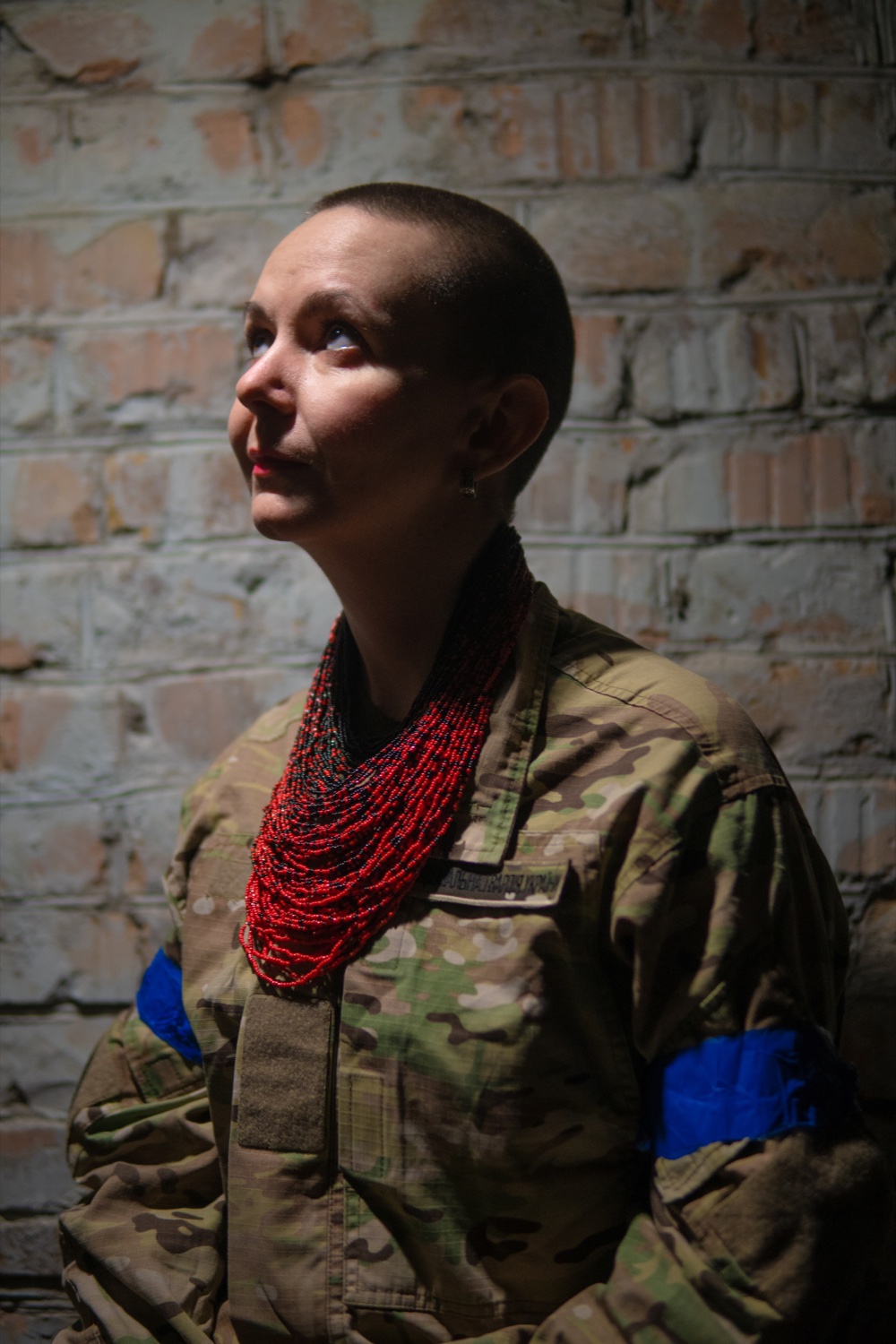
- Commons description read; own work and licence declared. Image inspected. Not independent proof of every identity or of events outside the scene. Valeriia Subotina (Karpylenko) at Azovstal, 19 March 2022, photographed by Dmytro Kozatskyi. Archive photograph.
- Check A. Provenance and passage consulted
- ABC News · 05.2022 · 29 s. Video opened and played on the ABC News page; verification is limited to the evacuation sequence.
- Check B. What it documents and its limits
- Evacuation of civilians from Azovstal, May 2022. The footage documents the evacuation and cannot establish responsibility for the abuses discussed in the investigation.
- Check A. Provenance and passage consulted
- U.S. Department of State / YouTube · 24.06.2024. Official video played on YouTube; the Azov exchange is identified in the transcript, with no verified timecode.
- Check B. What it documents and its limits
- Briefing of 24 June 2024. Near the end of the transcript, the spokesperson distinguishes the brigade that underwent Leahy vetting from the unit formed in 2014. The explanation does not establish a statutory exemption.
- Check A. Provenance and passage consulted
- Read the official transcript · 24.06.2024
- Check B. What it documents and its limits
- Briefing of 24 June 2024. Near the end of the transcript, the spokesperson distinguishes the brigade that underwent Leahy vetting from the unit formed in 2014. The explanation does not establish a statutory exemption.
- Check A. Provenance and passage consulted
- United Nations Web TV · 3 May 2022 · 03.05.2022. Official UN recording of 3 May 2022. Played the opening passage about the evacuation. The archive supplies an embeddable player.
- Check B. What it documents and its limits
- Documents what the UN said about its own humanitarian operation. The written statement and briefing come from the same organisation.
- Check A. Provenance and passage consulted
- United Nations in Ukraine · Osnat Lubrani · 03.05.2022. Statement by UN Humanitarian Coordinator Osnat Lubrani, dated 3 May 2022. Checked the evacuation passage.
- Check B. What it documents and its limits
- Describes civilians leaving, UN–ICRC coordination and assistance on arrival. The total applies to the group described by the coordinator.


