Reporting
Chemical weapons in Ukraine: EU calls on OPCW to establish responsibility
AI-assisted translation from Italian. Independent rereading is pending.
In brief
On 18 November the EU’s diplomatic service called on Moscow to cease chemical weapons use in Ukraine and on the OPCW to identify those responsible. The attribution to Russian forces comes from the Ukrainian national investigation cited by the EU. The OPCW Technical Secretariat records its assistance and its assessment of certain procedures for a September 2024 incident. [1] [2]
The positions of Kyiv and the European Union
The Ukrainian submission is dated 13 November and its cover records distribution on 17 November. Kyiv attributes widespread use of riot control agents as weapons to Russian forces, according to the EU statement citing the national inquiry. The EU’s diplomatic service called on the OPCW to attribute responsibility without delay. It said the EU was ready for further sanctions. The adoption of a new measure would require a separate act. [1] [3]
What the OPCW Technical Secretariat examined
The note dated 17 November refers to a previous technical assistance visit concerning the 20 September 2024 incident and records Ukraine’s request for support with its inquiry. In the annex, the Secretariat assesses certain procedures for collecting and handling environmental and digital evidence, including the chain of custody, against its own standards. That is technical work on a specific incident. The circulation of the national investigation through the OPCW is distinct from a finding of responsibility by the organisation. [2] [3]
The convention and the open questions
Article I of the convention prohibits using riot control agents as a method of warfare. The rule, a possible breach in a particular case and the identity of the perpetrator require distinct evidence. This review draws on the EEAS statement, the technical note and the cover of the Ukrainian report. The Ukrainian inquiry’s annexes were not verified in full. A Russian response specifically addressing the 17 November documents was not located in the sources consulted. [4]
Frequently asked questions
Did the OPCW attribute the incidents to Russia in these documents?
Did the EU adopt new sanctions through this statement?
The 18 November statement expresses readiness for further sanctions. A separate act would establish their adoption. [1]
What does the convention prohibit regarding riot control agents?
Article I prohibits their use as a method of warfare. [4]
Source register
The A/B results come from the research and rechecks documented in each source entry. The notes explain what remains open.
-
Ukraine: Statement by the Spokesperson on the perpetrators of chemical weapons attacks · European External Action Service ·
- A · Source identity and provenance
- Original consulted
Original EEAS statement dated 18 November, body read on the institution’s site.
- B · What the source substantiates
- Attributed statement
Supports the EU position and its readiness for further sanctions. The cited attribution depends on Ukraine’s inquiry.
-
C-31/S/1 — Technical expertise and annex NV/ODG-862/26 · OPCW Technical Secretariat ·
- A · Source identity and provenance
- Original consulted
OPCW PDF retrieved. The note and annex were read, the latter through the web reader’s transcription.
- B · What the source substantiates
- Limited evidentiary support
Documents assistance and procedural assessment for the September 2024 case. The technical assessment has a scope distinct from attribution.
-
C-31/NAT.1 — Ukraine: Request for circulation of a document · Permanent Representation of Ukraine to the OPCW ·
- A · Source identity and provenance
- Partial
Original PDF cover read on the OPCW site. Cover and distribution date checked; annexes not verified in full.
- B · What the source substantiates
- Attributed statement
Documents the submission and circulation of a report authored by Ukraine, with national provenance.
-
Chemical Weapons Convention — Article I, General Obligations · OPCW
- A · Source identity and provenance
- Original consulted
Article I read in the official OPCW text via web extraction.
- B · What the source substantiates
- Relevant passage checked
Establishes the convention rule. Applying it requires evidence on the incident and responsibility.
-
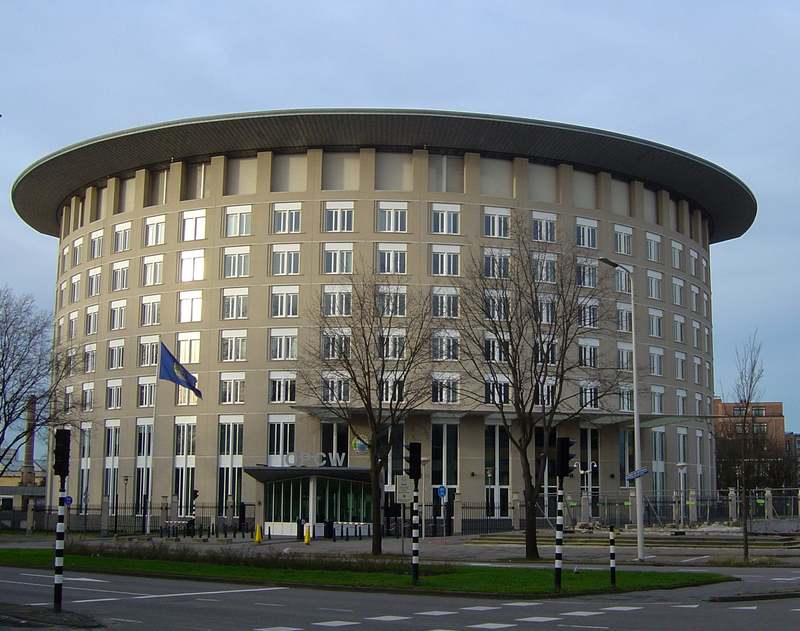
opcwhq szilas 20070217 · CC BY-SA 4.0 · Szilas / Wikimedia Commons ·
- A · Source identity and provenance
- Original consulted
The file page was opened and the photograph inspected. The date and author are attributed to the source.
- B · What the source substantiates
- Limited evidentiary support
Headquarters of the Organisation for the Prohibition of Chemical Weapons (OPCW) in The Hague, on 17 February 2007. This archive photo shows the institution involved without documenting the incidents in Ukraine.
