
Reporting · Strong evidence
Ukraine: WENRA, HERCA and NORA warn that attacks on the power grid increase nuclear risk
In brief
On 16 November 2026, WENRA, HERCA and NORA issued a joint warning about the effects of Russian attacks on Ukrainian energy infrastructure. The document describes a possible deterioration in nuclear safety: it does not report a nuclear accident or a radioactive release that has occurred. [1]
Frequently asked questions
Has a nuclear accident been announced?
No: the statement is a warning about risk. It does not announce an accident or radioactive release that has already occurred. [1]
Did Zaporizhzhia lose power today?
The NEA chronology consulted describes a loss of off-site power on 8 November, resolved that same day. It does not establish a new blackout on 16 November. [2]
What does the green rating mean?
It confirms that the joint warning exists and is documented by the original. It is not a certain prediction or a certification of current safety. [1]
What the warning says
The three networks of nuclear safety and radiation protection authorities highlight the danger that attacks on the grid and substations could further undermine the conditions required for plant safety. They also consider a complete collapse of the national grid possible, which would be difficult to restore. [1]
The statement calls on Russia to stop attacks on nuclear facilities and essential energy infrastructure. The signatories reaffirm their support for the Ukrainian regulator SNRIU and European coordination on emergency preparedness and response. [1]
The 8 November episode is not a new blackout
The Nuclear Energy Agency page, updated on 9 November, records the disconnection of Zaporizhzhia’s last external power line on 8 November at 02:36 and its restoration at 17:41. It reports the use of diesel generators and classifies the episode as the twenty-seventh complete loss of off-site power since the conflict began. [2]
This chronology provides context for electrical vulnerability, but does not describe the plant’s real-time status on 16 November. We do not turn an interruption that ended on 8 November into a new outage today. The NEA gathers information from other sources: its summary is not equivalent to an on-site inspection by our newsroom. [2]
Risk, accident and release are different claims
A preventive warning identifies a possibility and the conditions that could favour it. Claiming that an accident has occurred requires evidence of the event; discussing contamination requires relevant release and measurement data. The joint text provides no new radiological measurement and does not announce a release that has occurred. [1] [2]
The traffic-light rating therefore assesses only a documentable proposition: the three organisations issued the warning. It certifies neither an imminent accident nor the absence of all risk. This distinction avoids both alarmism about a disaster that has already happened and reassurance that the sources do not support. [1] [2]
A contextual photograph, not current evidence
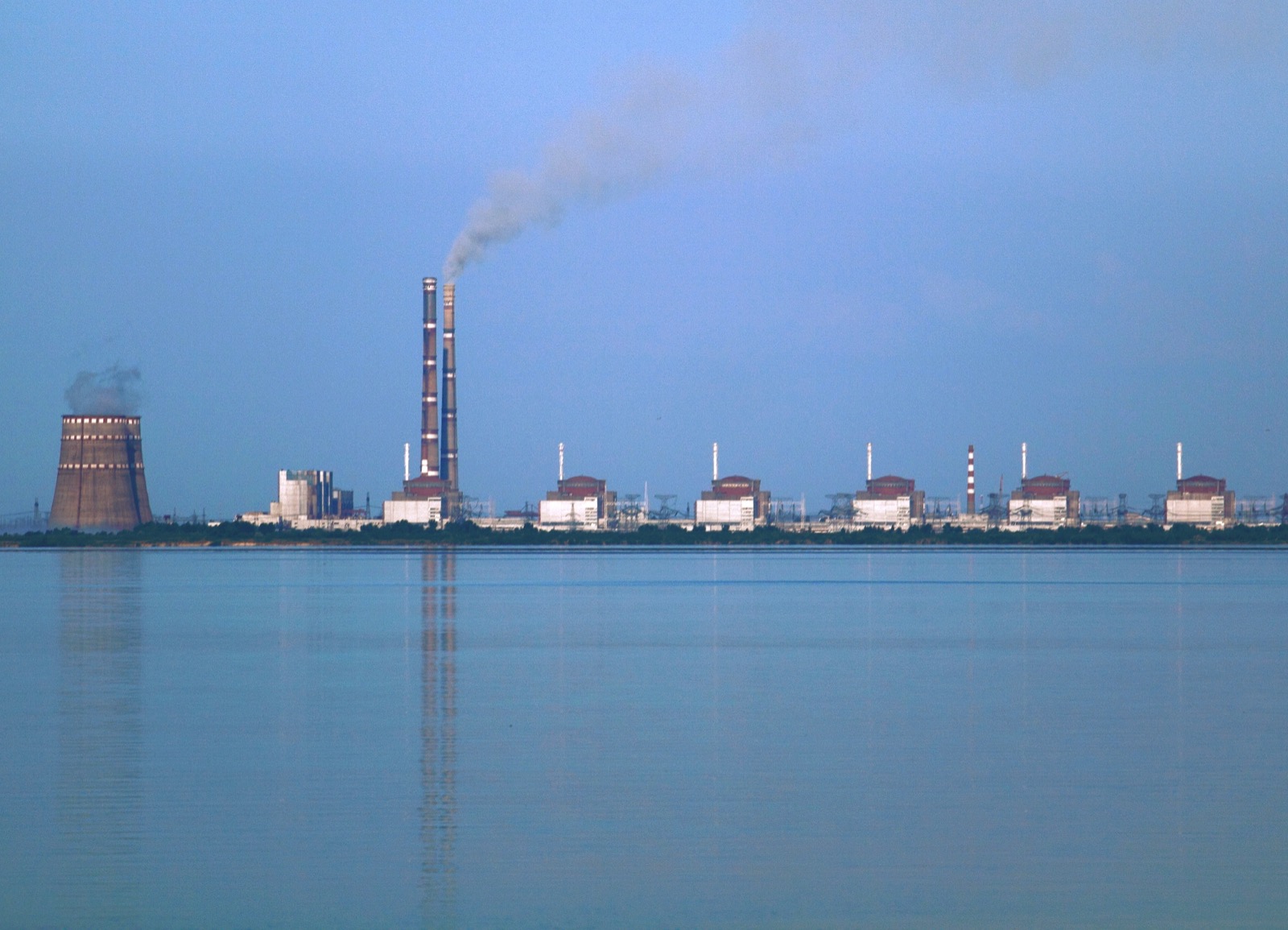
The image shows the Zaporizhzhia facilities in July 2009. The Commons file page identifies the author and CC BY-SA 3.0 licence; it also records earlier retouching. The reproduction retains attribution and licence and has only been resized, without cropping. [3] [4]
The photograph does not document damage, electricity supply or radiation levels in November 2026. The file page gives 10 July, whereas the metadata indicate 11 July: to avoid claiming greater precision than the evidence allows, the caption uses the month and year. [3] [4]
Source register
The A/B results come from the research and rechecks documented in each source entry. The notes explain what remains open.
-
Joint statement on the potential impact on nuclear safety from Russia’s attacks on Ukrainian energy infrastructure · WENRA · HERCA · NORA ·
- A · Source identity and provenance
- Original consulted
Original WENRA PDF dated 16 November, downloaded and read in full: one page, three signatory organisations.
- B · What the source substantiates
- Relevant passage checked
Direct evidence of the warning and the signatories’ requests. It does not document a new accident or a measured release.
-
Ukraine: Current status of nuclear power installations · OECD Nuclear Energy Agency ·
- A · Source identity and provenance
- Original consulted
Official NEA page read; stated last update 9 November 2026. The passage concerning 8 November was checked.
- B · What the source substantiates
- Limited evidentiary support
Institutional chronology reporting the outage and restoration on 8 November. It does not measure conditions on 16 November and gathers information from other sources.
-
Kernkraftwerk Saporischschja.JPG · Ralf1969 · ChNPP / Wikimedia Commons
- A · Source identity and provenance
- Original consulted
Commons file page and file history read: Ralf1969, July 2009, ChNPP retouching, CC BY-SA 3.0. The file-page date and metadata differ by one day.
- B · What the source substantiates
- Relevant passage checked
Historical photograph of the facilities, not evidence of events in 2026. Original downloaded and image inspected; copy resized without cropping.
-
Creative Commons Attribution-ShareAlike 3.0 Unported · Creative Commons
- A · Source identity and provenance
- Original consulted
Official CC BY-SA 3.0 licence page read.
- B · What the source substantiates
- Relevant passage checked
Reuse permitted with attribution, a link to the licence and compliance with share-alike requirements for adaptations. The photograph retains CC BY-SA 3.0.
