
Reporting
Sudan, El Obeid: Amnesty’s drone investigation and the limits of attribution
AI-assisted translation from Italian. Independent language review is pending. The sources record the documentary checks. Field verification and direct authentication of the investigation’s visual material remain open.
In brief
Amnesty’s investigation published on 18 November attributes nine attacks in and around El Obeid to the RSF, with 37 civilians killed and ten injured between June and August 2026. [1]
The parties’ positions
Amnesty calls for possible war crimes to be investigated. It reports that on 24 October the RSF denied responsibility and blamed the SAF, without evidence according to the NGO. Indirect account; original letter not obtained. [1]
Attributing a statement makes its author and the route by which it reaches us visible. A denial matters, but does not automatically carry the evidential weight of a documented reconstruction. Equally, a call for investigation is not a judicial finding of guilt. Both distinctions must remain clear even when the humanitarian situation is severe.
From evidence gathering to responsibility
The organization reports 29 interviews conducted between July and September, analysis of five photos/videos and satellite imagery. It says it identified no military objectives nearby at the times of the attacks. [1]
These are different levels of evidence. A witness may describe an explosion, an injury or an aircraft overhead; identifying the operator requires further material. Damage visible from above may help connect location and chronology, but does not alone identify who issued an order. Convergence must be assessed incident by incident, without turning a spatial match into proof of an entire chain of command.
In this review we reopened and read the texts listed at the end; we did not repeat the interviews or authenticate the underlying visual files. That limits our access to the evidence, rather than demonstrating that the cited research is unfounded. Distinguishing a source’s analysis from our checks allows a conclusion to be updated without erasing what the source documented.
Two concrete findings that answer different questions
Amnesty links at least five deaths to Al-Mithaq fuel station on 6 June. For the electricity station struck on 18 June, it describes damage and disruption without civilian casualties in that incident. [1]
A damaged site and a list of victims answer different questions. The former requires location and temporal comparison; the latter requires identities, circumstances and a connection to the attack. Even internally consistent arithmetic cannot replace those steps. An incident with no deaths reported may still have serious effects on water or hospitals; that does not justify assigning undocumented deaths to it.
What humanitarian reporting adds
In MSF’s 20 July interview, emergency coordinator Liesbeth Aelbrecht describes a team visit and difficulties accessing water, fuel and healthcare. She also reports that the electricity network was restored after outages. This describes July conditions, not an automatic update on conditions in November. [2]
It is a distinct contribution about services, not authentication of every attack or victim in the later investigation. Amnesty itself cites MSF: reading both pages does not double the number of underlying observations. We must distinguish what a team reports from its own visit from statistics it reproduces from other organizations. [1] [2]
A local case set within a national picture
OHCHR’s 17 November release, read on the UN Sudan website, reports over 2,230 civilians killed across Sudan from January to October, over 1,630 by drones. It separates the first-half report from subsequent updates and warns that the actual total may be higher. [3]
We do not add the local case set to the national toll: we do not know which cases overlap. Periods and collection criteria also differ. The UN Sudan reproduction is an institutional host for the same text, not a second independent census. The national context helps explain the crisis’s scale without resolving attribution for each individual attack. [3]
Assessment and outstanding checks
Clinical records linked to specific incidents, original visual files with spatial and temporal references, the complete RSF response and any evidence of military use of the sites could strengthen, correct or narrow particular conclusions. New information would not necessarily change the whole reconstruction: it must be connected to the question it answers.
The traffic light concerns only the assertion about individual criminal responsibility. Red means insufficient evidence to consider it already established in the material consulted; it does not declare the attacks or cited toll false. This is a proposed, revisable assessment. A document missing from our checks is not proof that it does not exist.
The investigation’s underlying evidential imagery has not been directly inspected in this review. AFP/Getty and MSF credits do not automatically grant permission to reproduce their photographs; none are embedded here. Access limits and both checks for each source appear at the end.
Related stories
Frequently asked questions
Did these attacks happen today?
No. They occurred in summer. [1]
Does red mean the investigation is false?
No. It concerns only the assertion that individual criminal responsibility is already established, not every element of the investigation.
Can the local and UN death tolls be added?
No. Periods and criteria differ, and the overlap between victims is unknown. [3]
Source register
The A/B results come from the research and rechecks documented in each source entry. The notes explain what remains open.
-
Sudan: Devastating RSF drone strikes on civilians in El Obeid should be investigated as war crimes · Amnesty International ·
- A · Source identity and provenance
- Original consulted
Amnesty’s original dated 18 November, reopened on 20 November at 03:05 (Rome). Checked the scope of the nine summer cases, the reported methodology and the quoted RSF response. Underlying interviews and original visual files were outside this review.
- B · What the source substantiates
- Attributed statement
Supports an attributed investigation. Original RSF letter, visual evidence and individual responsibility not independently checked; cited MSF/UN material is not additional independent corroboration.
-
People in El Obeid have limited services as drone attacks intensify · Médecins Sans Frontières / Liesbeth Aelbrecht ·
- A · Source identity and provenance
- Original consulted
Original MSF interview read in full on 18 November. Source date distinguished from access; field-visit context preserved.
- B · What the source substantiates
- Limited evidentiary support
Corroborates service context, not every victim or operator. Amnesty also cites MSF; do not double-count underlying observations.
-
UN report details deadly civilian impact of surge in drone strikes · OHCHR / United Nations in Sudan ·
- A · Source identity and provenance
- Copy consulted
Full release read on an institutional UN host on 18 November; reproduces OHCHR. This is not a new reading of the complete PDF report.
- B · What the source substantiates
- Limited evidentiary support
National context and separate periods; overlap with local cases unknown. Same release as the related story, not a second census.
-
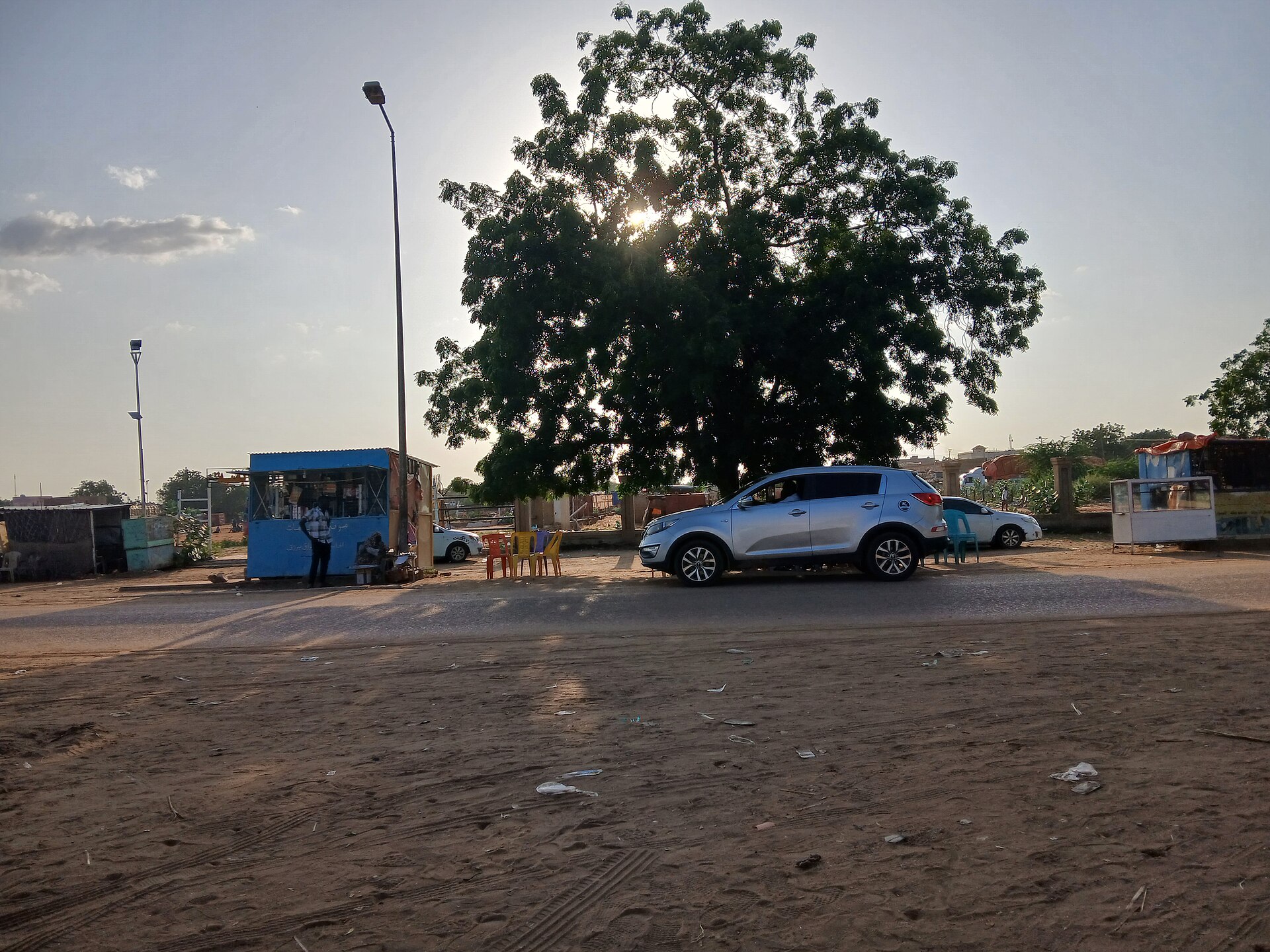
File:شارع الدرجة.jpg · Tawsol58 / Wikimedia Commons ·
- A · Source identity and provenance
- Original consulted
File page, CC0 declaration, attributed date and EXIF consulted. Commons display version visually inspected; not the full-resolution original file.
- B · What the source substantiates
- Limited evidentiary support
Dated urban context, not proof of an attack, current conditions or an investigation-matched site. Location attributed to the author, not newly independently geolocated.
-
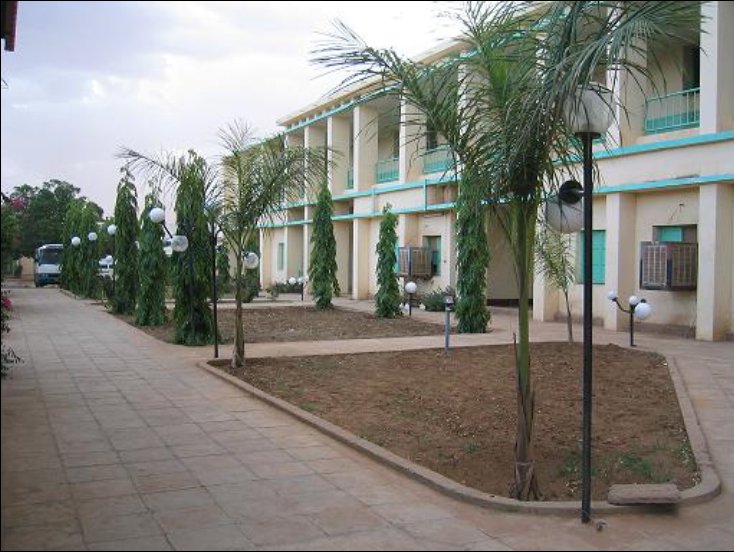
File:مستشفي الأبيض التعليمي.jpg · محسن الفكي / Wikimedia Commons ·
- A · Source identity and provenance
- Original consulted
File page and CC BY-SA 3.0 checked; complete original photograph viewed. Acquired file SHA-1 matches Commons. Date declared by the author.
- B · What the source substantiates
- Limited evidentiary support
Context of the building in 2014, not evidence of 2026 healthcare conditions. Credit, original title and licence retained; file unchanged.

