
News
Syria: OPCW reports new leads on the chemical weapons programme
The OPCW reports finding equipment that may be linked to Syria’s chemical weapons programme. The destruction of 42 bombs was verified in August and reported in September.
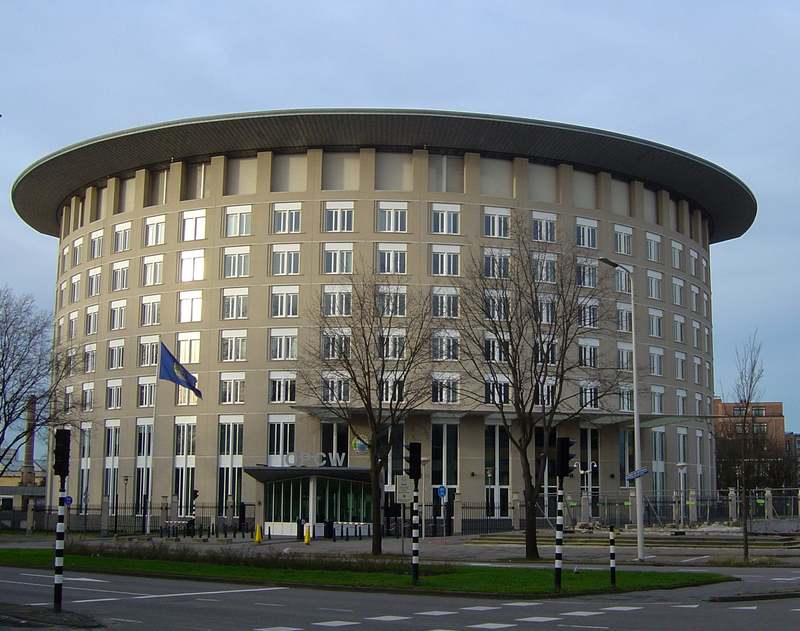
In brief
In early November, the OPCW Technical Secretariat identified equipment in Syria that may be linked to the Assad-era chemical weapons programme. Speaking in The Hague on 24 November, Director-General Sabrina Dallafior said her team was also reviewing documents that could help resolve at least one outstanding issue. The organisation presented both as leads that require further work. [1]
What inspectors had already verified
Inspections in May found undeclared material. Damascus amended its declaration to the OPCW in June. In August, inspectors verified the destruction of 42 declared, unfilled aerial bombs, as detailed in the report transmitted to the UN. On 3 September, UN disarmament chief Izumi Nakamitsu briefed the Security Council using the OPCW findings. It was the first such verification in Syria since 2014. The finding concerns those 42 munitions. [1] [2] [3]
What Damascus says
Syrian emergency minister Raed al-Saleh told the conference on 23 November that the authorities had handed over more than 100,000 pages to the OPCW, facilitated interviews and provided access to previously inaccessible sites. The page count is a government statement reported by the state agency SANA. The OPCW describes closer cooperation since October. The records we examined contain no independent check of the page count. [1] [4]
What remains unresolved
In her 24 November remarks, Dallafior did not identify the equipment’s function or say that any outstanding question had been resolved. At the same conference, the United Kingdom called for work to continue on destroying remaining materials, investigating past attacks and establishing accountability. SANA reported that the Syrian mission and civil society organisations discussed support and reparations for survivors and families at a side event. Verification of the munitions concerns disarmament. Attributing individual attacks requires evidence about each incident and those involved. [1] [5] [6]
Frequently asked questions
Were the 42 bombs destroyed in November?
Source register
- A
- Original statement by Sabrina Dallafior, published by the OPCW on 24 November, Syria section.
- B
- Distinguishes the August verification from the November leads. It does not establish the equipment’s function.
OPCW / UN · S/2026/778 · 30.09.2026
- A
- OPCW Secretariat report of 30 September annexed to UN document S/2026/778, paragraph 8.
- B
- Specifies the number and condition of the 42 bombs. This is the same OPCW verification cited in the speech.
- A
- Official provisional record of the Security Council, S/PV.10217, 3 September, pp. 3–4.
- B
- Dates Nakamitsu’s briefing. The count comes from the OPCW, without a separate UN inspection.
- A
- Syrian state agency SANA’s account of Raed al-Saleh’s 23 November address.
- B
- Records the government’s position. The page count has not been independently established in the sources examined.
- A
- Text released by the UK government on 24 November, passages on Syria.
- B
- Establishes the UK position. The figure for the bombs comes from the OPCW verification.
- A
- SANA’s 24 November account and photographs of the Syrian mission’s event.
- B
- Shows the state agency’s account of the discussion. It does not establish that reparation measures were adopted.
Szilas / Wikimedia Commons · 17.02.2007 · CC BY-SA 4.0
- A
- Original file record and metadata for the photograph by Szilas, 17 February 2007, CC BY-SA 4.0.
- B
- Shows the building in The Hague. It does not depict inspections or events in Syria.
