
Reporting
Children and war: Save the Children estimates 589 million lived near fighting in 2025
AI-assisted translation from Italian. Independent rereading is pending.
In brief
Save the Children reported on 18 November 2026 that about 589 million children lived within 50 km of a conflict event in 2025, according to an analysis drawing on Peace Research Institute Oslo data. The UN Secretary-General’s report records 8,322 verified incidents of denial of humanitarian access under its monitoring framework. The figures measure different things. [1] [2] [3]
What the estimate of 589 million measures
Save the Children cites an estimate of geographic proximity. According to the release, the 2025 figure compares with 468 million in 2022. The stated criterion for exposure is a 50 km radius. The estimate concerns where children lived and does not establish how many were injured, displaced or denied aid. [1] [3]
The report explains how PRIO combined the locations of lethal events recorded by UCDP with population estimates. It applies the radius within national borders. The result therefore depends on which incidents the dataset includes and on the population estimates. [3]
What the UN counts
Document A/80/723–S/2026/357, dated 16 June 2026, covers January to December 2025. Paragraph 7 lists incidents of denied access. Paragraph 2 explains that the report also includes earlier incidents that were verified in 2025. It counts incidents, rather than individual children. The report also notes that difficulties reaching affected areas limit coverage. [2]
A separate study on aid access compares 509 verified incidents in 2015 with 8,322 in the 2025 cycle. The increase is in documented incidents. The totals alone cannot show how much of the change reflects the true number of incidents and how much reflects the ability to document them. [2] [4]
Why the figures cannot be combined
The geographic estimate and the monitoring of denied access answer different questions. Dividing 8,322 by 589 million would give no measure of individual risk because the units and scopes differ. Save the Children identifies barriers to aid delivery. Attribution in any given case requires evidence about that case. [1] [2] [3]
Frequently asked questions
Does 589 million count children directly harmed?
It estimates how many children lived within 50 km of a conflict event, without establishing what happened to each child. [3]
Did all 8,322 incidents happen in 2025?
The UN report also includes earlier incidents verified in 2025. [2]
Does the total cover all denials of aid?
It covers incidents verified under the UN mandate and notes limitations on monitoring access and coverage. [2]
Source register
The A/B results come from the research and rechecks documented in each source entry. The notes explain what remains open.
-
Save the Children UK · Aid access denied to children almost every hour · Save the Children UK ·
- A · Source identity and provenance
- Original consulted
Original Save the Children UK release dated 18 November 2026. Read the estimate and the note on the 50 km radius and PRIO data.
- B · What the source substantiates
- Dependent account
Source for the attributed geographic estimate. It draws the figure of 8,322 incidents from the UN report without providing an independent count.
-
Children and armed conflict · A/80/723–S/2026/357 · United Nations · Secretary-General ·
- A · Source identity and provenance
- Original consulted
Original UN Secretary-General’s PDF in the UN Digital Library. Read the heading, paragraphs 1–7 and footnote 4.
- B · What the source substantiates
- Limited evidentiary support
Source for the verified incident count. It includes late verifications and does not measure all barriers to aid or the population living near conflict events.
-
Stop the War on Children · Changing the Odds · Save the Children · PRIO analysis
- A · Source identity and provenance
- Original consulted
Original Save the Children PDF. Read the definition of an event, the 2025 estimate and the methodology.
- B · What the source substantiates
- Limited evidentiary support
Explains the PRIO estimate, the geographic threshold and the population data. It does not count harm to individuals.
-
Access Restricted · Delivering Aid Against the Odds · Save the Children UK
- A · Source identity and provenance
- Original consulted
Original Save the Children UK PDF. Read the section comparing 2015 and 2025.
- B · What the source substantiates
- Dependent account
Reanalyses UN monitoring data. The comparison describes documented cases and provides no second count.
-
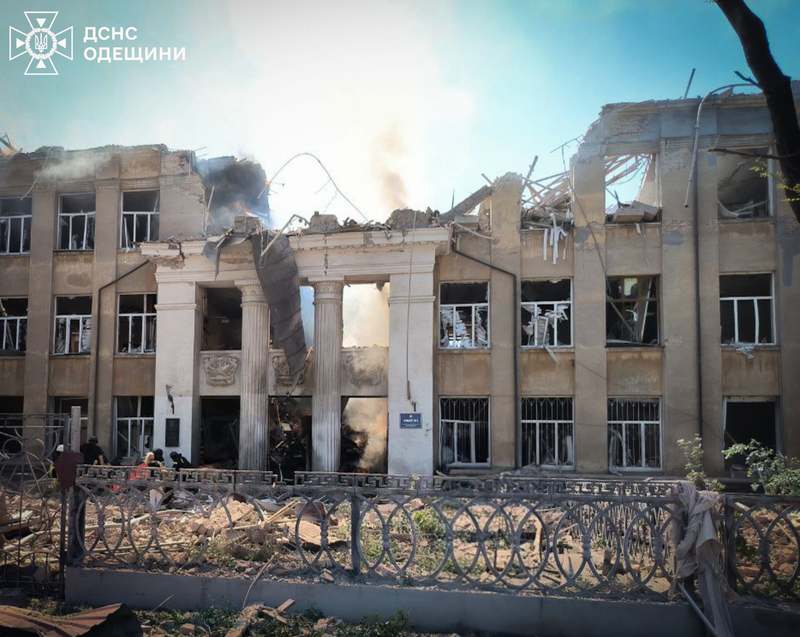
bilhorod dnistrovskyi lyceum 20250623 · CC BY 4.0 · ДСНС Одещини / State Emergency Service of Ukraine ·
- A · Source identity and provenance
- Original consulted
The file page was opened and the photograph inspected. The date and author are attributed to the source.
- B · What the source substantiates
- Limited evidentiary support
Damaged Lyceum No. 1 in Bilhorod-Dnistrovskyi, Ukraine, on 23 June 2025. This archive photograph shows one case and does not substantiate the global estimate.
