
News
Ituri: MONUSCO documents the return of 380 civilians to Plaine Savo
MONUSCO says it escorted 380 civilians back to Plaine Savo on 20 November. Some families were separated during their flight. The UN had already warned of a severe water shortage at the site.
In brief
MONUSCO says it escorted 380 civilians back to Plaine Savo on 20 November. Some families were separated during their flight. The UN had already warned of a severe water shortage at the site. [1] [8]
The UN says the site hosts more than 76,000 displaced people, with just five litres of water available per person per day. [1]
Update · The UN mission publishes its account of the escort
MONUSCO says the fighting on 18 November forced about 380 people to flee towards Fataki and Djaiba. On 20 November, Bangladeshi and Nepalese peacekeepers, in coordination with the Congolese army, escorted them back to Plaine Savo. Women and children separated during the flight were among them. [8]
The account was published on 23 November and concerns the same transfer Radio Okapi previously reported. The mission describes an operation it took part in and provides no new measurement of water availability. [8]
What the suspension means
At the 20 November briefing, UN deputy spokesperson Farhan Haq said the water supply to Plaine Savo had been suspended since 6 November, following threats and harassment at the main collection point. The site is in Djugu Territory in the Congolese province of Ituri. According to the briefing, families have just five litres of water per person per day, a third of the recommended minimum. [1]
Access to aid
An assessment by the UN and its partners describes restrictions on movement and threats to residents, including abductions, sexual violence, extortion and child recruitment. Local sources cited by Haq report seven people killed, including two civilians, in clashes near the site earlier in the week. The briefing does not identify those responsible, and SINE VELO has no separate corroboration of that toll. [1]
What the sources establish
OCHA called on parties to protect the civilian character of the site and allow humanitarian access. Afriquactu’s report draws on the same UN briefing. It provides no separate water measurement or casualty count. The five litres describe the availability reported by the UN. It did not say that all access to water had ended. [1] [2]
UN video · The briefing on Plaine Savo
The Ituri section starts around 10:25. The recording shows Farhan Haq speaking from the UN press room. [4]
Loading opens the external player. Press Play in the player to watch.
Frequently asked questions
Did the UN say the site ran out of water?
The briefing reports a suspension of the water supply since 6 November and says residents still have five litres per person per day. [1]
Updated · About 380 people escorted to Plaine Savo
On 22 November, Radio Okapi reported that MONUSCO peacekeepers had escorted about 380 civilians from Fataki to the Plaine Savo displacement site in Djugu territory two days earlier. The people had fled in the preceding days. Security sources quoted by the station reported fighting on 18 November between Congolese armed forces (FARDC) and the Convention for Popular Revolution (CRP). [5]
The station also attributes to MONUSCO a report that 24 civilians took refuge in Bayoo. This was a separate group from the people escorted to Plaine Savo. In August the mission had documented earlier displacement caused by fighting between the same parties in the Fataki and Bule area. [5] [6]
The escort report concerns one movement. The UN briefing of 20 November separately documents the difficulty of obtaining water at the site. Restoration of the water supply remains to be verified. [5] [1]
Source register
United Nations · Farhan Haq · 20.11.2026
- A
- The official written account of Farhan Haq’s 20 November briefing, section on the Democratic Republic of the Congo, was read.
- B
- It relays the humanitarian assessment of population, water and access. The UN attributes the toll of the clashes to local sources and the briefing does not give raw figures behind its water estimate.
Afriquactu · Reagan Ndota · 20.11.2026
- A
- Reagan Ndota’s original Afriquactu report, published on 20 November, was read.
- B
- It draws on the assessment presented at the UN briefing. It adds no independent verification of the figures or responsibility.
Kahindon Estha / Wikimedia Commons · CC0 1.0
- A
- The source record, original file and CC0 licence were checked. Kahindon Estha is credited. The stated date is 11 November 2023.
- B
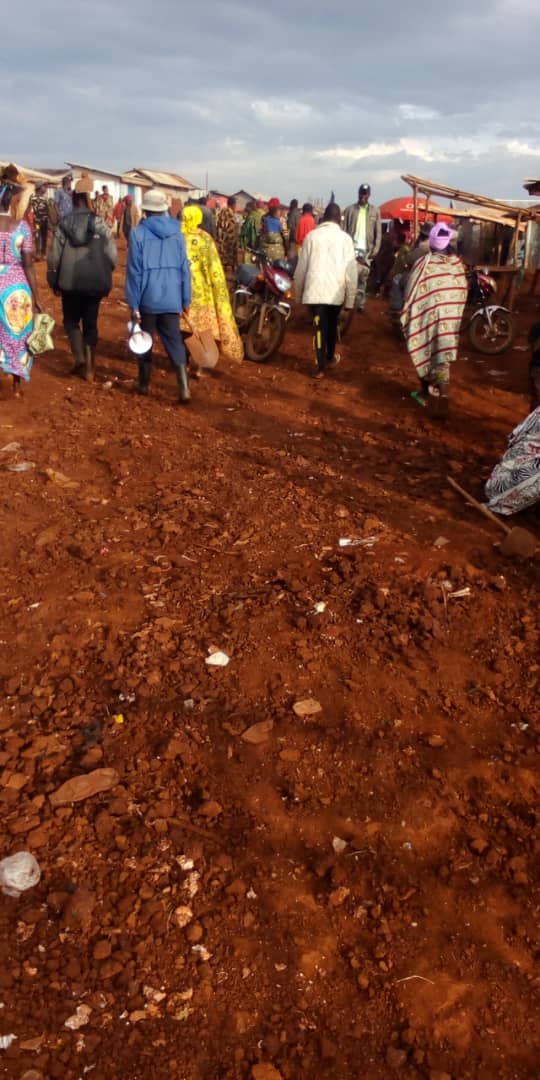
- It documents Rhoo in Bunia, another site in Ituri. It does not show the conditions reported at Plaine Savo.
United Nations Web TV · 20.11.2026 · 10:25
- A
- The Ituri segment of the official 20 November recording was viewed, starting around 10:25.
- B
- It documents the deputy spokesperson’s remarks. It is the same briefing as source 1 and does not include footage of the camp.
- A
- Read the original French report, published on 22 November at 07:24, including the passage on the escort of 20 November.
- B
- Radio Okapi reports about 380 people and cites security sources and MONUSCO. The 20 November count has not been independently verified.
- A
- Read the mission’s original note of 28 August 2026 about Fataki, Bule and displacement after fighting.
- B
- The note documents earlier conditions. It does not corroborate the 20 November escort or its count.
MONUSCO / Force · Flickr · Wikimedia Commons · CC BY-SA 2.0
- A
- The image and its Wikimedia Commons record were checked: MONUSCO / Force, October 2021, CC BY-SA 2.0. The record links to the mission’s publication.
- B
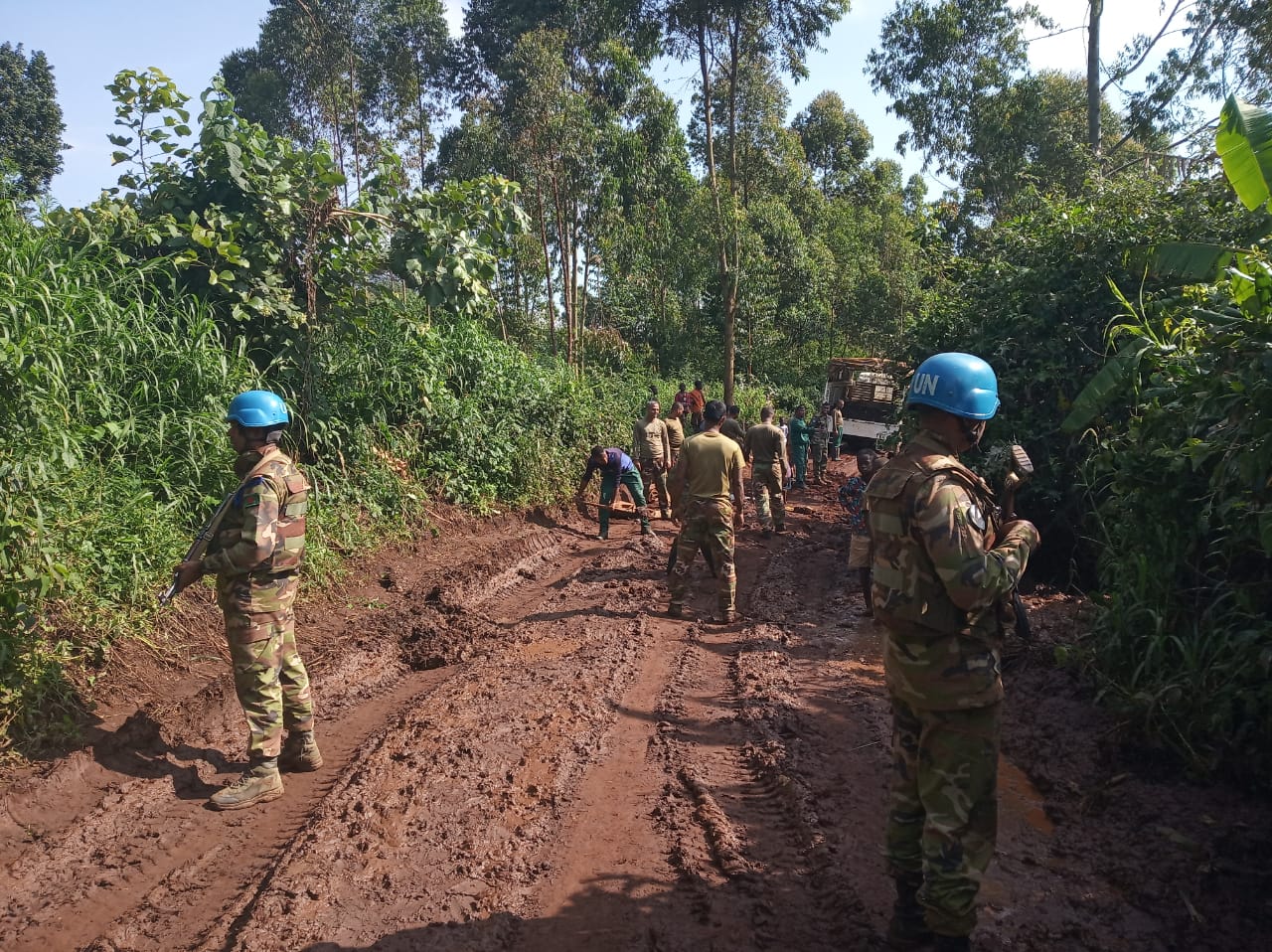
- The image shows peacekeepers and roadwork on a muddy road. The mission identifies it as the road to Roe camp in Djugu territory. It documents earlier work and does not show the 2026 transfer to Plaine Savo.
MONUSCO · Didier Vignon Dossou-Gbakon · 23.11.2026 · FR
- A
- Original MONUSCO account in French, published 23 November and signed by Didier Vignon Dossou-Gbakon. It describes the 20 November escort.
- B
- The mission provides a firsthand institutional account of its own operation. No second group or new water measurement is reported.

