
Reporting
Iran: US Senate rejects resolution to end hostilities
The US Senate voted 51 to 48 on 19 November against a House-backed resolution directing the removal of US forces from hostilities with Iran.
AI-assisted reporting and translation from Italian. The translation has not been independently revised.
In brief
The US Senate voted 51 to 48 on 19 November against a House-backed resolution directing the removal of US forces from hostilities with Iran. [1] [2]
The vote
In roll call 269 at 2:01 p.m. in Washington, one senator did not vote. Republicans Susan Collins, Lisa Murkowski and Rand Paul supported the resolution. Democrat John Fetterman voted against it. The House had approved the same text on 15 September by 220 votes to 204. [1] [2]
What the resolution said
Concurrent resolution H.Con.Res. 93 invoked section 5(c) of the War Powers Resolution. It directed the president to remove US forces from hostilities with Iran, with an exception for the defence of the United States, an ally or a partner against imminent attack and a provision for explicit congressional authorisation. [3]
Positions in the Senate
Democrat Tim Kaine supported the measure. He said he would pursue other legislative options to end hostilities if the White House did not change course. Republican Tim Sheehy opposed it, arguing on the floor that the United States should continue to protect the country and its allies, Associated Press reported. [4] [5]
What the result means
The House-backed measure fell short in the Senate and therefore did not receive the support of both chambers. The official roll call establishes the outcome of that measure. Military developments and future White House decisions require separate evidence. [1] [3]
Frequently asked questions
What was the tally?
Forty-eight senators voted for the resolution and 51 against. One did not vote. [1]
Had the House approved the resolution?
Yes. The House voted 220 to 204 in favour on 15 September. [2]
Was there an exception for defence?
Yes. The text allowed for defence against an imminent attack under the conditions it set out. [3]
Sources
U.S. Senate · Roll Call 269 · 19.11.2026
- Check A · Provenance
- Official roll call 269 of 19 November, 2:01 p.m. in Washington.
- Check B · What the source establishes
- Records 48 in favour, 51 against and one not voting, with individual votes.
U.S. House of Representatives · Roll Call 307 · 15.09.2026
- Check A · Provenance
- Official House roll call 307, 15 September at 10:32 p.m.
- Check B · What the source establishes
- Establishes that the House passed the same resolution 220 to 204.
U.S. Government Publishing Office · H.Con.Res. 93
- Check A · Provenance
- Official Government Publishing Office edition of the House-passed text.
- Check B · What the source establishes
- Sets out the removal provision, the defence exception and its conditions. The measure did not take effect.
Tim Kaine · U.S. Senate · 19.11.2026
- Check A · Provenance
- Original statement by Senator Tim Kaine dated 19 November.
- Check B · What the source establishes
- Direct evidence of his position and stated intention to pursue other legislative options.
Mary Clare Jalonick · Associated Press · 19.11.2026
- Check A · Provenance
- Reporting by Mary Clare Jalonick dated 19 November.
- Check B · What the source establishes
- Reports Sheehy’s floor remarks. The congressional records establish the tallies and the text.
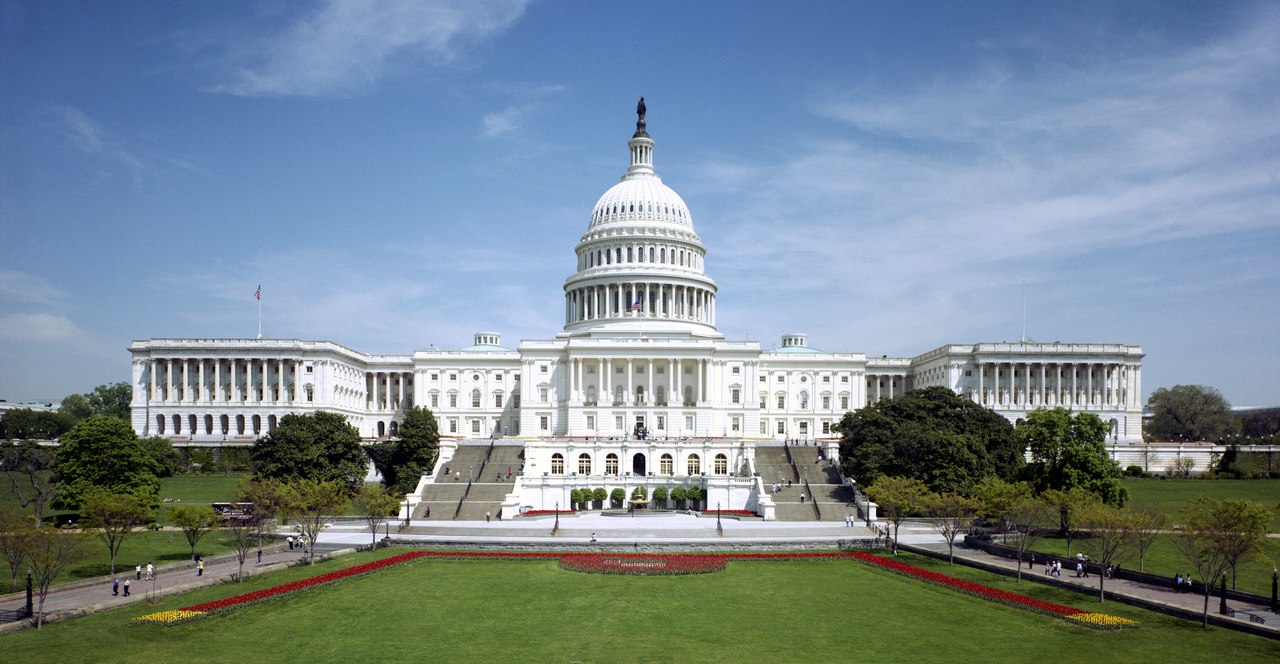
Architect of the Capitol / Wikimedia Commons · 1997 · Public Domain Mark 1.0
- Check A · Provenance
- Original file record, Architect of the Capitol, 1997, public domain in the United States.
- Check B · What the source establishes
- The photograph shows the seat of Congress. It does not show the session.
