Humanitarian update · Partial or conflicting evidence
Congo: violence disrupts Ebola care and contact tracing
In brief
The joint update of 15 November describes an Ebola response obstructed by war. WHO and Africa CDC report damaged health facilities and contacts who can no longer be reached in Cantine-Aloya. This is a health-response update, not news of a new massacre on 15 or 16 November. [1] [2]
Frequently asked questions
Were the 66 people killed in a new attack on 15 November?
Does a thousand missing contacts mean a thousand new infections?
No. A contact monitored by health teams is not automatically a confirmed case. WHO distinguishes the two categories. [2]
A response update, not a new attack
The statement of 15 November, six months into the outbreak, records more than 80 attacks on health care. It describes progress in some areas but also a fragile response affected by displacement and access difficulties. For Cantine-Aloya, it reports a second attack early on 11 November. The statement’s date must not replace the dates of the events: the update concerns their impact on the ability to reach communities. [1]
Dates and death tolls cannot be added together
Africa CDC’s statement of 8 November dates the first attack to 5 November and reports attribution to the Allied Democratic Forces, ADF, without presenting it as a judicial finding. On 11 November, Tedros had already reported 66 civilians killed, including three health workers, and three facilities looted and burned. That toll predates the statement of 15 November. We do not add it to different initial counts or turn it into the number killed in a further incident. [2] [3]
A contact is not a confirmed case
WHO distinguishes more than a thousand contacts lost to follow-up from three confirmed cases who remain unaccounted for. The first category concerns people whom teams need to monitor, not a thousand established diagnoses. The second concerns already confirmed cases. Conflating them would artificially inflate infections. WHO explains that security, access, surveillance and continuity of care must work together: flight from violence can interrupt several parts of the response, not just hospital work. [2]
What the sources and photograph establish
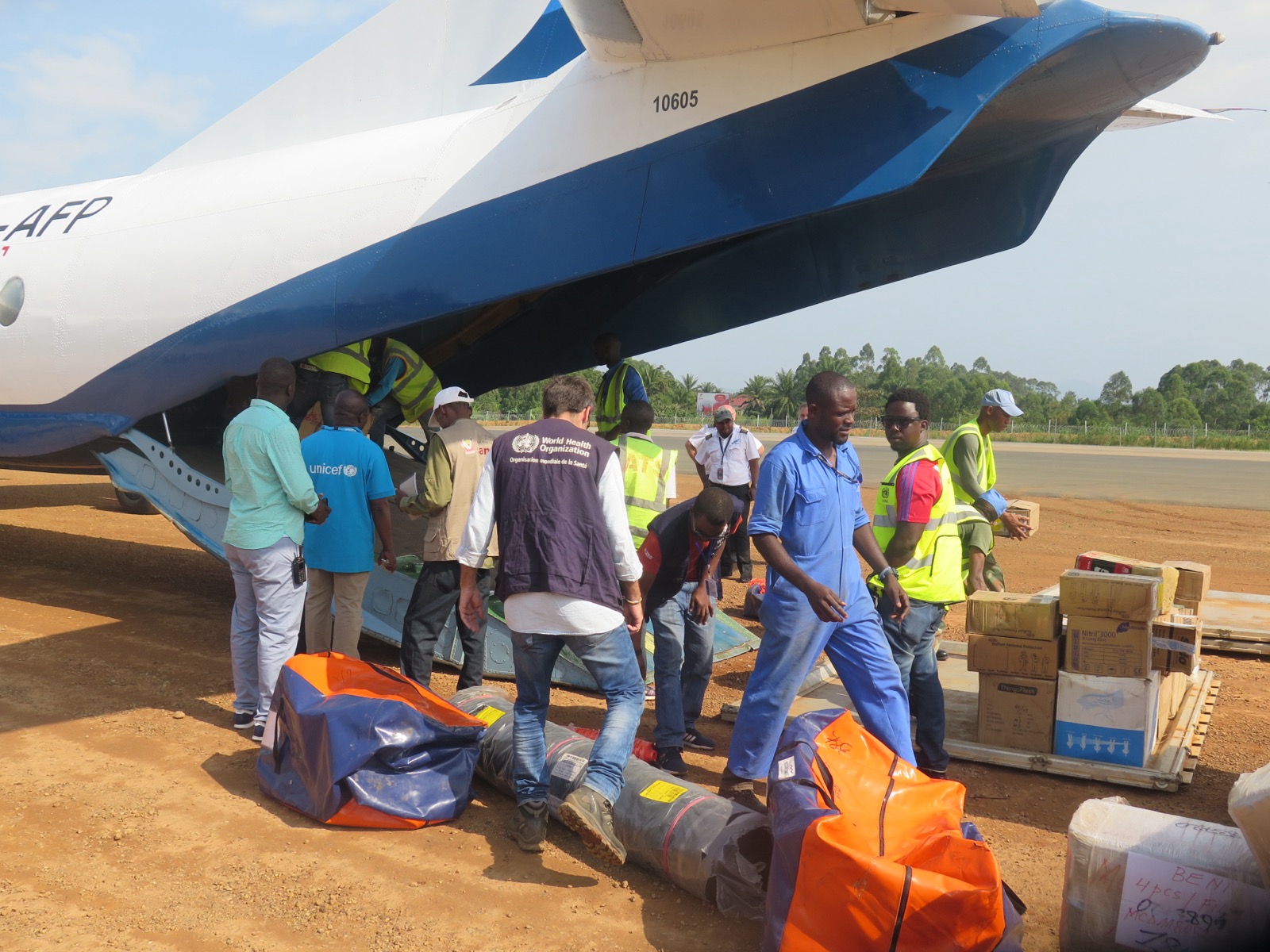
The yellow rating preserves this distinction: original documents are available, but field data remain attributed and have not been checked person by person by the newsroom. WHO and Africa CDC cooperate in the same response; repeating figures across statements does not create independent corroboration. The photograph shows medical supplies arriving in Beni on 5 August 2018 during another Ebola response. It provides historical context, not an image of Cantine-Aloya or the November 2026 attacks. AP’s reporting of 15 November also describes obstacles to care and strikes over unpaid wages; it is not an independent verification of the specific Cantine-Aloya death toll. [1] [2] [4] [5] [6]
Source register
The A/B results come from the research and rechecks documented in each source entry. The notes explain what remains open.
-
Six months on, accessing hard-to-reach communities key to halting Ebola outbreak · Africa CDC · joint statement ·
- A · Source identity and provenance
- Original consulted
Institutional original read; violence section and dates checked.
- B · What the source substantiates
- Attributed statement
Establishes the operational update of 15 November, not a new attack that day. Shares data with WHO.
-
WHO Director-General opening remarks: Ebola briefing, 11 November 2026 · World Health Organization · Tedros Adhanom Ghebreyesus ·
- A · Source identity and provenance
- Original consulted
Original WHO remarks read, including tolls and follow-up categories.
- B · What the source substantiates
- Attributed statement
Documents WHO’s account: 66 deaths, contacts and cases distinguished. Not an independent name-by-name verification.
-
Africa CDC Statement on the Attack in North Kivu, DRC · Africa CDC ·
- A · Source identity and provenance
- Original consulted
Original read: attack dated 5 November and reported attribution to ADF.
- B · What the source substantiates
- Attributed statement
Evidence of the warning and reported chronology; ADF responsibility remains attributed, not a judicial finding.
-
MONUSCO facilitates delivery of medical logistics in Ebola hit Beni 19.jpg · MONUSCO / Mamadou Alain Coulibaly · Wikimedia Commons ·
- A · Source identity and provenance
- Original consulted
Commons record read; author and date checked, with Flickr licence review recorded on Commons. Image downloaded and inspected.
- B · What the source substantiates
- Relevant passage checked
Historical medical-logistics photo in Beni in 2018, not evidence of 2026 events.
-
Creative Commons Attribution-ShareAlike 2.0 Generic · Creative Commons
- A · Source identity and provenance
- Original consulted
Official licence page read.
- B · What the source substantiates
- Relevant passage checked
Reuse requires credit, a link and share-alike; resized without cropping under CC BY-SA 2.0.
-
Ebola outbreak remains out of control in Congo 6 months into response · Associated Press ·
- A · Source identity and provenance
- Reporting consulted
AP article read in full by the newsroom researcher in the browser; 15 November version.
- B · What the source substantiates
- Limited evidentiary support
Separate reporting on response obstacles, not independent corroboration of every WHO/Africa CDC figure.
