
Dossier
Ukrainian children transferred or deported: what have the UN and ICC documented?
An independent United Nations commission documented the deportation or forcible transfer of 1,205 Ukrainian children and found that 80% of the children in the group it examined had not returned at the time of its findings. Moscow describes the movements as evacuations or temporary placements. What do the records show? And how do the International Criminal Court’s arrest warrants, the European Court of Human Rights judgment and Kyiv’s figures differ? [1] [4]
In brief
Yes. There is documented evidence of the deportation and forcible transfer of Ukrainian children. The UN Independent International Commission of Inquiry on Ukraine [1] verified cases involving 1,205 children from five regions. It traced movements to Russia or to other Russian-occupied areas of Ukraine, long-term placements and obstacles to family reunification. It found that the acts it examined constituted war crimes and, for the specific offences set out in its report, also crimes against humanity.
That figure is not a comprehensive count. It does not tell us how many children were affected in total, how many acquired Russian citizenship or how many were adopted. And the investigators’ findings are not individual criminal convictions.
Green: documented
“The UN Commission documented deportations or forcible transfers of Ukrainian children.”
Final report A/HRC/61/61, paragraphs 7–18: 1,205 children verified, not a census. [1]
2. What investigators documented
The final report, A/HRC/61/61, dated 30 March 2026, includes previously reported cases as well as newly verified ones. Paragraph 8 of the final report and the detailed findings in A/HRC/61/CRP.8, paragraphs 7–8, 14 and 18–19 [1], document the deportation of 995 children from 11 institutions in the self-proclaimed Donetsk and Luhansk republics. The operation began shortly before the full-scale invasion on 24 February 2022. That does not mean every child had already crossed the border by that date. The 995 are included in the 1,205; the other 210 were documented in earlier reports. The fact that the children came from institutions does not establish that they were all orphans or had no relatives or guardians.
The Commission describes children being moved from transit centres into indefinite placements with families or in institutions across Russia. It documented cases in which children were granted Russian citizenship or entered in foster-care or adoption databases. These are distinct steps: being listed in a database is not the same as being adopted, and citizenship does not by itself establish that an adoption took place. The Commission says some of the documented placements appear to have been adoptions; its report does not establish how many. [1]
In many cases, the report says, families and guardians were not told what had happened to the children or where they were. Some had to search for one another without an adequate repatriation system for the cases examined. The obstacles, delays and prolonged separations were among the Commission’s documented findings, not merely possible consequences. [1]
How the evidence was gathered. The Commission describes interviews, documentary evidence and publicly available material. The 2,433 people interviewed and 27 visits to Ukraine cited in the introduction refer to the inquiry as a whole, not just the work on children. Russia did not recognise the Commission. According to the report, 39 written requests for access, information or meetings went unanswered. That lack of cooperation limits how fully the Commission could establish what happened, but it does not erase the cases it documented. [1]
3. Why the figures cannot be subtracted
| Figure | Source and reference date | What it counts, and what it does not |
|---|---|---|
| 1,205 | UN Commission, final report of 30 March 2026 [1] | Children from five regions whose deportation or transfer investigators verified, including 995 children from institutions. Not a nationwide total. |
| 80% | Same Commission and report [1] | Share of the children documented by the Commission who had not returned at the time of its findings. It does not apply to Kyiv’s register and is not an updated November figure. |
| 20,651 | Ukrainian authorities’ September 2026 figure, cited by the European Parliament on 12 November [6] | Cases verified by the Ukrainian authorities as deportations or forcible transfers. The resolution attributes the figure to Kyiv; Parliament did not certify the cases individually. |
| 2,752 | Ukrainian Children of War portal, as of 28 October 2026, cited in the same resolution [6] | Returns of children who were deported, forcibly transferred or brought back from occupied territories. This does not mean 2,752 returns from Russia alone. |
| 2,833 | Ukrainian presidential initiative Bring Kids Back UA, as of 19 November 2026 [7] | Returns announced under the programme. The briefing also covers children who had been living under occupation and does not reconcile its cases individually with the September figure. |
These groups may overlap, but the sources do not show that one is wholly contained in another. Subtracting 2,833 from 20,651 does not reliably establish how many children still need to be repatriated. Nor does the difference between the two return figures show, on its own, how many children came back from Russia between 28 October and 19 November. The actual total number of children affected remains unknown.
Sources: UN final report, paragraphs 8–12 [1]; European Parliament resolution of 12 November, recital B [6]; Bring Kids Back UA, 19 November [7].
4. What Russia says
On 3 December 2025, before the UN General Assembly vote, Russia’s deputy permanent representative, Maria Zabolotskaya, disputed the Ukrainian figure of about 20,000 then under discussion. She said children had been evacuated for safety or had lost contact with their families; that obtaining citizenship was voluntary; that the arrangements were preliminary or temporary guardianship rather than forced adoption; and that a cooperation mechanism had existed since 2023. She cited roles for Qatar, the International Committee of the Red Cross and the Holy See. [4]
Her statement predates the Commission’s March 2026 final report. It is a primary source for Moscow’s position, but not a response to the individual cases in that report. The Commission found that, in the cases it examined, the reasons given did not justify removing the children under international humanitarian law and that many placements were not temporary. Investigators also found that the Russian authorities had previously promoted adoption publicly as the preferred solution. Around the time the ICC warrants were issued, those authorities began denying that adoptions were taking place, insisting the arrangements were foster placements. Individual reunifications do not show that repatriation was facilitated in every case; equally, the UN report does not claim that no child returned. [4] [1]
5. When can moving children be a lawful evacuation?
Article 49 of the Fourth Geneva Convention [8] generally prohibits deporting or forcibly transferring protected persons from occupied territory. It allows temporary evacuations of an area only in narrowly defined circumstances, for the safety of the population or for imperative military reasons. Evacuation outside the occupied territory is permitted under this exception only when keeping evacuees within that territory is materially impossible. Evacuees must be returned to their homes as soon as hostilities in the area in question have ceased.
Article 78 of Additional Protocol I [8] sets specific safeguards when a party arranges the evacuation abroad of children who are not its own nationals. The evacuation must be temporary and justified by compelling health or medical-treatment reasons; the provision allows safety as a ground only outside occupied territory. If parents or guardians can be found, their written consent is required. Otherwise, consent must be obtained from those primarily responsible for the children under law or custom. The Protocol also requires measures to facilitate identification and return. Article 74 [8] concerns reuniting families separated by war.
The label given to a movement is not enough. What matters is the reason, duration, destination, consent and the steps taken to return children and reunite families. Conversely, moving children to a safer area is not automatically unlawful: the circumstances and safeguards have to be examined. [8]
6. Three institutions, three kinds of finding
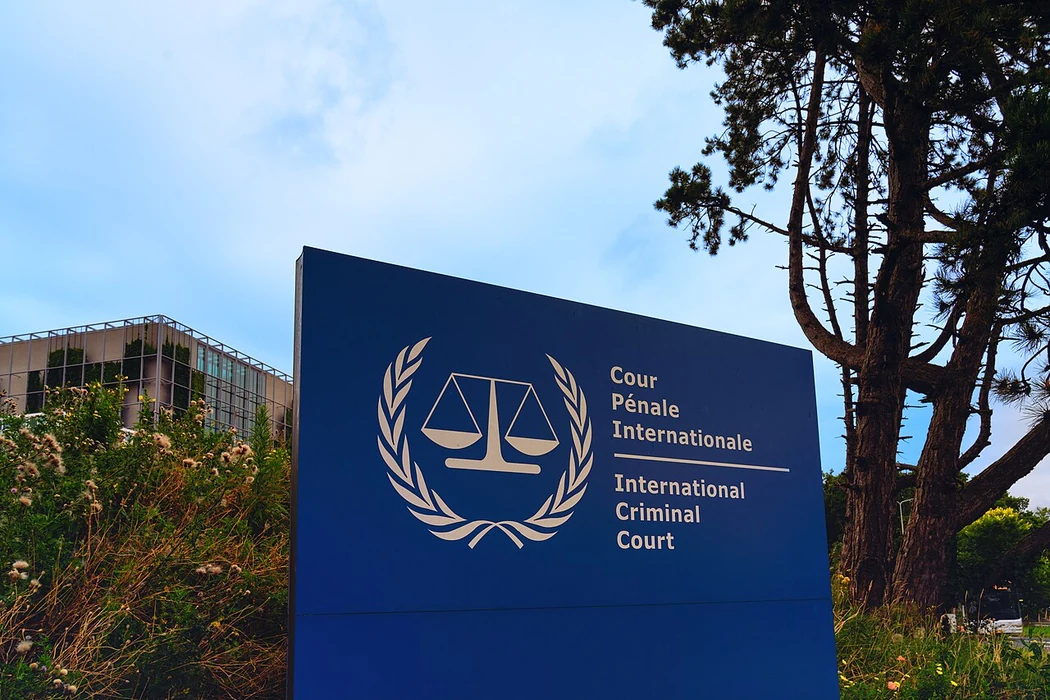
International Criminal Court (ICC), 17 March 2023. Pre-Trial Chamber II issued arrest warrants for Vladimir Putin and Maria Lvova-Belova, Russia’s Presidential Commissioner for Children’s Rights. The judges found reasonable grounds to believe the two may bear individual criminal responsibility for the alleged war crimes of unlawful deportation and unlawful transfer of children from occupied areas of Ukraine to Russia, under Articles 8(2)(a)(vii) and 8(2)(b)(viii) of the Rome Statute. That is the threshold for the warrants, not a finding of guilt. [2]
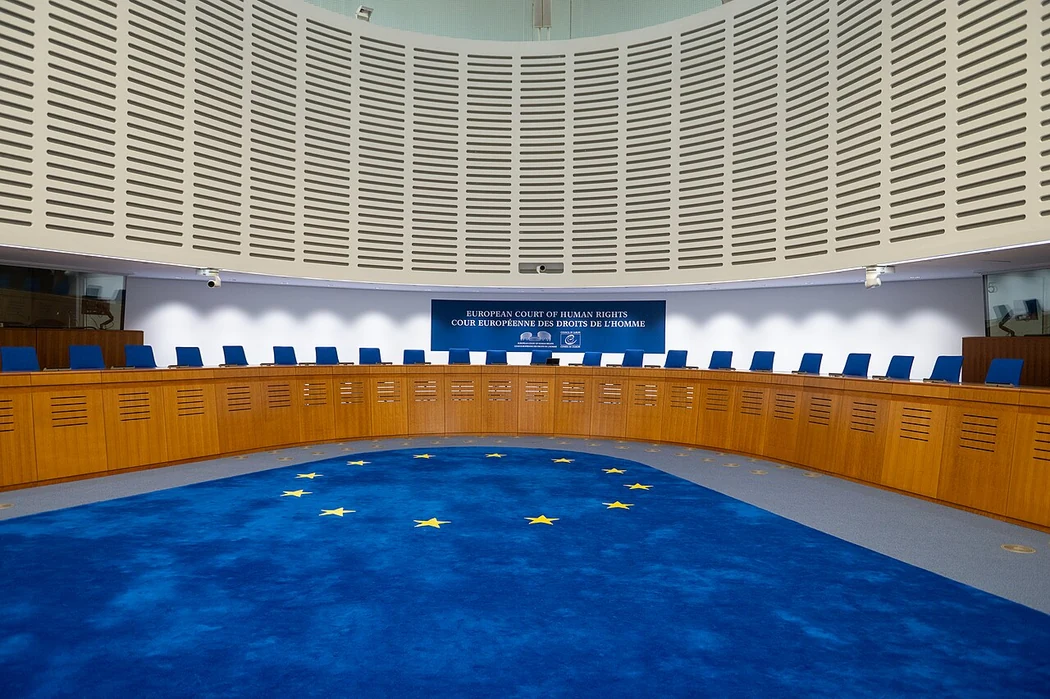
European Court of Human Rights (ECtHR), 9 July 2025. In Ukraine and the Netherlands v. Russia, the Grand Chamber found the Russian state responsible for violations of the European Convention on Human Rights. On the specific issue of children, it found an administrative practice of transfers to Russia and, in many cases, subsequent adoption, between June 2014 and 16 September 2022, in breach of Articles 3, 5 and 8. Among the measures for implementing its judgment it called for cooperation on an independent international mechanism to identify children and reunite them safely. “In many cases” refers to the facts examined by the Court, not a rate that can be applied to the Commission’s 1,205 cases or the Ukrainian register. [3]
UN Independent International Commission of Inquiry, March 2026. Investigators concluded that the cases examined constituted the war crimes of unlawful deportation or transfer. They also found unjustifiable delay in repatriation and, within the systematic pattern they documented, the crimes against humanity of deportation and forcible transfer and of enforced disappearance. The Commission gathers and evaluates evidence; it does not hand down criminal judgments. [1]
The resolutions adopted by the UN General Assembly on 3 December 2025 [5] and by the European Parliament on 12 November 2026 [6] call for action on return and reunification. They are separate from judicial decisions. The fact that other public documents use the term “genocide” does not turn the ICC warrants discussed here into genocide warrants.
7. A return is not necessarily a family reunification
A child can return to Ukrainian-controlled territory without yet being reunited with relatives or guardians. The International Committee of the Red Cross describes its role as a neutral intermediary in facilitating some crossings and reunifications; its account is not a complete list [9]. The Ukrainian programme likewise describes the return as the start of a process that can include finding accommodation, recovering documents, psychological support and returning to school [7]. A tally of returns alone cannot tell us how that process went or whether it succeeded.
Key dates
- June 2014–16 September 2022: the period covered by the practice affecting children that the ECtHR established in its 2025 judgment. [3]
- Shortly before 24 February 2022: deportation of the group of 995 children from 11 institutions began, according to the UN’s detailed findings. This is a subset of the verified cases. [1]
- 17 March 2023: the ICC issued two arrest warrants for alleged war crimes. [2]
- 9 July 2025: the ECtHR Grand Chamber delivered its judgment on state responsibility. [3]
- 3 December 2025: the Russian mission made its statement and the UN General Assembly adopted its resolution on the return of the children. [4] [5]
- 12 and 30 March 2026: the findings were presented publicly in Geneva on 12 March; the final report is dated 30 March. [10] [1]
- 12 November 2026: the European Parliament adopted a resolution citing September and October figures from Ukraine. [6]
- 19 November 2026: Bring Kids Back UA reported 2,833 returns under its initiative. [7]
UN briefing of 12 March 2026
The commissioners present the findings of the inquiry. Video playback has not been confirmed. Open the original briefing and transcript [10]
Frequently asked questions
Is 1,205 an estimate?
No. It is the number of children whose deportation or transfer the Commission documented. It is not a nationwide estimate. [1]
Does 80% mean that 80% of all children registered by Kyiv are still in Russia?
No. It refers only to the group examined by the Commission at the time of its findings. Failure to return does not establish that every child was in Russia. [1]
Can an evacuation be lawful?
Did Russia deny that any children had been moved?
No. In its UN statement Russia disputed Kyiv’s interpretation and figure, and described the movements as rescues or temporary arrangements. That is Russia’s position, not independent corroboration. [4]
Source register
UN final report A/HRC/61/61, 30 March 2026; cover, summary, paragraphs 2–5 and 7–18; detailed findings A/HRC/61/CRP.8, paragraphs 7–8, 14, 18–19 · UN final report, paragraphs 2–5 and 7–18 · UN detailed findings, ECOI copy, paragraphs 7–8, 14 and 18–19
- A
- Dates, 1,205 children from five regions, including 995 from 11 institutions; 80% not returned, different placements, 39 unanswered requests and legal findings.
- B
- The operation began before the full-scale invasion; not every child crossed at the same time or had the same outcome. The 210 previously documented children are the other component of the total.
ICC notice, 17 March 2023; Situation in Ukraine · ICC arrest warrants notice · ICC situation in Ukraine
- A
- Two warrants, evidentiary threshold, alleged war crimes and applicable articles.
- B
- Warrants are not conclusive proof, a conviction or a finding of state responsibility; these warrants are not for genocide.
ECtHR Grand Chamber, 9 July 2025, paragraphs 1567–1599, official summary (xii) and measures under Article 46 · ECtHR Grand Chamber judgment · ECtHR official summary · ECtHR announcement
- A
- Breaches of Articles 3, 5 and 8; relevant period; transfers and adoptions in many cases; reunification measures.
- B
- Inter-state judgment, not a criminal trial; cross-checked against the Court’s official announcement.
Russian UN mission, Zabolotskaya, 3 December 2025 · Russian mission statement to the UN
- A
- Official Russian position on the figure, guardianship, citizenship and cooperation.
- B
- Primary evidence for what Moscow said, not for whether the claims are true. It predates the final UN report.
UN General Assembly, A/RES/ES-11/9 · UN General Assembly resolution
- A
- The resolution adopted on 3 December 2025 on children’s return.
- B
- Not a judicial decision or a census.
European Parliament, P10_TA(2026)0380, 12 November 2026, recital B · European Parliament adopted resolution · European Parliament procedure file
- A
- 20,651 from the Ukrainian authorities in September; 2,752 from the Ukrainian portal as of 28 October; scope of each figure.
- B
- The European Parliament cites Ukrainian figures for September and October. The 12 November resolution does not certify individual cases.
Bring Kids Back UA, 19 November 2026 briefing · Bring Kids Back UA briefing
- A
- 2,833 returns announced by the initiative and support it describes after return.
- B
- The Ukrainian programme reports returns from more than one context. No external check has established whether records overlap.
Fourth Geneva Convention, Article 49; Additional Protocol I, Articles 74 and 78 · Fourth Geneva Convention, Article 49 · Additional Protocol I, Article 74 · Additional Protocol I, Article 78
- A
- General prohibition, narrowly defined exceptions, written consent, return and reunification.
- B
- The applicable law is not evidence of individual cases. Article 78 restricts the use of safety as grounds for evacuation in occupied territory.
ICRC, 31 March 2025 · ICRC account of crossings and reunifications
- A
- ICRC account of humanitarian intermediation and reunifications.
- B
- Primary source for its own activities, not a register of deportations.
UN Geneva briefing, 12 March 2026 · UN Geneva briefing and transcript
- A
- The commissioners’ presentation of the inquiry’s findings.
- B
- Source page, rundown and transcript checked; playback not confirmed. The video is not footage of specific transfers.
Cover photograph · European Union / Laura Proctor · CC BY 4.0 · European Commission P-070472/00-01
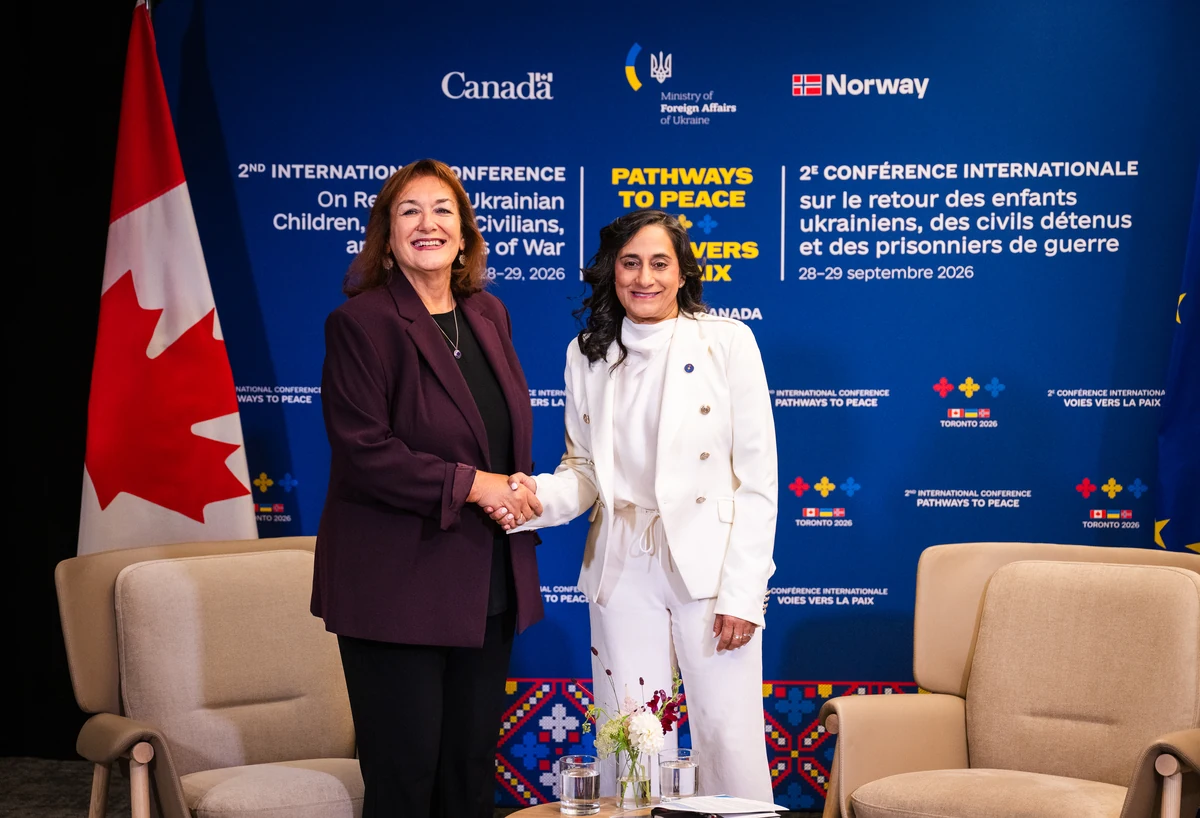
European Commissioner Dubravka Šuica and Canadian Foreign Minister Anita Anand at the conference on returns in Toronto, 28 September 2026. The photo shows the meeting, not a repatriation. Photograph resized and converted to WebP.
Photograph of the ICC · Tony Webster · CC BY 2.0
The sign and headquarters of the International Criminal Court in The Hague on 23 July 2024. Archive photograph taken after the 2023 arrest warrants. Photograph resized and converted to WebP.
Photograph of the ECtHR courtroom · Mickaël Schauli · CC BY-SA 4.0
The empty Grand Chamber courtroom of the ECtHR in Strasbourg on 21 September 2025. Archive photograph taken after the 9 July judgment. Photograph resized and converted to WebP.


