Dossier
Nord Stream: what we know about the sabotage and the trial in Germany
The 2022 sabotage and the Hamburg trial: what authorities say, which allegations are before the court and what remains unresolved.
In brief
Sabotage damaged the Nord Stream 1 and 2 pipelines in the Baltic Sea in September 2022. Sweden and Denmark closed their respective investigations in 2024 for different reasons. One defendant is on trial in Hamburg. German federal prosecutors allege that Ukrainian state bodies commissioned the planning, but their representative says the indictment does not identify the body. As of 22 November 2026, no ruling on the merits was found in the public sources consulted. [1] · [2].
Strong evidence
Denmark concluded that the damage was caused by deliberate sabotage.
This is the authorities’ public conclusion, not a finding as to the perpetrator. [6].
Allegation to be tested
German prosecutors allege that Ukrainian state bodies commissioned the planning.
According to Otte, the indictment does not identify the body, and no court finding establishing the alleged commission was located. [2].
False
“Denmark closed its investigation because there was no sabotage.”
The statement says the opposite about sabotage and gives a different reason for closure. [6].
26 September 2022: the damage and gas flows
Denmark and Sweden reported the explosions to the United Nations Security Council in a letter dated 29 September. Germany’s federal regulator noted that Nord Stream 1 had delivered no gas since the start of September and that Nord Stream 2 had never entered operation. Damage to the infrastructure is distinct from interruption of a flow that was not under way when the explosions occurred. The cited sources do not by themselves quantify the long-term economic effects. [3] · [4].
Two investigations closed for different reasons
On 7 February 2024, Swedish prosecutors announced that Swedish jurisdiction did not apply. They had transferred material to Germany that could be used as evidence. On 26 February Copenhagen Police and the Danish Security and Intelligence Service (PET) concluded that there had been deliberate sabotage but that the necessary basis to pursue a criminal case in Denmark was lacking. Neither closure identifies or clears a party that commissioned the attack. Germany continued to update the Security Council on its investigation. [5] · [6] · [7].
What reached court
Federal prosecutors filed the indictment on 30 June 2026. On 2 September the Higher Regional Court in Hamburg admitted the indictment against Serhii K. and ordered the case to proceed to trial (3 St 2/26). The charges include an alleged attack on civilian objects as a war crime and other offences related to the explosions, damage and disruption of services. This is a preliminary finding that the case can proceed, not a conviction. On 30 September the court did not admit the pipeline companies as accessory prosecutors. That ruling concerns their procedural status, not the merits. [8] · [1] · [9].
The alleged commission and the status of the case
The minutes of 14 October record prosecutors’ public allegation that the plan was developed on instructions from Ukrainian state bodies. Lars Otte of the Federal Prosecutor’s Office clarified that the indictment does not identify the body. He also said prosecutors had no indications of involvement by U.S. or Russian bodies, without ruling it out categorically. This is the prosecution’s position, not an established finding of state responsibility or proof of a presidential order. The full indictment was not consulted. [2].
Hearings began on 14 October. In the official schedule consulted on 22 November, the next dates listed are 25 and 26 November. The list runs through 17 December, and the page envisages further hearings in 2027. Dates can change, and the final listing is not a date for judgment. No ruling on the merits was found in the public sources consulted. The defendant is presumed innocent. [1] · [10].
NDR/Tagesschau: the opening of the Hamburg trial
A report from the courthouse on 14 October 2026 (about 2 minutes), showing the building and including remarks by the court spokesperson. It is not a full recording of the hearing or evidence for the allegation. [13]
FAQ
Was it an accident?
Danish authorities concluded it was deliberate sabotage. That does not identify who ordered it. [6]
Why did Sweden and Denmark close their investigations?
Has a court found that Ukraine ordered the sabotage?
Not in the sources consulted. The alleged commission is a prosecution allegation, and Otte says the indictment does not identify the specific body. [2]
Source register
- A
- Court notice and schedule, case 3 St 2/26.
- B
- Admits charges to trial and lists scheduled dates. It does not decide the merits.
- A
- 14 October minutes, printed pages 19 and 20.
- B
- Records the prosecutor’s words and the limit on identifying a state body. It is not the full indictment.
- A
- Official document indexed in the research dossier; direct access failed on this recheck.
- B
- Sweden and Denmark’s communication on the explosions, not a UN finding on responsibility.
Bundesnetzagentur, 28 September 2022
- A
- 28 September report read for the dossier. This attempt to reopen the PDF timed out.
- B
- Distinguishes supply through the two pipelines. It does not quantify the later economic impact.
- A
- Original document read.
- B
- Explains the lack of Swedish jurisdiction and transfer of material to Germany.
- A
- Original document read.
- B
- Records deliberate sabotage and insufficient grounds for a Danish prosecution. It identifies no instigator.
- A
- Official document indexed in the research dossier; direct access failed on this recheck.
- B
- Joint letter with a German annex on the investigation. It relies on the national authorities.
- A
- Official document indexed in the research dossier; direct access failed on this recheck.
- B
- Records the filing and the nature of the charges. It is not a judgment.
- A
- Original document read.
- B
- Addresses the companies’ requests to join the proceedings. It does not decide guilt.
- A
- Original document read.
- B
- No public ruling on the merits was found. The list is not the full case file.
Fred Romero / Wikimedia Commons
- A
- Photograph record, provenance and licence checked.
- B
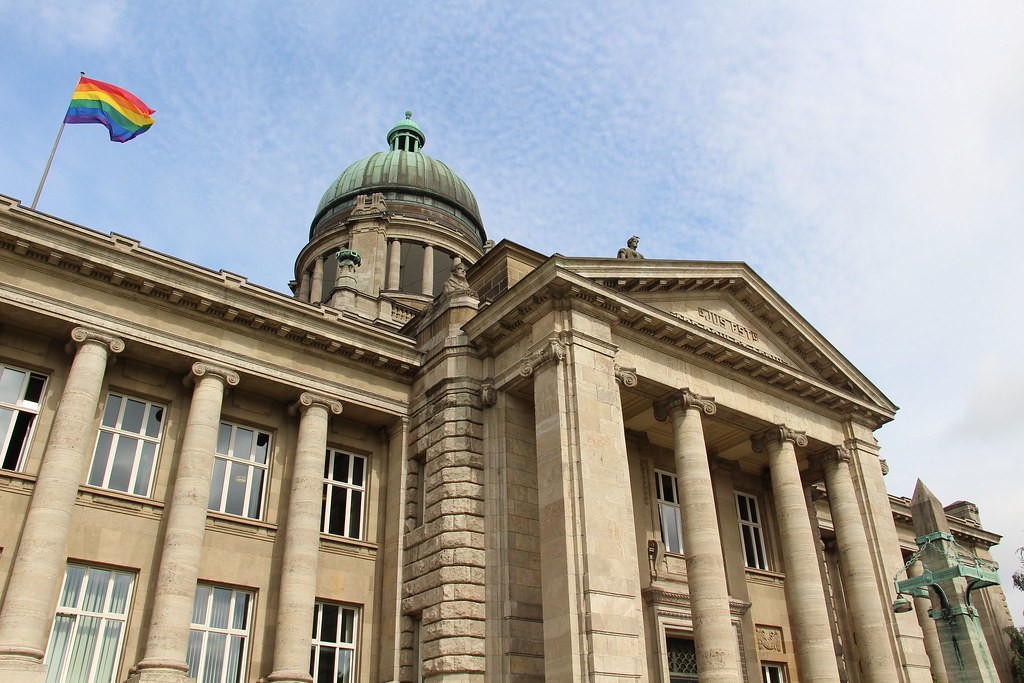
- Archive image of the courthouse, separate from the trial.
Creative Commons Attribution 2.0
- A
- Photograph record, provenance and licence checked.
- B
- Licence for the photograph. It does not cover the video.
NDR/Tagesschau: the opening of the Hamburg trial
- A
- Publisher’s page for the 14 October 2026 report; footage checked for the dossier.
- B
- Report from the trial opening. It does not substantiate the charges.
